Align Health Library
Your mouth and your gut: the digestive connection
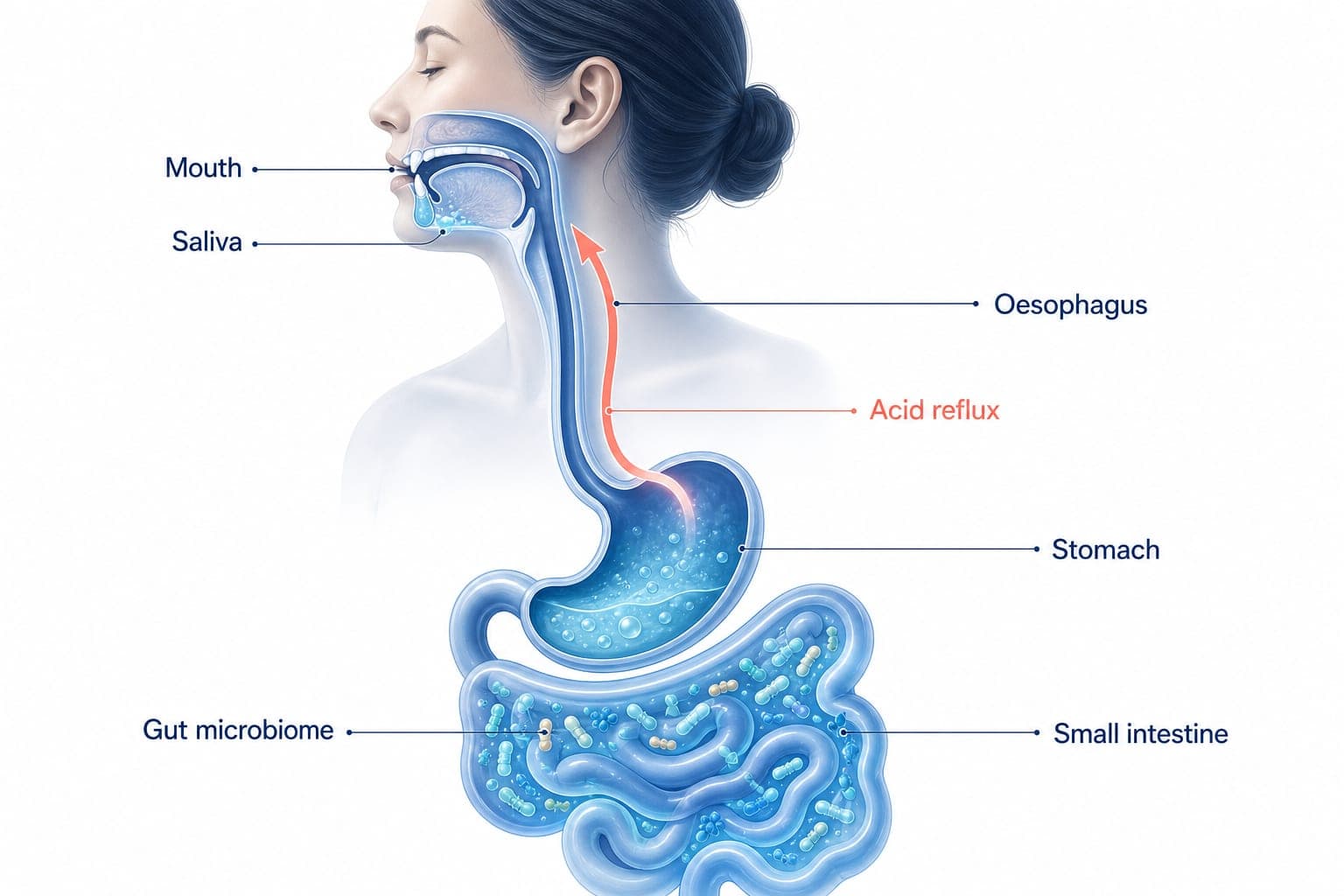
Digestion begins in your mouth. Every time you chew, saliva starts breaking food down before it reaches your stomach. It is therefore not surprising that problems in your digestive system can affect your teeth and gums, and that the health of your mouth may also influence your gut.

How your gut can affect your mouth
Research into the oral-gut connection has grown rapidly in recent years. While scientists are still learning exactly how these systems interact, we already know that conditions such as acid reflux, changes in the microbiome and chronic inflammation can affect both oral and digestive health.
Acid reflux (GERD)
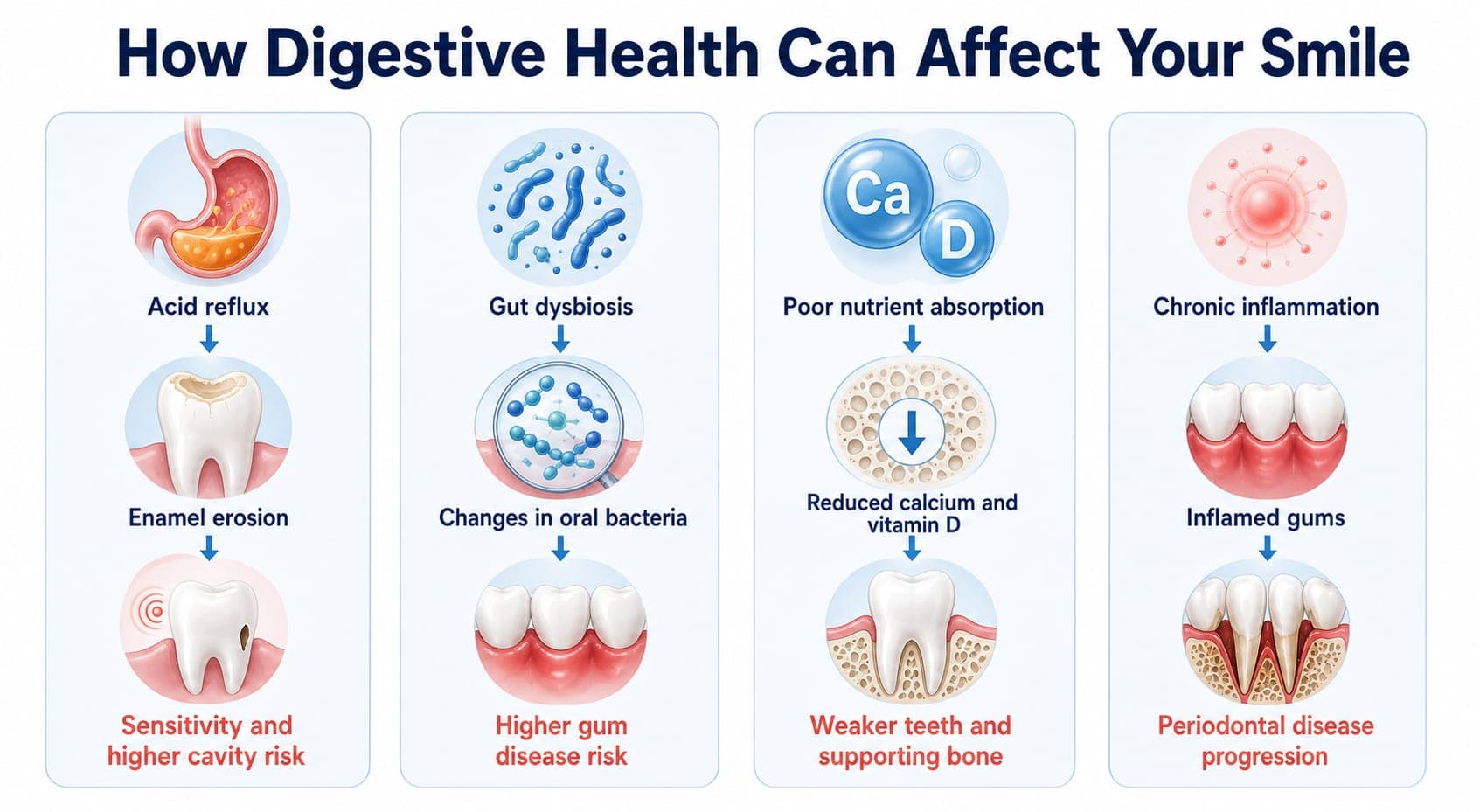
Frequent acid reflux or gastro-oesophageal reflux disease (GERD) allows stomach acid to reach the mouth, gradually dissolving the protective enamel covering your teeth.
Dentists often notice this as a characteristic pattern of wear on the inside surfaces of the upper front and lower back teeth, sometimes before reflux has even been diagnosed.
Because enamel cannot regenerate once it is lost, early detection is important. Acid reflux can also increase the risk of tooth sensitivity and cavities by weakening enamel and reducing saliva's ability to neutralise acids.
Why it matters
- Protecting enamel early helps prevent irreversible tooth wear and future restorative treatment.
Changes in the oral-gut microbiome
Your mouth and gut each contain trillions of bacteria that make up their own microbiomes. These bacterial communities constantly communicate through swallowed saliva, immune signals and inflammation.
When the gut microbiome becomes imbalanced, it may also influence the balance of bacteria in the mouth. Research suggests this may increase the risk of gum disease and tooth decay, although scientists are still working to understand exactly how this occurs.
Inflammation and nutrient absorption
Poor gut health can contribute to low-grade inflammation throughout the body, including the gums. This may worsen existing gum disease and accelerate the loss of supporting bone around the teeth.
Some digestive conditions, such as coeliac disease, can also reduce the absorption of important nutrients including calcium and vitamin D. These nutrients are essential for healthy teeth and jawbone development.
Why it matters
- Healthy gums depend not only on good brushing, but also on good nutrition and a healthy immune system.
How your mouth can affect your gut
The relationship works both ways. Every day you swallow millions of bacteria from your mouth. When your gums are healthy, this is a normal part of digestion. However, untreated gum disease may increase the number of harmful bacteria entering the digestive tract.
Researchers are investigating whether these bacteria contribute to changes in the gut microbiome and digestive inflammation. Studies have also found links between gum disease and conditions such as inflammatory bowel disease (IBD), irritable bowel syndrome (IBS) and Helicobacter pylori infection.
While these associations do not prove cause and effect, they reinforce the close relationship between oral and digestive health.

Why this connection matters
Healthy digestion begins in the mouth, and a healthy mouth supports the rest of your digestive system.
Looking after your teeth and gums is about more than preventing cavities. It may also help reduce inflammatory burden, maintain a healthier microbiome and support your overall wellbeing.
For this reason, we consider your medical history, digestive symptoms and oral health together, not as separate conditions.

Signs you may notice
Digestive problems do not always cause obvious symptoms in the mouth, but there are several signs that may suggest your oral and digestive health are connected.
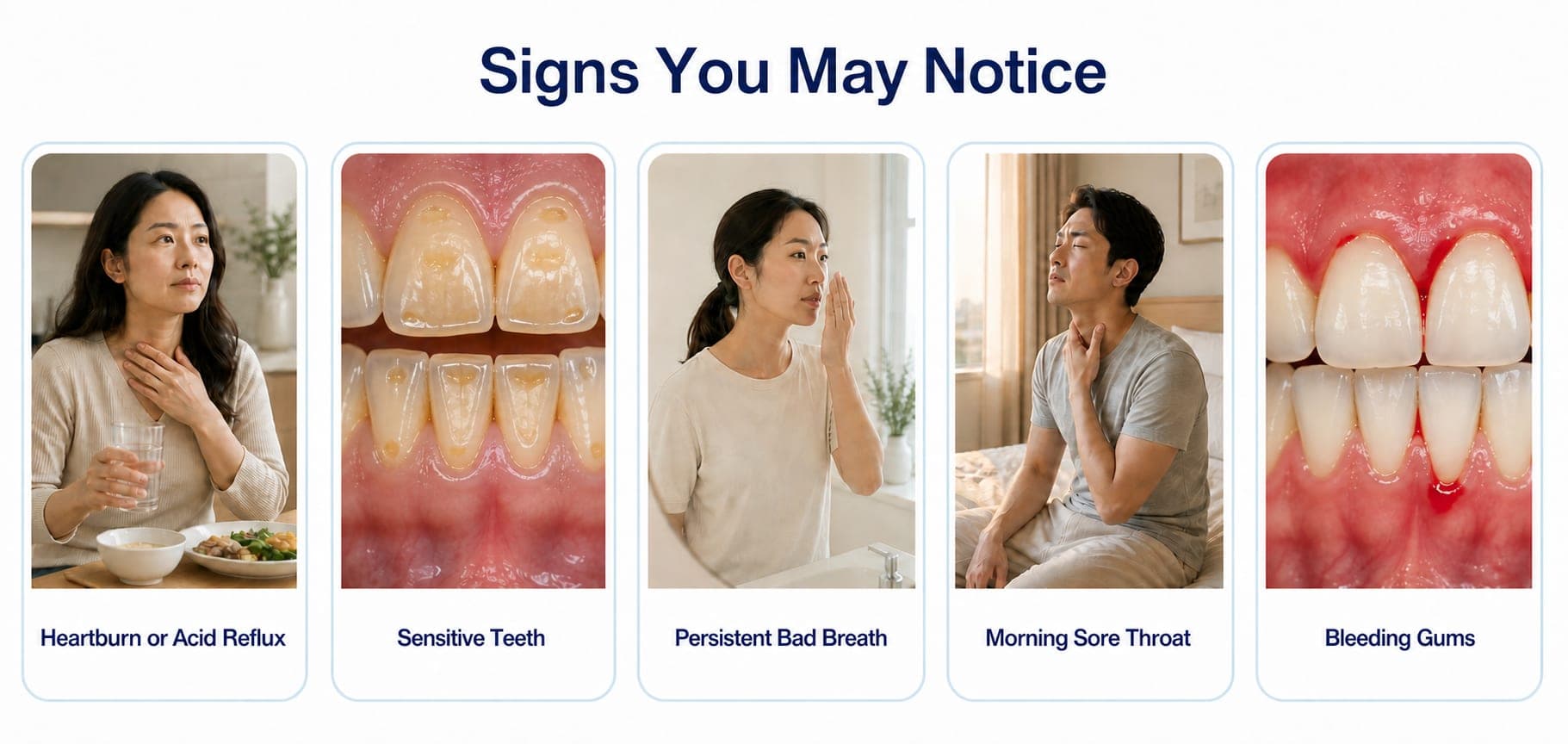
- Frequent heartburn or acid reflux, especially after meals or when lying down.
- Sensitive, worn or thinning teeth, particularly if hot, cold or sweet foods trigger discomfort.
- Persistent bad breath despite good oral hygiene.
- A sore throat or hoarse voice, especially first thing in the morning.
- Bleeding or inflamed gums, particularly if accompanied by ongoing digestive symptoms.
Risk factors we consider
During your assessment, we look beyond your teeth to understand factors that may contribute to enamel wear, gum disease and digestive-related oral problems.
- Frequent acid reflux or GERD
- Recurrent vomiting
- A diet high in acidic foods and drinks
- Smoking and alcohol use
- Poor oral hygiene or existing gum disease
- Digestive conditions that affect nutrient absorption, such as coeliac disease

How Align Dental Surgery can help
Our goal is not simply to repair damaged teeth, but to identify the underlying cause and help protect your long-term oral health.
- Identifying early signs of reflux-related tooth wear before significant damage occurs
- Protecting weakened enamel with preventive fluoride treatments and personalised home-care advice
- Monitoring changes over time to prevent further enamel loss
- Supporting healthier gums through professional periodontal care and tailored oral hygiene advice
- Working with your GP or gastroenterologist when digestive symptoms suggest further medical assessment may be beneficial
Concerned about acid reflux or tooth wear?
If you've noticed tooth sensitivity, enamel wear or frequent acid reflux, we'd be happy to help.
A comprehensive assessment allows us to identify early signs of damage, protect your teeth from further wear and work alongside your GP or gastroenterologist when appropriate.

About the author
Dr Alexia Kwan is a director and senior dental surgeon at Align Dental Surgery, with a particular interest in Invisalign for children. She also works in implants, wisdom tooth surgery and cosmetic dentistry such as veneers, crowns and bridges, and offers general dentistry for adults and children.
The Align Health Library is her initiative to explain, in plain language, what current research says about the connection between oral health and general health.

Questions & answers
Common questions
Can my dentist tell if I have acid reflux?
Should I be worried about the oral-gut microbiome?
What should I do if reflux is affecting my teeth?
Sources
References & further reading
The research behind this guide. Ask us at your next visit if you would like to know more about any of these studies.
- Wieser, H., et al. Dental Manifestations and Celiac Disease: An Overview. Journal of Clinical Medicine, 2023.
- National Institute of Diabetes and Digestive and Kidney Diseases. Dental Enamel Defects & Celiac Disease.
- Kamada, N., et al. Role of the gut microbiota in immunity and inflammatory disease. Nature Reviews Immunology, 2013.
- Harrandah, A.M. The Oral-Gut-Systemic Axis: Emerging Insights into Periodontitis, Microbiota Dysbiosis, and Systemic Disease Interplay. Diagnostics, 2025.
- Alavi, G., et al. Dental Erosion in Patients with Gastroesophageal Reflux Disease (GERD) in a Sample of Patients Referred to the Motahari Clinic, Shiraz, Iran. Journal of Dentistry (Shiraz), 2014.
- National Institute of Dental and Craniofacial Research. The Gut's Role in Oral Bone Health, 2022.
- Zepeda-Rivera, M., et al. A distinct Fusobacterium nucleatum clade dominates the colorectal cancer niche. Nature, 2024.
- Cafiero, C., et al. Fusobacterium in the microbiome: from health to disease across the oral-gut axis and beyond. Biofilms and Microbiomes, 2021/2025.
- Farrell, J., et al. Variations of Oral Microbiota Are Associated with Pancreatic Disease Including Pancreatic Cancer. Gut, 2012.
- Gan, K., et al. Oral pathogens meet the gut microbiome: new mechanistic insights on systemic disease. Frontiers in Cellular and Infection Microbiology, 2025.
- Bao, J., et al. Periodontitis may induce gut microbiota dysbiosis via salivary microbiota. International Journal of Oral Science, 2022.
- Kitamoto, S., & Kamada, N. Periodontal connection with intestinal inflammation: Microbiological and immunological mechanisms. Periodontology 2000, 2022.
- Xi, M., et al. Periodontal bacteria influence systemic diseases through the gut microbiota. Frontiers in Cellular and Infection Microbiology, 2024.
- Fourie, N.H., et al. The microbiome of the oral mucosa in irritable bowel syndrome. Gut Microbes, 2016.
- López-Valverde, N., et al. Possible Association of Periodontal Diseases With Helicobacter pylori Gastric Infection: A Systematic Review and Meta-Analysis. Frontiers in Medicine, 2022.
- National Institute of Dental and Craniofacial Research. Healthy Mouth, Healthy Body.
Book a visit
Healthy digestion begins with a healthy mouth
If you've noticed tooth sensitivity, enamel wear or frequent acid reflux, book a comprehensive assessment with Align Dental Surgery in Singapore and we will help protect your teeth from further wear.