Airway self-screening
Airway self-screening questionnaire
Breathing, sleep quality, and oral development are closely connected. This questionnaire helps adults and parents identify early signs of airway or sleep-related breathing concerns, including snoring and obstructive sleep apnea risk factors. It is not a diagnosis.

The questionnaire
Answer Yes or No to each item
A short how-to-check is included for each. Take your time, and answer for yourself or for your child.
1. Mouth Breathing vs Nasal Breathing
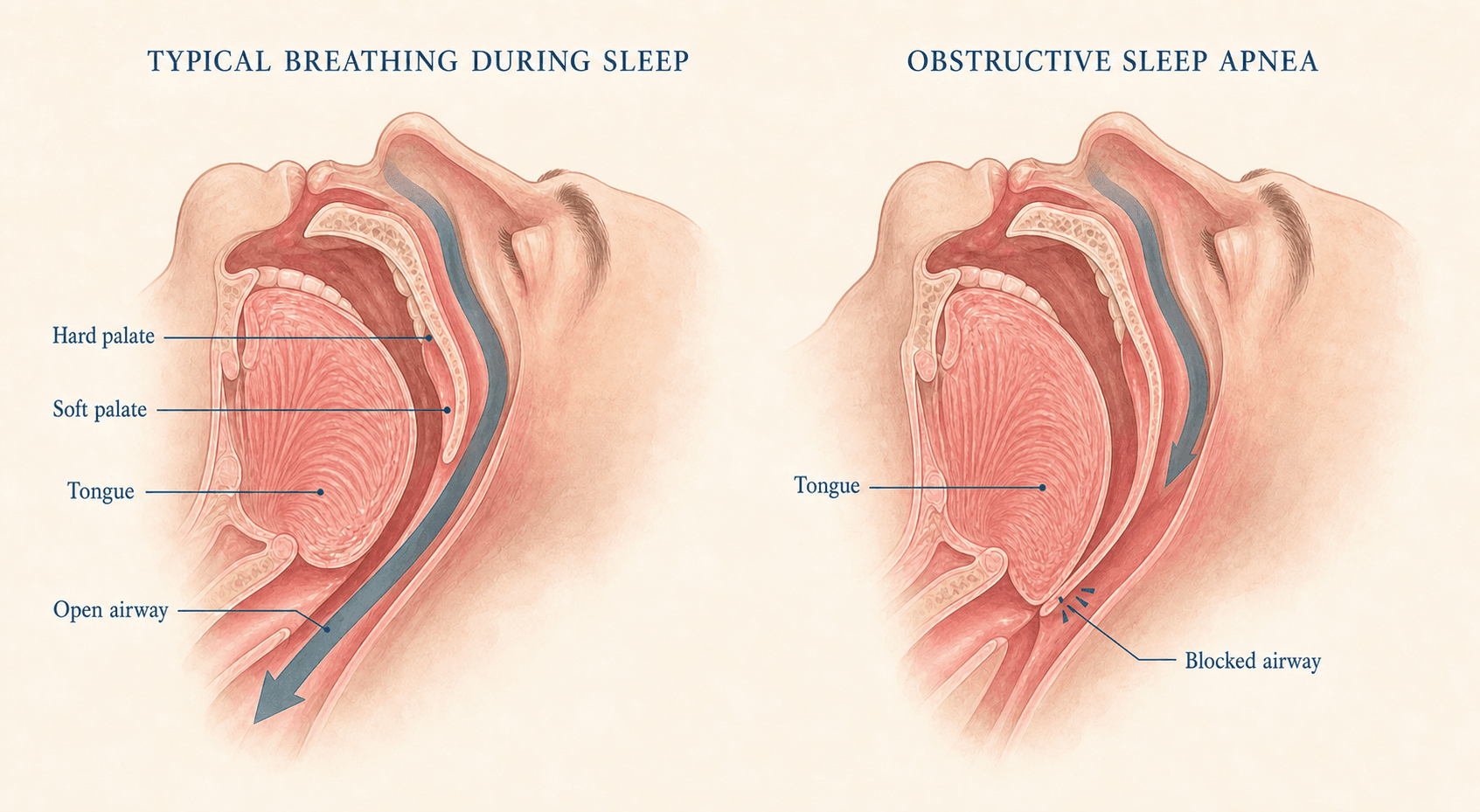
Why this matters: Healthy breathing occurs through the nose, both during the day and while sleeping. Nasal breathing supports proper tongue posture, helps keep the airway open, and is important for normal jaw development in children. Mouth breathing is often a sign of underlying airway restriction and is associated with snoring and sleep-related breathing disorders.
At-home nasal breathing check (adults / older children): Hold a small sip of water (about 15 ml) in your mouth and breathe only through your nose for up to 3 minutes.
2. Enlarged Tonsils (Tonsil Hypertrophy)
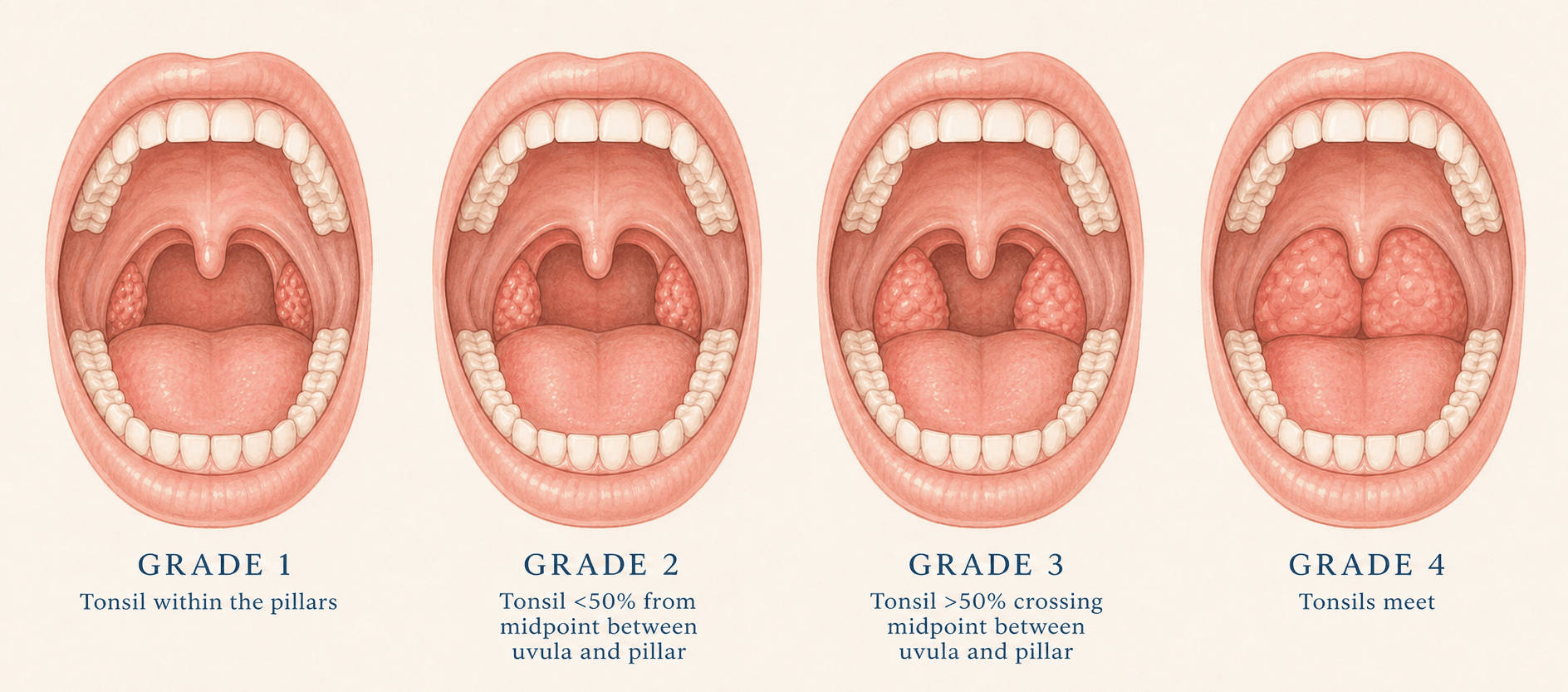
Why this matters: The tonsils sit at the back of the throat and form part of the immune system. When enlarged, they can reduce airway space, particularly during sleep when throat muscles relax. Enlarged tonsils are a common contributor to airway obstruction and sleep-related breathing problems, especially in children.
Based on the Brodsky Tonsil Scale: No = Grade 0-1 · Yes = Grade 2-4.
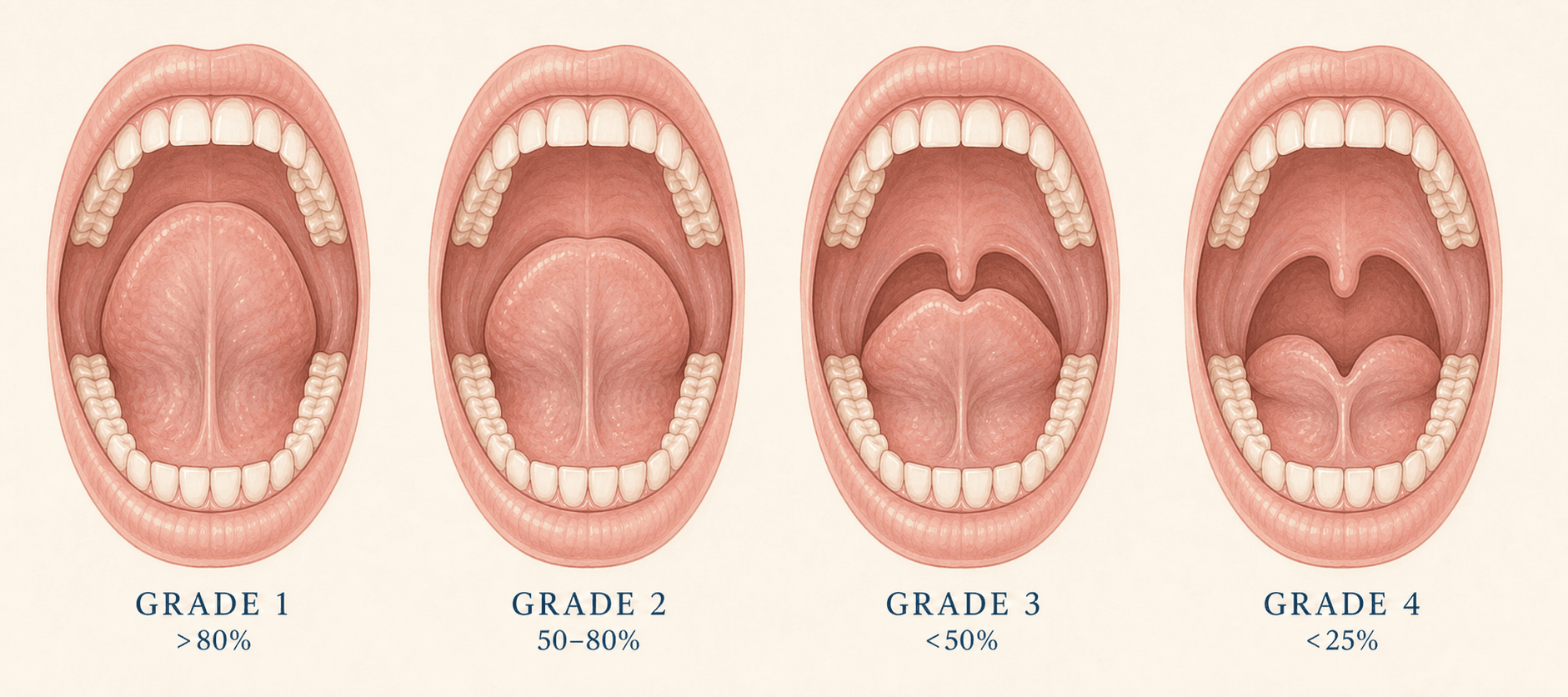
3. Tongue Size & Space in the Throat (Mallampati Tongue Score)
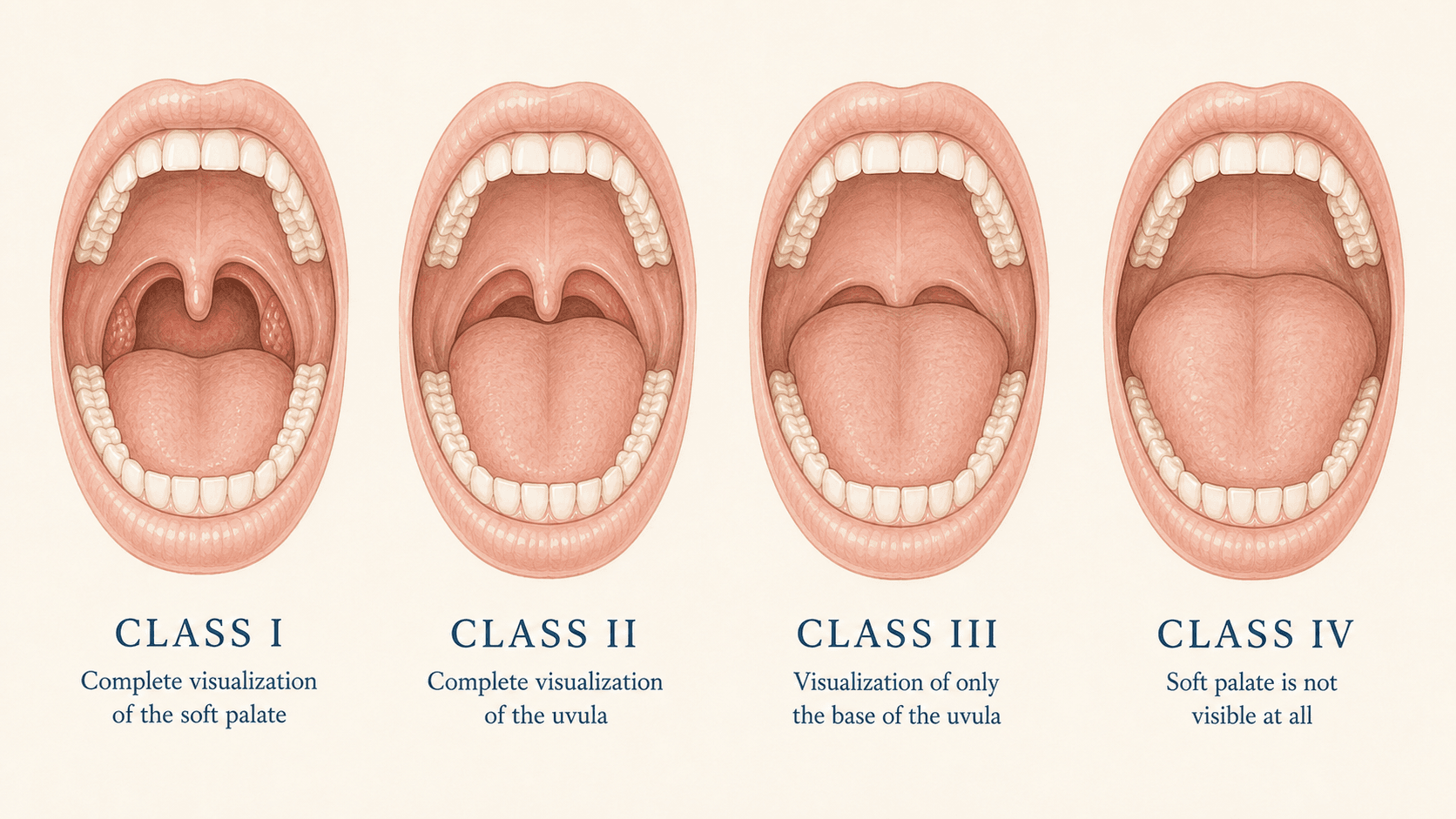
Why this matters: A tongue that occupies more space in the throat can narrow the airway, particularly at night when muscles relax. This increases the likelihood of snoring, disturbed sleep, and breathing pauses. A higher Mallampati score is a recognised risk factor for sleep-related breathing disorders.
How to check: Open your mouth wide in front of a mirror and stick your tongue out as far as you can without speaking or saying “ahh”.
No = Class I-II · Yes = Class III-IV, where most or all oral structures are blocked by the tongue.
4. Tongue Movement & Tongue Tie (Ankyloglossia)
Why this matters: A healthy tongue should rest against the roof of the mouth, helping to support an open airway. When tongue movement is restricted, the tongue may sit lower in the mouth and fall backward during sleep, narrowing the airway. Research shows a strong association between tongue tie and sleep-disordered breathing in children, with potential long-term effects on breathing, posture, and development.
How to check: Open your mouth comfortably and try to lift the tip of your tongue to the incisive papilla (the small bump behind your upper front teeth).
No = Grade 1-2 · Yes = Grade 3-4.
Scoring
Understanding your results
Count your Yes answers. This scale mirrors the result shown after you complete the questionnaire above.
0-1 Yes
Lower risk. Continue to monitor breathing and sleep quality.
2-3 Yes
Possible airway concerns. A professional assessment may be helpful.
4 Yes
Increased risk of airway or sleep-related breathing disorders.
What happens next
A gentle, airway-focused assessment
At Align Dental Surgery, we look beyond the teeth to assess how breathing and oral development may be affecting sleep and long-term health.
Our airway assessments include:
- Breathing patterns (day and night)
- Oral and jaw development
- Tongue posture and function
- Risk factors influencing sleep quality and airway health
Where appropriate, we work closely with ENT specialists and medical colleagues to assess the airway more comprehensively and coordinate care, particularly for children or patients with more complex airway concerns.
Take the next step
Not sure what your result means? Let us take a look
Whatever your answers, an assessment will tell you whether anything needs doing, and when. We will examine you or your child and arrange a medical referral if a sleep study is appropriate.