

Dental bridges
Dental bridges
A fixed, natural-looking way to close the gap left by a missing tooth, anchored to the teeth on either side.
What a dental bridge is
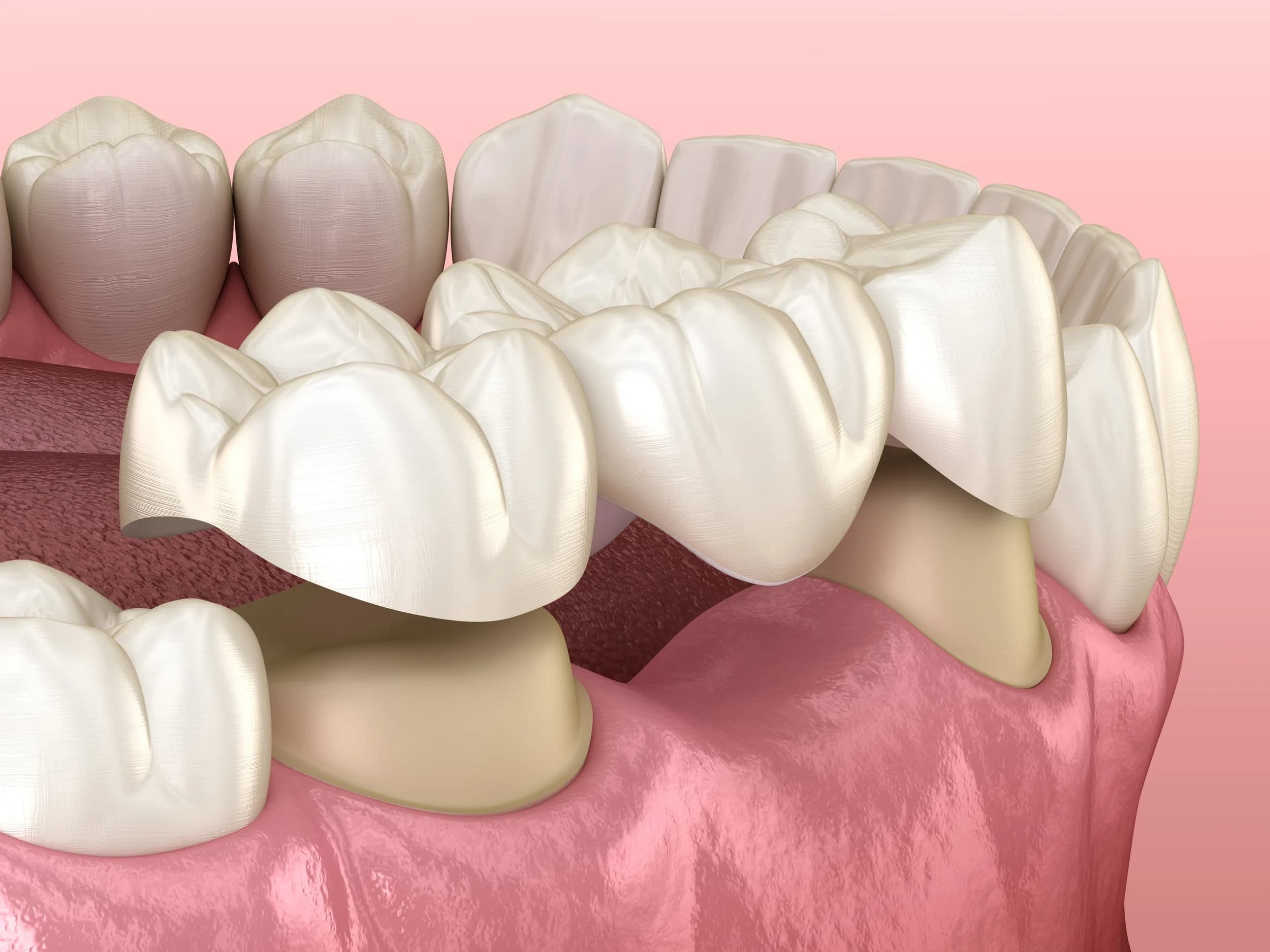
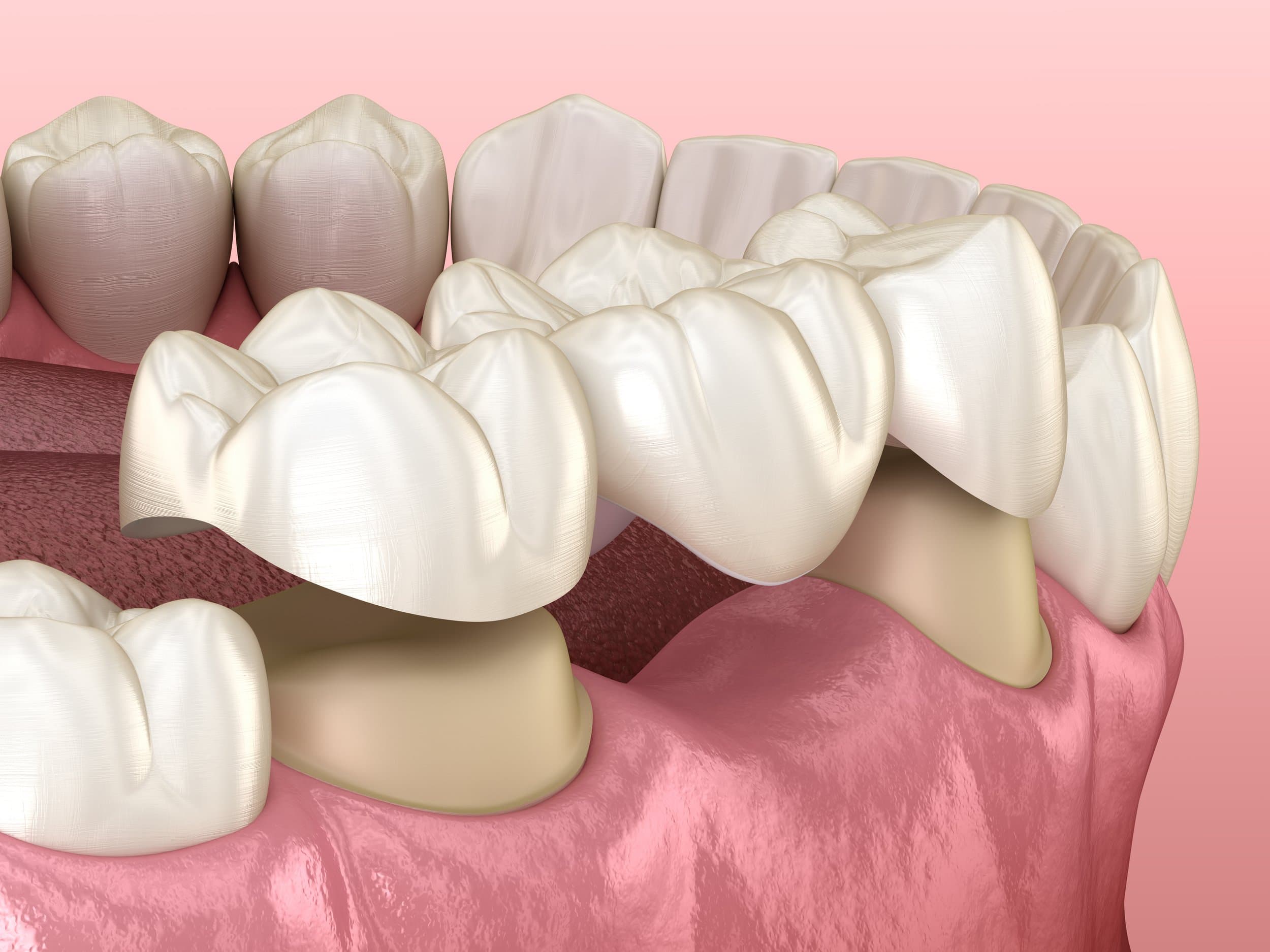
A dental bridge is a fixed, long-term way to replace one or more missing teeth, made to match the colour of the teeth around it. It is built from two crowns that sit over the teeth on either side of the gap, with a false tooth spanning the space between them.
The false tooth is called a pontic, and it is usually made from porcelain or ceramic. A bridge can close a single gap or replace several teeth in a row.
What a bridge does for you
Replacing a missing tooth is not only about appearance. A gap changes how you chew and speak, and the teeth around it can start to drift over time.
What a bridge does for you
- Closes the gap and improves your smile
- Restores chewing, for a better choice of foods that matters for nutrition and digestion
- Helps your speech, as gaps and unstable dentures can cause lisping
- Supports the lips and restores facial contours, profile and proportion
- Stops the remaining teeth from drifting out of alignment
- Supports your confidence in everyday situations

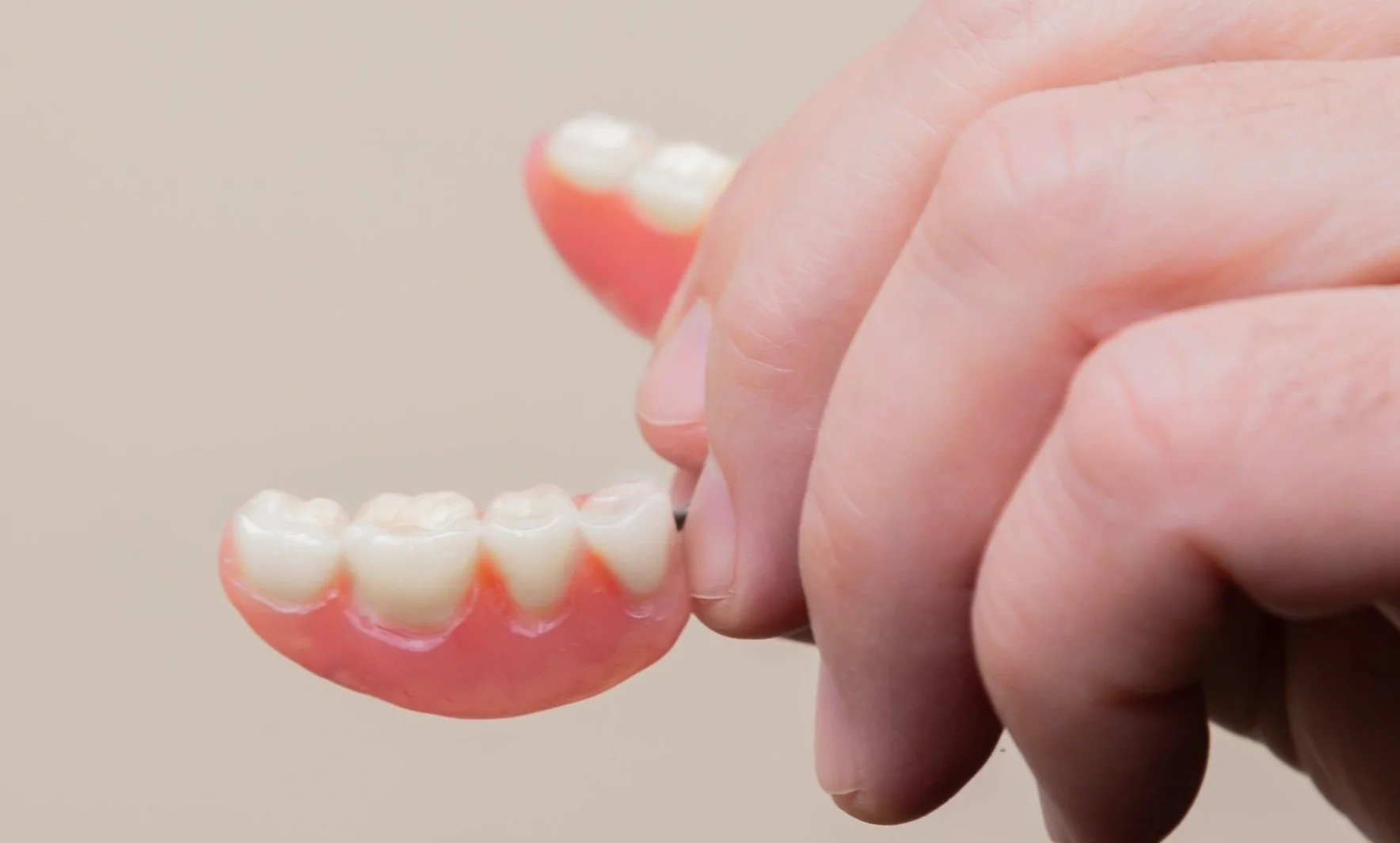
Bridge or denture?
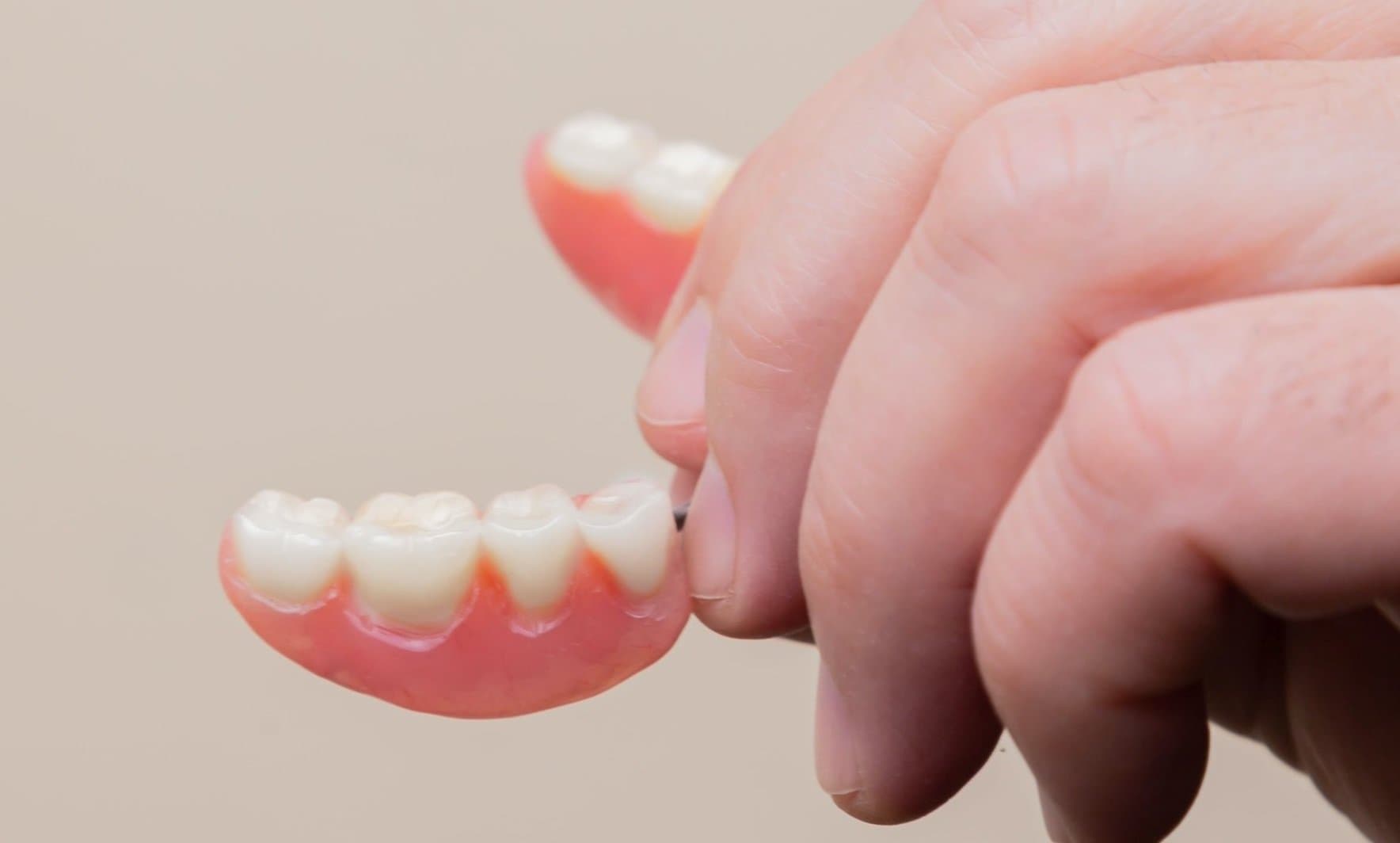
A removable denture is a lower-cost way to replace several teeth, but for one or a few missing teeth a fixed bridge is usually more stable and more comfortable.
A dental bridge lasts on average between seven and ten years, and some last fifteen years or more with good care.
How a bridge compares with a denture
- A bridge is fixed in place, a denture is removable
- A bridge stays in at night, a denture is taken out
- A bridge is more stable when you chew
- A bridge tends to feel more comfortable
- A bridge usually looks more natural
- A bridge can be supported by natural teeth or by dental implants
Types of bridge
Where the gap is not too wide and there are one or two strong teeth on each side, a traditional bridge is an option. Those teeth are prepared by removing their outer layer, and a framework carrying the false tooth, made of metal and porcelain for support, is cemented over them.
Modern frameworks are usually zirconia, which has largely superseded traditional metal-based bridges because of the improved aesthetics. Because zirconia can be milled with 3D computer technology, the fit is more precise and the laboratory time is shorter.
Bridge or implant?
If only one tooth is missing, a single dental implant can stand on its own, replacing the tooth without trimming the healthy teeth on either side, which is why it is often the more conservative choice. A bridge makes more sense when the neighbouring teeth would benefit from crowns anyway, or where an implant is not suitable, for example if there is not enough bone, though bone grafting can sometimes change that.
We assess your bite, the teeth around the gap and the supporting bone, then explain the options, what each involves, how long each lasts and the cost, so you can choose with a clear picture.
Implant-supported bridges
When many teeth are missing, implants can be used to span the gap and support a bridge, instead of replacing every lost tooth with its own implant. This reduces the cost, and it is also the option where there is insufficient bone.
An implant-supported bridge is similar to a traditional bridge, except that it rests on titanium roots instead of natural teeth.
Questions & answers
Dental bridges: common questions
How long does a dental bridge last?
Should I choose a bridge or a dental implant?
How do I clean under a dental bridge?
Explore our other dental services
Book a visit
Ready to take care of your smile?
Tell us what you need and our team will help you book the right appointment, usually within one working day.