
Retainer wear & care
Retainer wear & care guide
Finishing braces or Invisalign is not the end: retainers keep your result. Here is how to wear and look after them.

Why wearing retainers matters
Teeth have a natural tendency to drift back toward their original positions after orthodontic treatment, a process called relapse. Wearing your retainers consistently holds the alignment you achieved with Invisalign or braces and keeps your smile stable long-term.
Skipping retainer wear is the most common reason people end up needing orthodontic treatment again.

Recommended wear schedule
Retainers are a lifelong commitment. Stopping wear can lead to teeth shifting and misalignment returning.
- First 6 months: wear around 20 hours a day.
- Next 6 months: wear around 10 to 12 hours a day.
- Long term: wear nightly, for life.
Eating, drinking and storage
- Remove retainers before eating, to prevent stains, cracks and warping.
- Avoid hot drinks or foods while wearing them, as heat can warp the plastic.
- Drink only plain water while retainers are in your mouth.
- Always store retainers in their protective case when not in use.
- Never wrap retainers in napkins or tissues, which is how they most often get thrown away by accident.
- Check regularly for looseness, distortion or wear, and do not attempt a DIY fix if they crack.
Cleaning your retainers
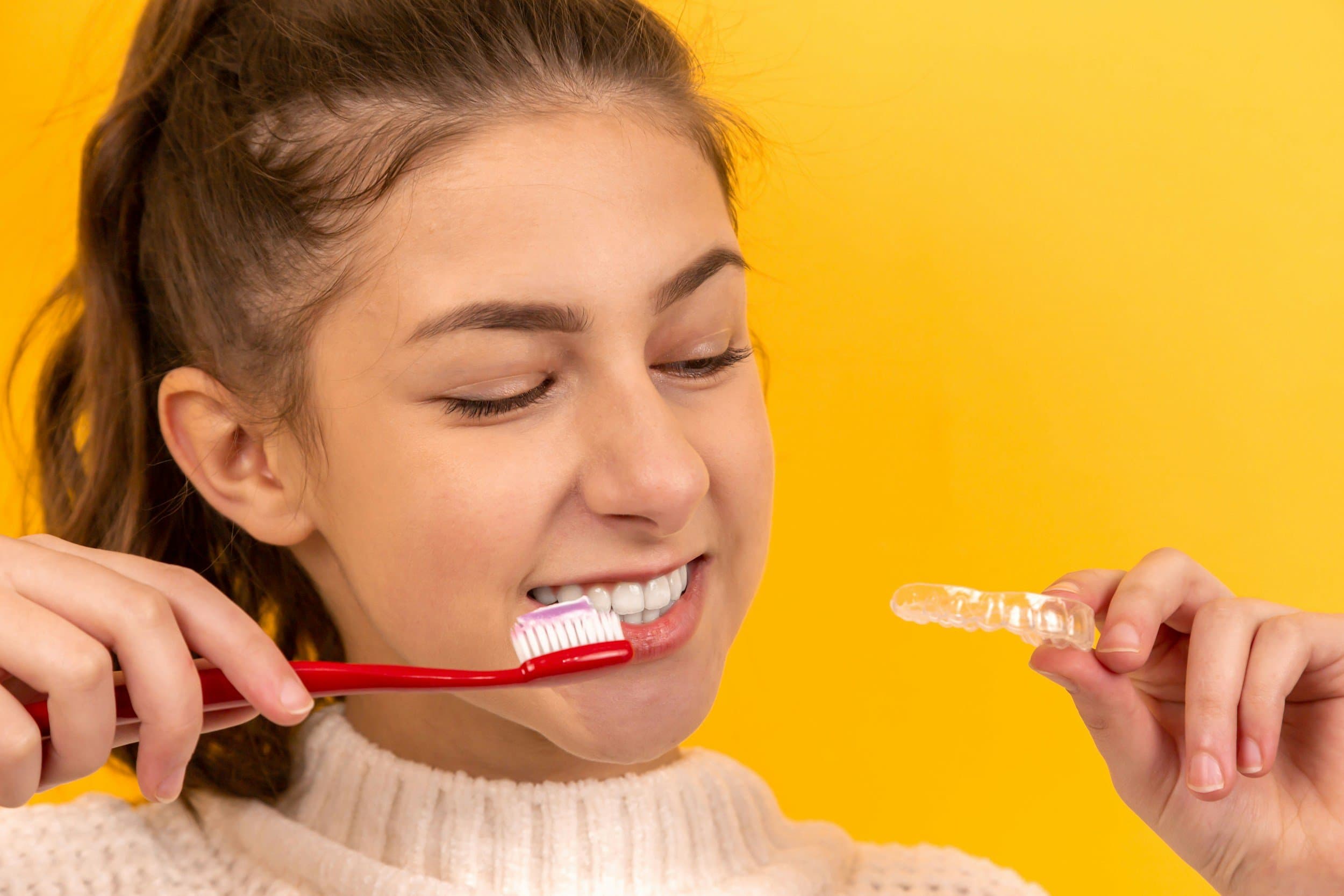
- Brush your retainers twice a day with a soft toothbrush and a little mild soap or non-abrasive toothpaste, holding them gently.
- Use retainer-cleaning tablets such as Retainer Brite, or an equivalent, two to three times a week.
- Rinse with cool water only.
- Avoid soaking in mouthwash, alcohol or Dettol, which can cloud or damage the plastic.
- Pat dry with a towel and keep them away from heat.
If your retainers feel tight
If your retainers feel tight after some time out of them, your teeth may have shifted slightly.
What to do
- Resume full-time wear until they feel comfortable again.
- Do not force a tight retainer into place.
- Contact the clinic if a retainer no longer fits.
Caring for fixed (bonded) retainers
These steps apply if you have a fixed retainer, a thin wire bonded behind your teeth.
- Brush gently along the gumline and around the wire.
- Use superfloss or interdental brushes to clean around the wire.
- Avoid biting directly into hard foods.
- Contact the clinic if the wire loosens or detaches.
- Wear a removable retainer as a backup if the fixed retainer breaks.
When to contact Align Dental Surgery
Contact the clinic for any concern about your retainers, or to arrange a replacement.
Contact us if
- Retainers feel too tight or too loose.
- Cracks, warping or discomfort.
- Persistent pain or irritation.
- A broken fixed retainer wire.
- Lost retainers.
- Any uncertainty about hygiene or fit.
Questions & answers
Retainer wear & care: common questions
Do I really have to wear retainers for life?
What should I do if my retainer breaks or stops fitting?
How do I keep my retainer from smelling or going cloudy?
Explore our other dental services
Book a visit
Ready to take care of your smile?
Tell us what you need and our team will help you book the right appointment, usually within one working day.