Airway orthodontics
Airway-focused orthodontics in Singapore
Looking past crooked teeth to how the jaw develops and how you breathe, because the two are connected.

Mouth breathing, snoring, restless sleep, daytime tiredness, crowded teeth and a narrow palate often go together. They can be signs that the jaws have not had the room to grow that they should, which has knock-on effects for the teeth, the face and the airway.
We look at the whole picture: how you or your child breathes, the shape of the palate, the bite, and where things are in development. Where there is a narrow upper jaw, gently widening it can create room for the teeth and support the airway at the same time. For children, getting in early, while growth is on your side, makes the biggest difference.
This is not a substitute for medical care of conditions like obstructive sleep apnea, and we will refer to or work alongside the right medical specialists when that is needed. But the dental and orthodontic side, jaw development and the airway, is something we can assess and help with.
Beyond straight teeth
Airway-focused orthodontics looks beyond cosmetic alignment. It aims to optimise how the jaws, tongue and airway work together.
By creating adequate space for the tongue and improving nasal breathing, treatment supports facial harmony, efficient oxygen flow and long-term wellness.
Why the airway matters
The airway, the passage that allows air to flow from the nose to the lungs, is closely linked to jaw position, tongue posture and facial growth.
A narrow upper jaw or retruded lower jaw can restrict airflow, leading to mouth breathing, snoring, and poor sleep quality or fatigue.
Addressing airway and jaw development early promotes better oxygenation, deeper sleep and overall health.
The connection between jaw development and airway health
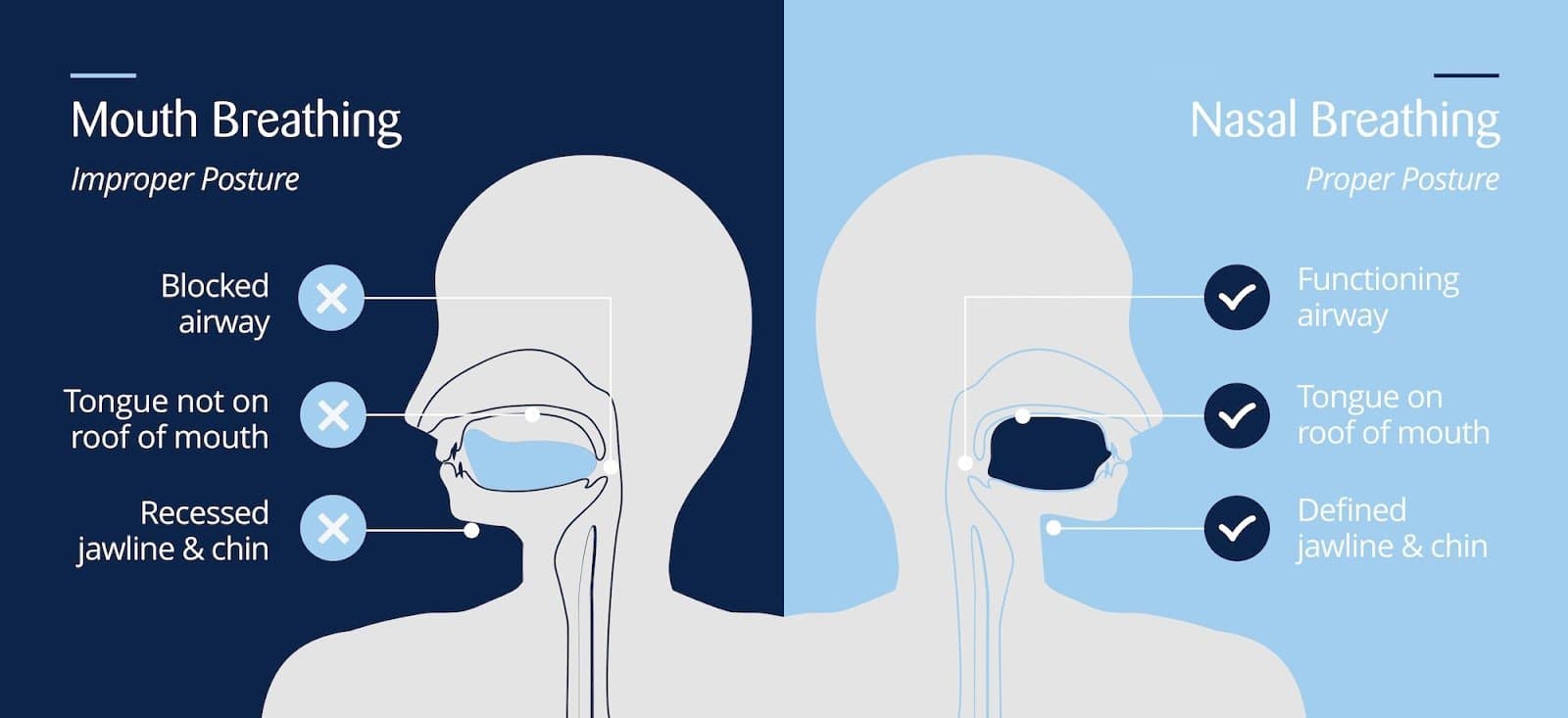
The size and position of the upper and lower jaws directly influence the airway space, the pathway for oxygen flow.
The tongue acts as a natural expander of the upper jaw. When it rests properly on the palate, the upper jaw develops wide and symmetrical. If the tongue sits low, due to airway blockage or mouth breathing, the upper jaw becomes narrow and the airway restricted.
When the upper jaw is narrow or the lower jaw sits backward, the space behind the tongue decreases, making nasal breathing harder and increasing airway resistance.
Proper jaw development ensures that the tongue can rest comfortably against the palate, keeping the airway open during sleep and daily breathing.
Conversely, well-developed jaws create adequate space for the tongue and allow efficient nasal airflow, supporting calm breathing, restorative sleep and long-term dental stability.
Underdeveloped jaws may lead to
- Chronic mouth breathing and nasal congestion
- Snoring or disturbed sleep
- Forward head posture or daytime tiredness
- Narrow arches and crowded teeth
The importance of early airway-focused treatment
Early treatment leverages a child's natural growth potential to correct jaw and breathing issues before they become long-term problems.
By encouraging proper nasal breathing and jaw development early, we can minimise airway restriction and prevent dental relapse later in life.
Addressing these issues in childhood can often prevent surgery or complex orthodontic treatment later.
Why timing matters
- Up to 90% of facial growth is completed by age 12.
- Airway issues such as mouth breathing or narrow jaws can cause permanent changes in facial structure and airway size if left untreated.
- Correcting mouth breathing early prevents jaw underdevelopment and facial elongation.
- Early expansion can increase nasal airway size, improve oxygen levels, and reduce the risk of sleep apnea or sleep-disordered breathing.
Early diagnosis and airway assessment
Identifying airway and growth concerns early helps prevent long-term complications.
Common signs of airway or breathing issues
- Mouth breathing or snoring
- Frequent congestion or allergies
- Daytime tiredness or poor focus
- Open-mouth posture or dark circles under the eyes
- Crowded teeth or a narrow upper jaw
What an airway assessment involves
A comprehensive airway assessment may include
- Evaluation of facial growth, jaw width and posture
- Dental arch measurement and bite analysis
- Collaboration with ENT specialists, paediatricians or sleep physicians
Treatment approaches in airway orthodontics
Treatment varies based on age, growth stage and individual anatomy. It focuses on expanding and balancing the jaws, improving airway volume, and retraining the oral muscles for correct breathing and tongue posture. The main approaches are set out below.
Palatal expansion (children and teens)
- Widens the upper jaw to improve nasal airflow and create room for the tongue.
- Encourages proper nasal breathing and natural bite alignment.
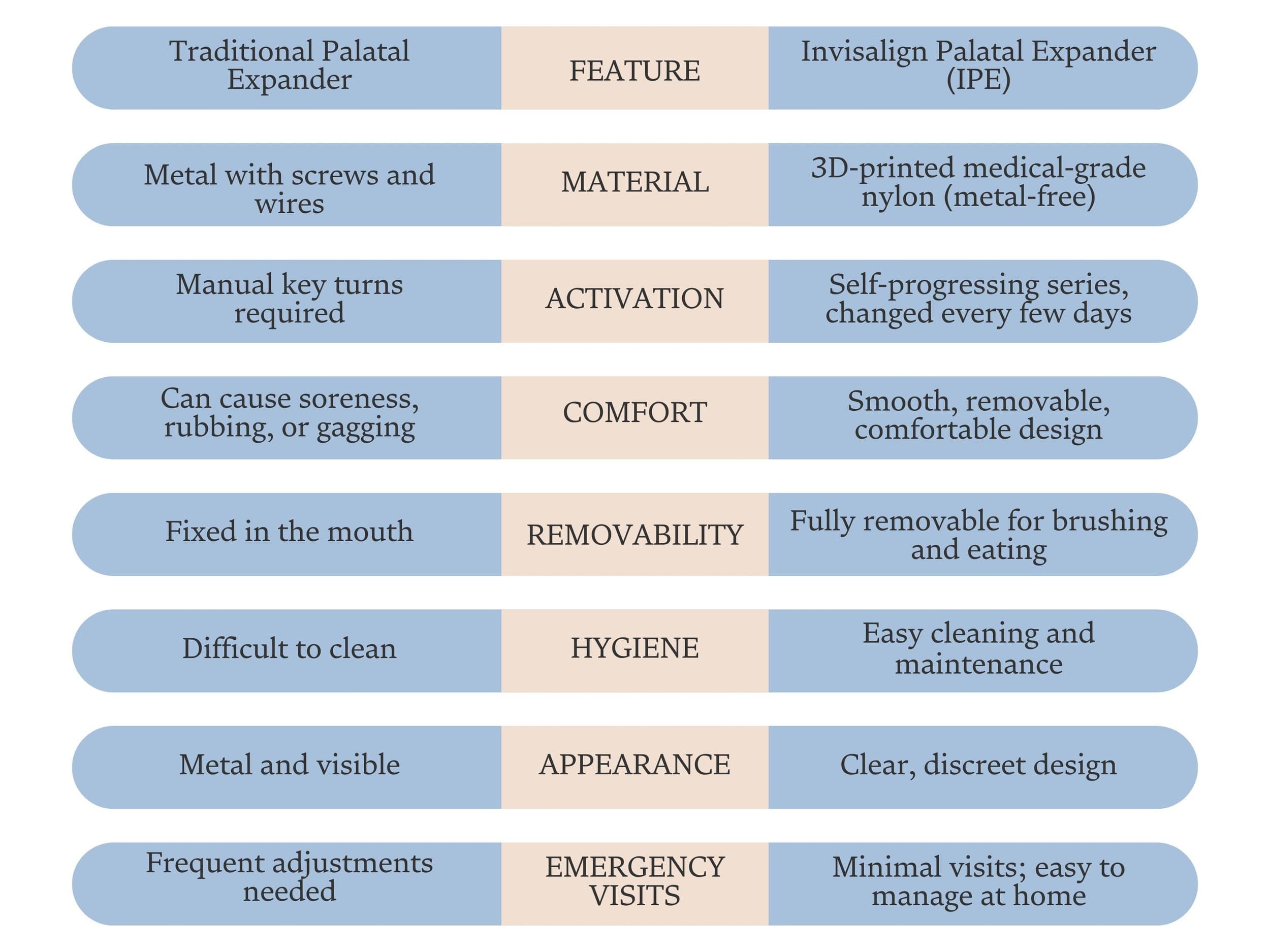
- Modern expanders, such as the Invisalign Palatal Expander and Rapid Maxillary Expansion devices, apply gentle pressure to widen the mid-palatal suture.
- Helps reduce snoring and improve sleep quality in children.
Mandibular advancement and growth guidance
- For children with a retruded lower jaw, devices like Twin Blocks guide forward jaw growth.
- Improves airway openness and facial balance while reducing future malocclusions.
- In adults, mandibular advancement devices reposition the jaw during sleep to minimise airway collapse.
Myofunctional therapy
- Exercises that retrain the tongue, lip and facial muscles for correct resting posture and nasal breathing.
- Stabilises orthodontic results and prevents relapse.
- Often combined with expansion or appliance therapy.
MARPE and adult expansion
- For adults with mature jawbones, Miniscrew-Assisted Rapid Palatal Expansion (MARPE) widens the upper jaw without surgery in many cases.
- High success rates, around 85%, with improved nasal airflow and sleep quality.
Orthognathic surgery (severe cases)
- In complex adult cases, jaw surgery may be needed to permanently enlarge the airway.
- Repositions the upper and lower jaws for improved breathing and facial harmony.
- Especially effective for severe sleep apnea and skeletal discrepancies.
Multidisciplinary collaboration
Optimal results often require teamwork. This integrated approach ensures both the structural and functional causes of airway issues are treated comprehensively.
The team may include
- Orthodontists
- ENT specialists
- Sleep physicians
- Myofunctional therapists
- Physiotherapists
Lifestyle and supportive measures
- Encouraging nasal hygiene, allergy management and posture awareness enhances treatment outcomes.
- Regular follow-ups during growth ensure long-term airway stability and healthy breathing patterns.
Collaborative, holistic care
At Align Dental Surgery, we believe airway-focused orthodontics is best delivered through team-based, holistic care. By coordinating with ENT, myofunctional and sleep specialists, we address both the cause and the effect of breathing dysfunction.

The benefits of airway-focused orthodontics
What treatment aims to achieve
- Enhanced airflow and oxygen delivery
- Better sleep and daytime focus
- Balanced facial aesthetics
- Long-term dental stability
- Improved posture and overall wellbeing
The takeaway
Healthy jaw growth and open airways are the foundation of a confident smile and a healthy life.
Through airway-focused orthodontics, we help both children and adults breathe better, sleep better and smile better, naturally.

Explore airway-focused care


The Align Dental difference
Why patients choose us
We treat the cause
Crowded teeth and poor sleep often share a root cause: jaws that did not get enough room to grow.
Best done early
In children, guiding jaw growth is most effective while growth is still happening, which is why early assessment counts.
Joined-up care
Where medical input is needed, for example for sleep apnea, we refer to and work alongside the right specialists.
Questions & answers
Airway orthodontics: common questions
What is airway-focused orthodontics?
How do I know if my child has an airway problem?
Is a palatal expander uncomfortable?
Can adults benefit from airway-focused treatment too?
Explore our other dental services
Book a visit
Ready to take care of your smile?
Tell us what you need and our team will help you book the right appointment, usually within one working day.