
Skip to content
A confident, complete smile restored with dental implants at Align Dental Surgery

Dental implants

Dental implants

A permanent, natural-looking way to replace one or more missing teeth, with a titanium root that fuses to the bone.

Everything you need to know about dental implants

Dental implants are a popular choice for people who are missing teeth. They are permanent, look natural, and can last a lifetime with proper care.

A dental implant is an artificial tooth root that is placed in the jawbone to hold a replacement tooth or bridge. It is an option for people who have lost a tooth or teeth due to periodontal disease, an injury, or some other reason.

Dental implants are made of titanium, a material that is compatible with the human body. The implant fuses with the bone over time, creating a strong and stable foundation for the replacement tooth.

The benefits of dental implants

Why patients choose implants

  • A permanent replacement for missing teeth
  • A predictable and good long-term success rate
  • Prevents the supporting bone from shrinking after tooth loss
  • Helps prevent further tooth loss
  • Does not decay, as it is made from titanium
  • Generates stronger bite forces, for better chewing and so better digestion and nutrition
  • Improved oral health
  • Increased comfort
  • Preserves the jawbone
  • Restores appearance, creating more confidence and self-esteem
  • Better support for the lips and cheeks, for a more youthful look
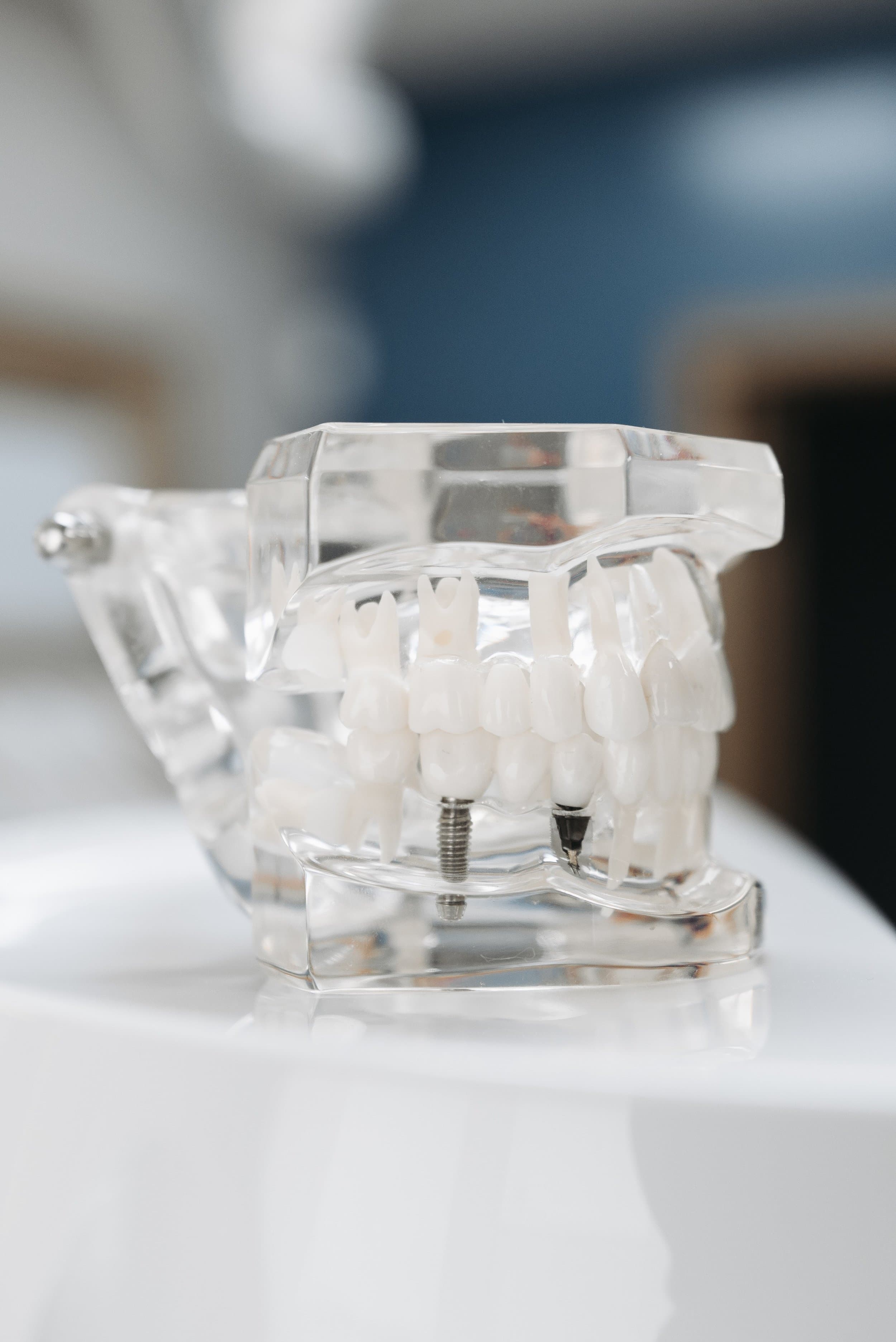
Dental implants used to replace missing teeth at Align Dental Surgery

Are you suitable for implants?

Implants can be placed in most patients from age 18 to 80.

Even if you have lost your teeth for many years, we are able to regenerate bone in order to place implants as a foundation for your denture or bridge.

Patients with health conditions should inform our dentist so that additional precautions can be taken, if required. In most instances, surgery can be performed after clearance from your medical specialist. A consultation with 3D imaging shows how much bone is present and whether a graft is needed first.
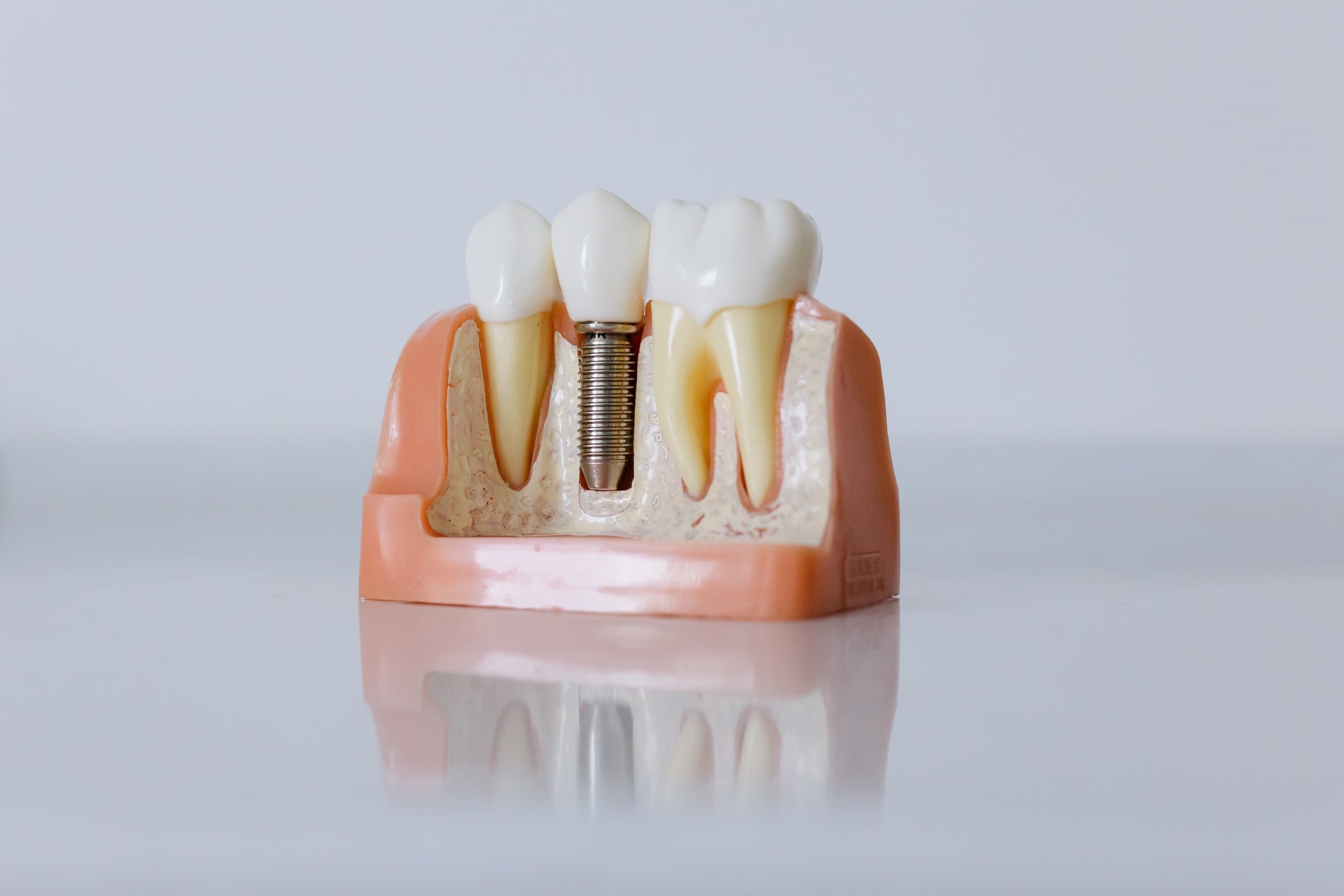
A dental implant model showing the titanium post in the jawbone at Align Dental Surgery

The Align Dental implant process

Treatment follows a clear sequence of four stages, with healing time built in between them.
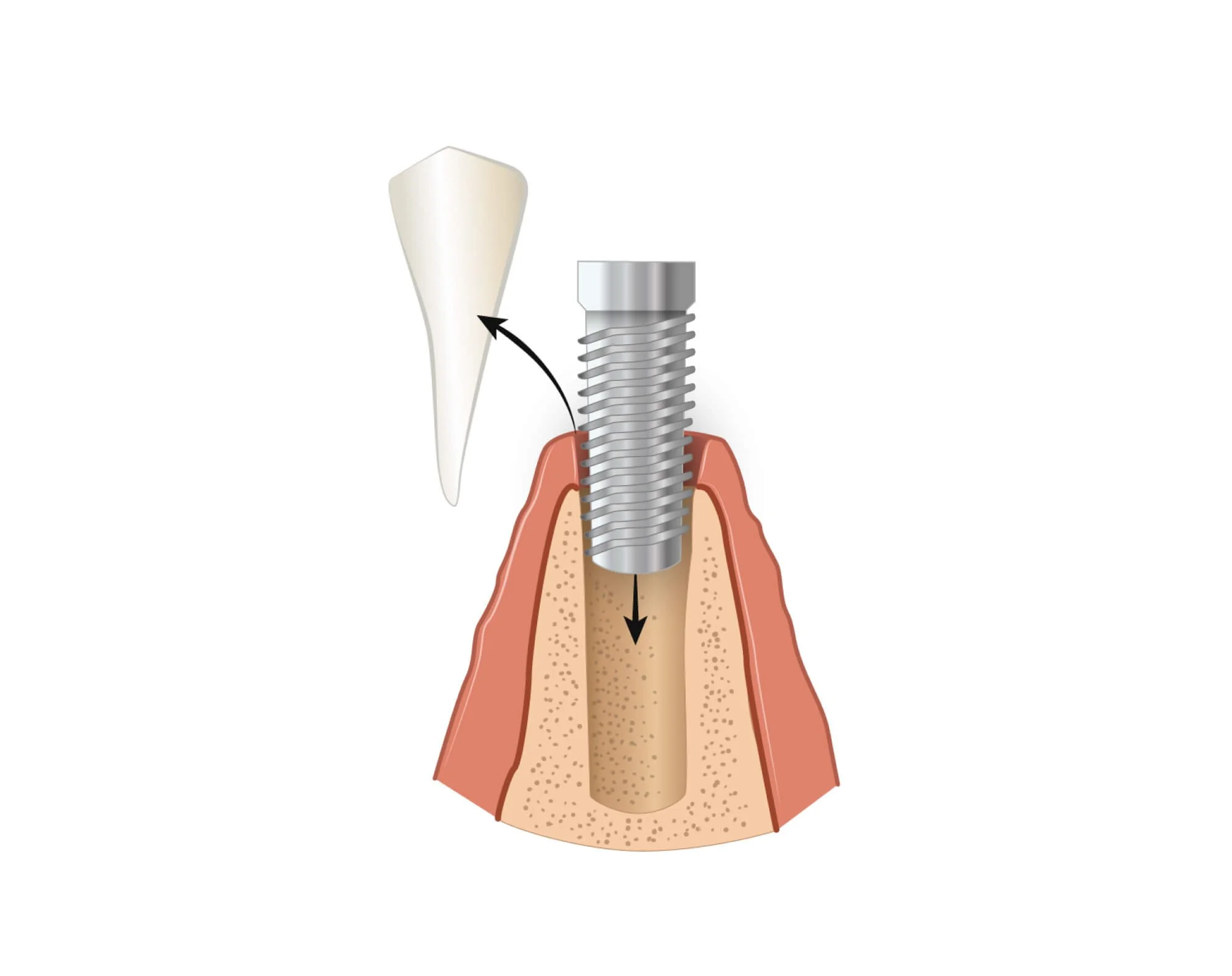
  1. Diagram of a titanium implant fixture inserted into the jawbone at Align Dental Surgery

    Implant insertion

    The implant fixture is surgically inserted into the jawbone and acts as a root for the replacement tooth.
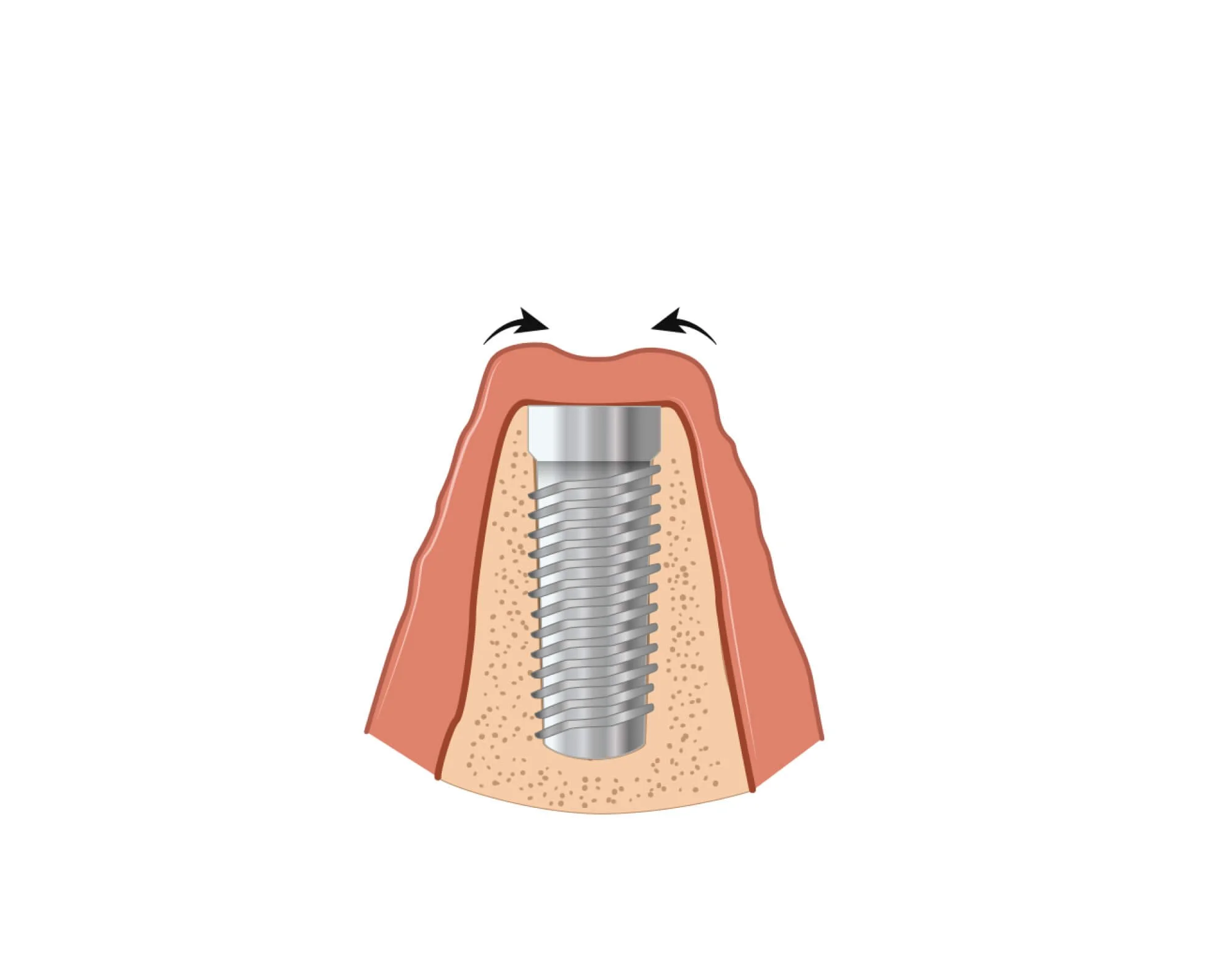
  2. Illustration of a dental implant fusing with the jawbone at Align Dental Surgery

    Osseointegration

    The implant fixture is left to recover and fuse with the surrounding jawbone, becoming part of your natural gum line.
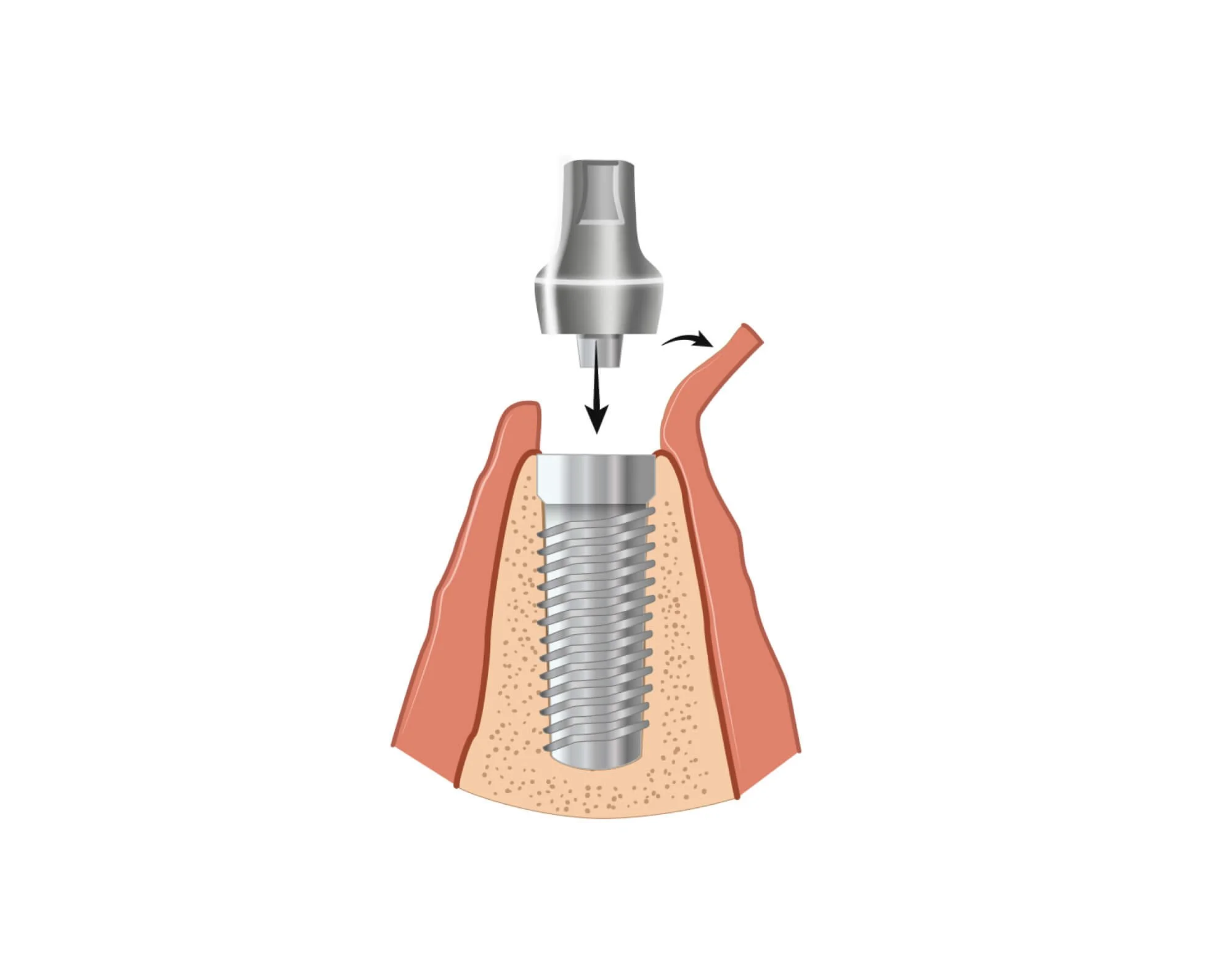
  3. Diagram of an abutment attached to a dental implant at Align Dental Surgery

    Abutment

    The gum is reopened to expose the implant fixture in order to attach the abutment, which connects to the crown.
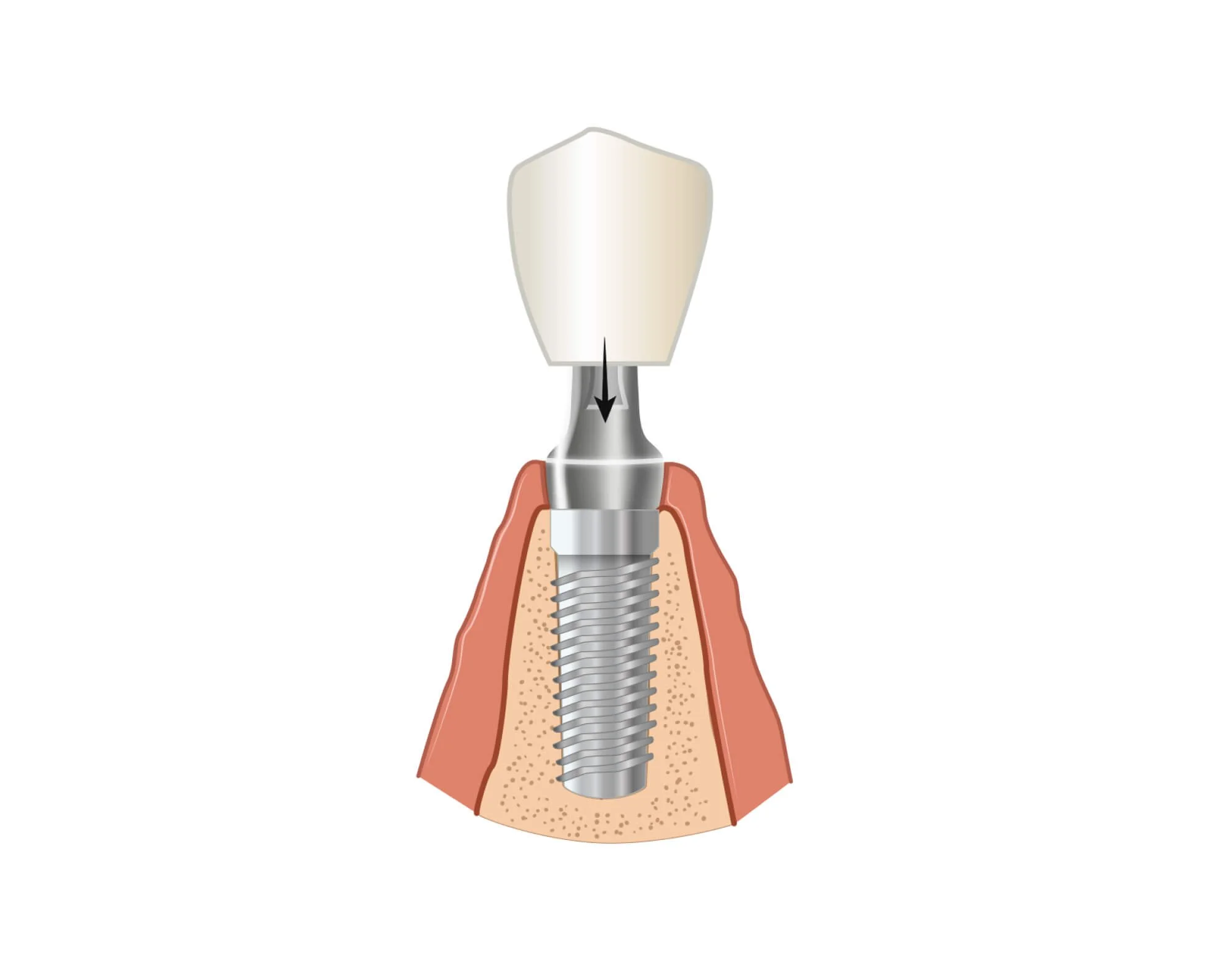
  4. Diagram of a crown fitted onto a dental implant at Align Dental Surgery

    Crown placement

    The final prosthesis, the crown, is permanently fitted to the abutment to complete the restoration.

Dental implant surgery explained

The entire dental implant procedure can often be divided into three main stages and takes between four and six months to complete.

The three stages

  1. Removing any decayed or shaky teeth and allowing the bone to heal.
  2. Placing the implant screw into the bone and again allowing the bone to harden around the implant.
  3. Finishing up the final crown or replacement teeth.

A man smiling with a complete smile restored by dental implants at Align Dental Surgery

Questions & answers

Dental implants: common questions

Am I a suitable candidate for dental implants?
Most adults in reasonable general health with healthy gums are suitable, provided there is enough bone to anchor the implant, or enough that a bone graft can build it up. Smoking, uncontrolled diabetes, certain medications and active gum disease can affect healing and the long-term outlook, so we assess each person individually and may treat gum disease or recommend stopping smoking first. A 3D scan tells us how much bone there is and whether grafting is needed. The best way to find out is a consultation, where we examine you, take imaging if appropriate, and give you a clear picture of what is possible.
How long does dental implant treatment take?
Implant treatment is staged over several months, mainly because the implant needs time to fuse with the bone before the final tooth is fitted, which typically takes a few months. The sequence is: place the implant, allow it to integrate, then fit the crown, bridge or denture on top; if a bone graft is needed first, that adds healing time before the implant goes in. The appointments themselves are relatively short, it is mostly the healing in between. We will map out the full timeline for your case at the planning stage so you know what to expect and when.
How do I look after a dental implant?
An implant is cared for much like a natural tooth: brush twice a day, clean between the teeth daily (around an implant crown, interdental brushes or floss designed for implants work well), and keep up your regular check-ups and cleanings. Implants do not decay, but the gum and bone around them can become inflamed (peri-implantitis) if plaque is allowed to build up, much as gum disease affects natural teeth, so cleaning matters. We will show you the technique and monitor the implant at your routine visits. Looked after well, an implant can last many years.
What is implant surgery like?
After local anaesthetic is given, a small incision is made in the gum and the insertion point is decided. The site is then gently prepared with drills of increasing diameter, and the implant is rotated to the planned depth and left to heal undisturbed for about three to four months. It is generally a minimally invasive procedure and discomfort is usually minimal. For anxious patients, it can be carried out under intravenous sedation, where a mix of medications helps you relax and stay comfortable during treatment.
How long does recovery take?
You may feel some discomfort after the operation, which is usually managed with the prescribed painkillers taken regularly. Some swelling and bruising is to be expected. Most people can resume normal activity within a day, while avoiding strenuous exercise and swimming. A normal or soft diet can begin once the numbness from the local anaesthetic wears off, usually around two to three hours after the procedure.

Book a visit

Ready to take care of your smile?

Tell us what you need and our team will help you book the right appointment, usually within one working day.

Request appointment