

Scaling & gum treatment
Scaling, polishing & gum treatment
A professional clean that clears plaque and tartar from where your toothbrush cannot reach, and keeps your gums healthy and your teeth stable.
What scaling is
Scaling is the removal of plaque and tartar from the teeth. Plaque is a sticky film of bacteria that forms on the tooth surface. Tartar is plaque that has hardened, and once it forms a toothbrush can no longer shift it.
Scaling clears these deposits so the tooth surfaces are clean above and below the gum line.
Why scaling matters
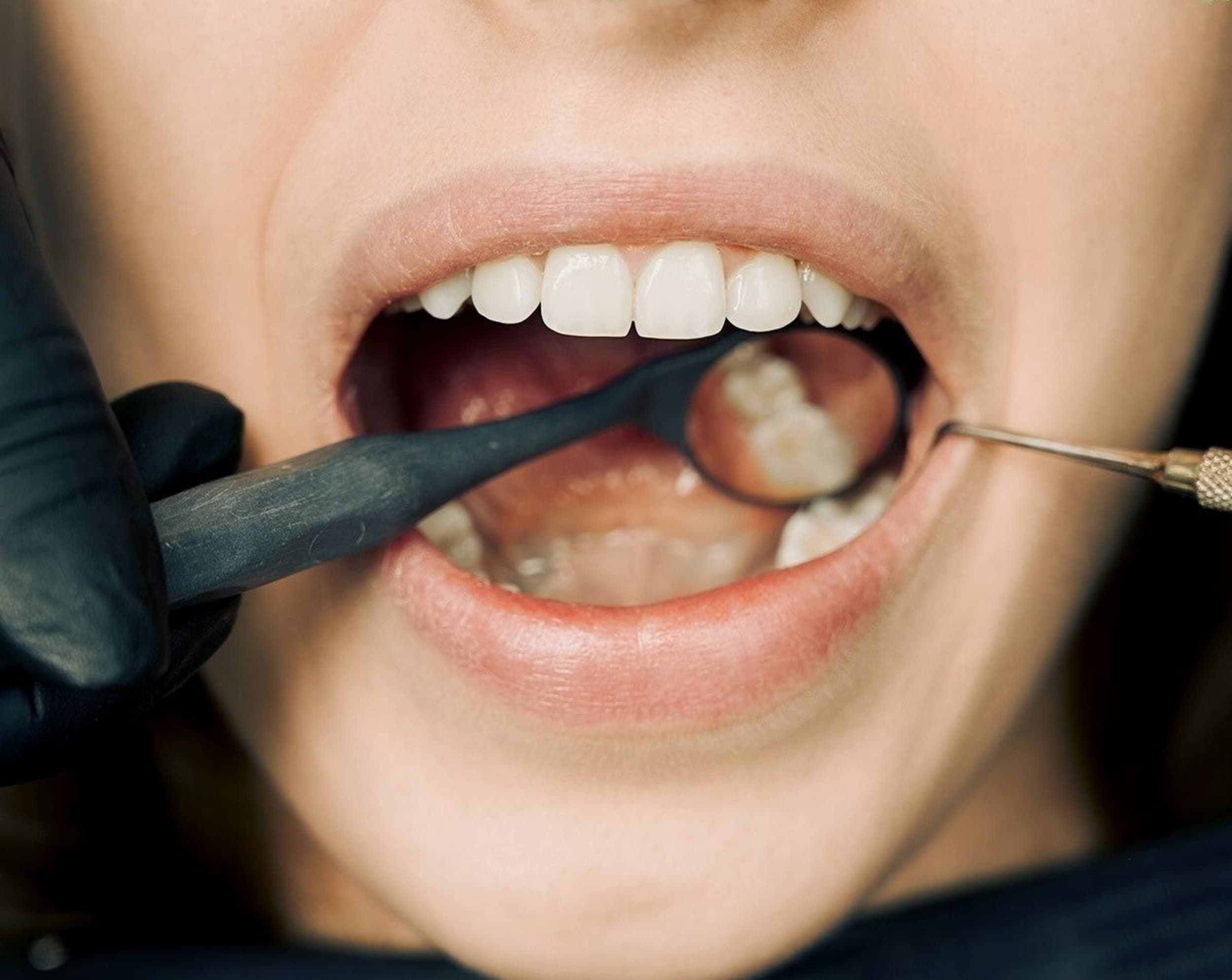
Within about two hours of eating, a soft film of bacteria called plaque starts forming on the teeth, as minerals in saliva combine with bacteria around food debris. If it is not removed thoroughly, it hardens into tartar, which a toothbrush cannot shift. Tartar irritates the gums, breath becomes less fresh, the gums start to bleed, and over time the bone that holds the teeth can be lost and teeth can loosen.
Cleaning the tooth surfaces at and just below the gum line is one of the most effective things we can do, alongside daily brushing and flossing, to keep gums healthy and teeth stable for the long term.
Signs your gums need attention
- Gums that bleed when you brush or floss
- Persistent bad breath or a bad taste
- Gums that look red, swollen or have receded
- Teeth that feel loose or have shifted
- It has been more than a year since your last clean
What a routine visit involves
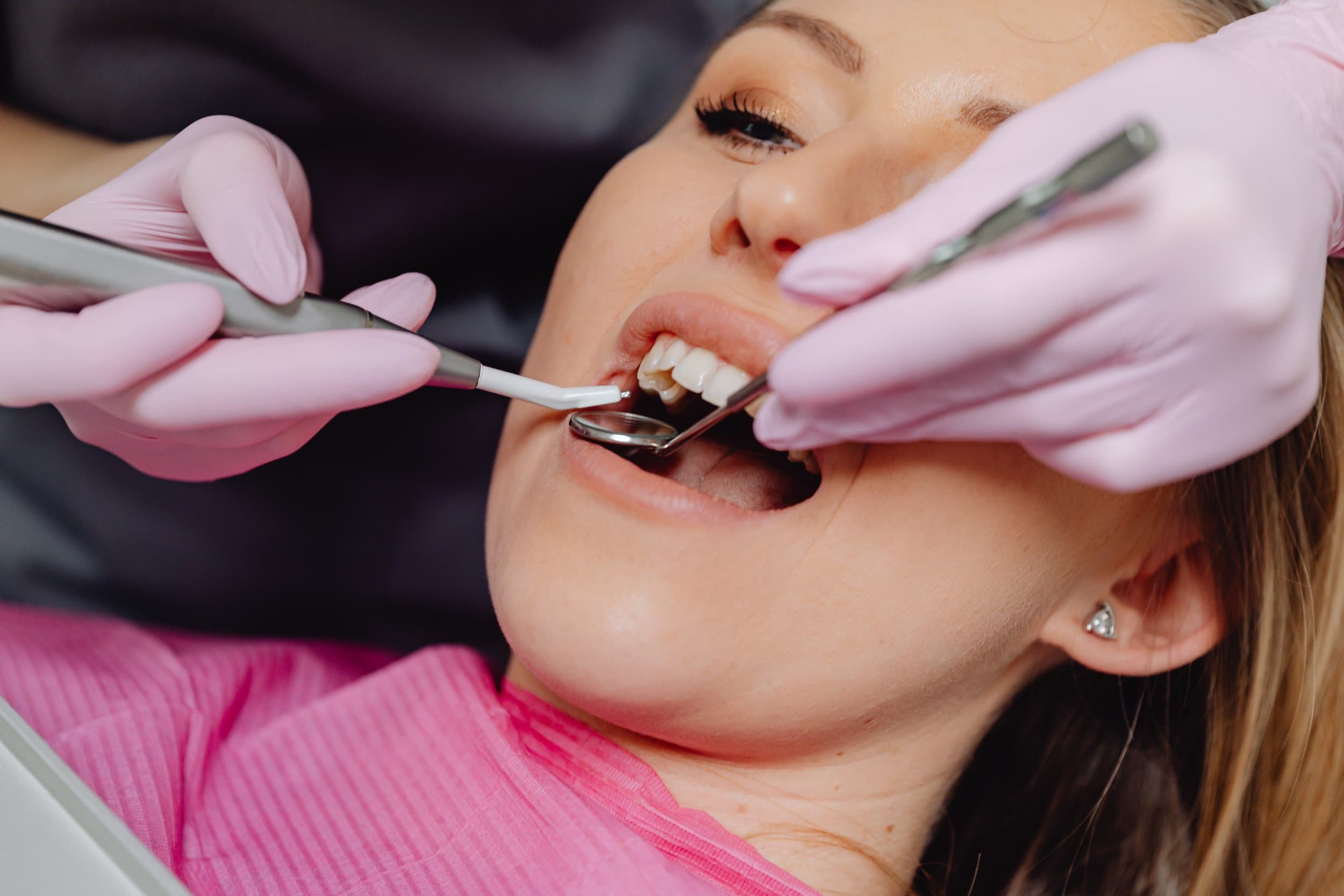
A routine scale and polish usually takes about 20 to 30 minutes and is generally comfortable, though you may feel some sensitivity, especially if it has been a while since your last clean.
Most of the appointment is the clean itself, finished with a fluoride application at the gum margin to ease sensitivity of the freshly cleaned surfaces.
A routine scale and polish, step by step
- Remove the hard tartar deposits with an ultrasonic scaler.
- Polish the tooth surfaces smooth so plaque is slower to build up.
- Clear any remaining soft deposits below the gum line with an air jet.
- Apply fluoride at the gum margin to ease sensitivity.
Deeper cleaning: root planing
In some patients the deposits are very adherent or sit in deeper pockets, so the roots need a more thorough clean. This deeper procedure is called root planing.
Root planing can be more sensitive, so it is usually done under local anaesthesia for comfort. For patients who are needle-phobic or anxious about treatment, we can provide nitrous oxide (laughing gas) or intravenous sedation.
If gum disease is left untreated
Gum disease is easier to control when it is treated early, and some people are genetically more prone to aggressive forms of it. Left untreated, it tends to progress: the gums recede, the supporting bone is lost, teeth become loose, and eventually they can be lost altogether, often with persistent bad breath.
At that stage a deeper clean of the roots, sometimes called gum surgery, may be needed. Where bone has been lost to gum disease it can often be regenerated, and missing teeth can be replaced with bridges or titanium implants.
Questions & answers
Scaling & gum treatment: common questions
Does scaling hurt?
How often should I have my teeth scaled?
What happens if gum disease is left untreated?
How long does a scaling appointment take?
What is root planing?
Explore our other dental services
Book a visit
Ready to take care of your smile?
Tell us what you need and our team will help you book the right appointment, usually within one working day.