
Bone graft & regeneration
Bone graft & regeneration
Rebuilding jawbone that has been lost, so there is a solid foundation for a dental implant, or to repair a bony defect.
What a bone graft is
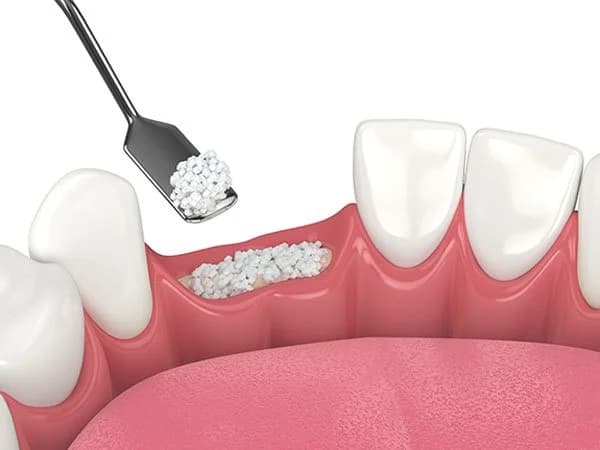
Bone grafting is a surgical procedure that replaces missing bone or repairs a bony defect. Graft material, taken from another site in your own mouth, from a processed donor source, or as a synthetic substitute, is placed into the area that needs building up, where it acts as a scaffold for your body to form new bone.
The most common reason is to prepare for a dental implant. An implant needs enough solid bone to be placed safely and to last, so if a tooth has been missing long enough for the bone to shrink, or if decay, gum disease or an injury has reduced it, a graft restores what is needed. Whether you need one is assessed with a 3D scan at your consultation.
When bone grafting is used
- To rebuild bone before placing a dental implant
- Where a tooth has been missing for a while and the bone has shrunk
- To restore bone lost to gum disease
- To repair a bony defect caused by trauma or infection
Types of graft material
A few options are available, and the right one depends on how much bone is needed, where, and the specifics of your case. Our dental surgeon explains which material is being used and why before the procedure.
The main options
- Autograft: a small amount of your own bone, taken from another site, which integrates predictably.
- Allograft: processed donor bone or a prepared substitute material.
- Alloderm: a processed donor tissue (natural cadaveric skin) that forms a porous scaffold, sutured into place at the graft site for new tissue to grow into.

Preparing for the procedure
Before a graft, your dentist explains the whole process and may arrange tests such as a CT scan or X-rays. You will get instructions on diet, medication or lifestyle in the run-up, so you are in good shape for the procedure.
The graft itself is carried out under local anaesthesia, with sedation or general anaesthesia available for comfort.
The treatment journey
- Consultation and a 3D scan to assess how much bone is available.
- The graft is placed under local anaesthesia, with sedation or general anaesthesia available.
- A healing period, often several months, while new bone forms.
- The implant or planned treatment is carried out once the area has matured.
Recovery and aftercare
After the graft, follow the post-operative instructions carefully. You will usually have pain relief to manage discomfort and antibiotics to reduce the risk of infection. Healing takes time, often several months, before an implant can be placed.
While the graft heals
- Eat soft foods at first and keep the area clean as instructed.
- Avoid vigorous rinsing, straws, smoking and alcohol.
- Take any pain relief and antibiotics exactly as prescribed.
- Call the clinic if anything concerns you during healing.
Risks to be aware of
Bone grafting is generally safe and effective, though as with any surgery there are risks. Your dental surgeon goes through these with you before the procedure, along with what to expect during recovery, so you can make an informed decision.
Possible risks
- Infection at the graft site
- Nerve damage or scarring
- The graft not fully integrating with the existing bone, or not being as strong or stable as hoped
Questions & answers
Bone graft & regeneration: common questions
Why do I need a bone graft before a dental implant?
What is recovery from a bone graft like?
Where does the graft material come from?
Explore our other dental services
Book a visit
Ready to take care of your smile?
Tell us what you need and our team will help you book the right appointment, usually within one working day.