Mouth breathing vs nasal breathing
Nasal breathing vs mouth breathing
A healthy airway supports efficient breathing, restful sleep and balanced facial growth. Here is how nasal and mouth breathing differ, and why it matters.

Nasal breathing: a clear airway
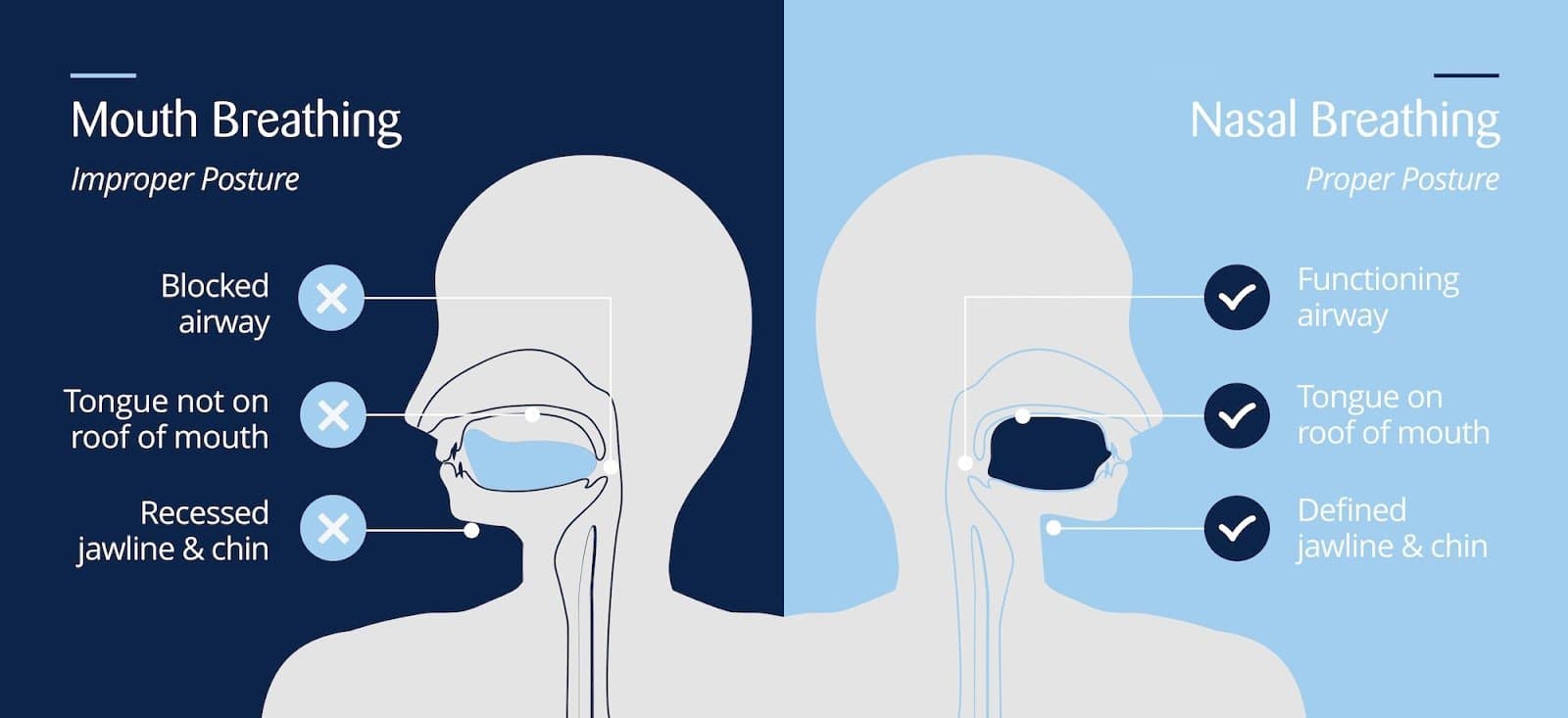
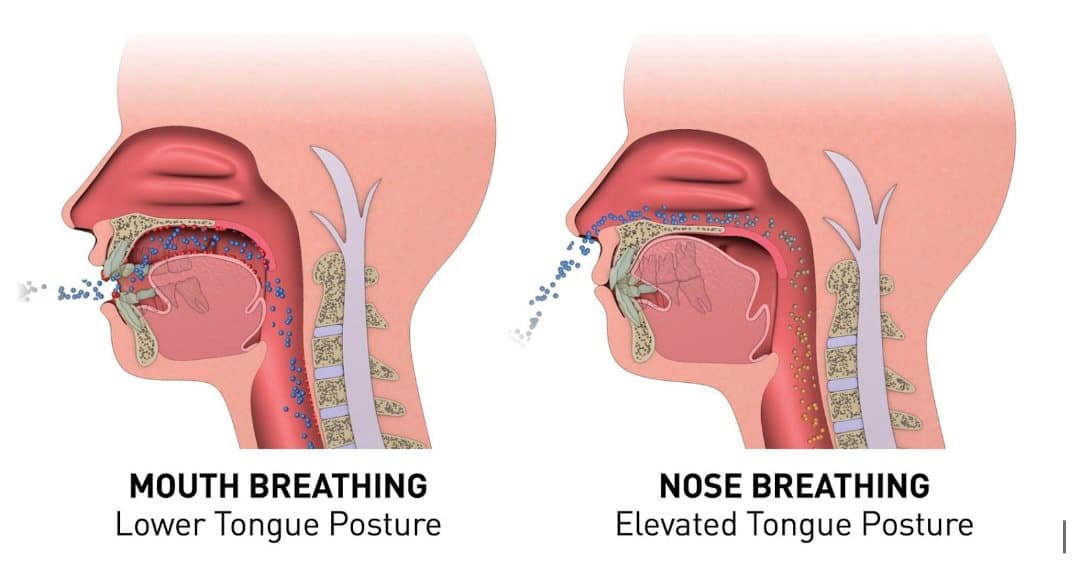
When we breathe through the nose, the tongue rests gently and fully on the palate, the lips are closed, and the teeth lightly touch or are slightly apart. That tongue position acts like a natural support for the upper jaw, helping it stay broad, and keeps the nasal passages open for smooth, quiet airflow.
Nasal breathing also produces nitric oxide in the nasal passages, which helps regulate the airway, opens blood vessels in the lungs to improve oxygen delivery, and has a protective effect against some pathogens. The overall picture is a wide, clear airway, consistent oxygen levels, relaxed posture, and deep, restorative sleep with little snoring.
Signs of healthy nasal breathing
- Airway: wide and clear, with uninterrupted airflow through the nose
- Tongue: resting fully on the palate, supporting upper-jaw width and balanced facial growth
- Posture: lips closed, jaws relaxed, head and neck in natural alignment
- Oxygen: consistent levels, with efficient exchange through the nose
- Nitric oxide: produced in the nasal passages, opening blood vessels in the lungs and improving oxygen delivery
- Sleep: deep and restorative, with minimal snoring or restlessness
Mouth breathing: a narrow airway
When breathing happens through the mouth, the tongue drops down from the palate and sits low and forward, so it no longer supports the upper jaw. Over time this is associated with a narrow upper jaw, a chin that sits further back, less airway space, and less efficient oxygen exchange, which are common contributors to snoring and to sleep-disordered breathing.
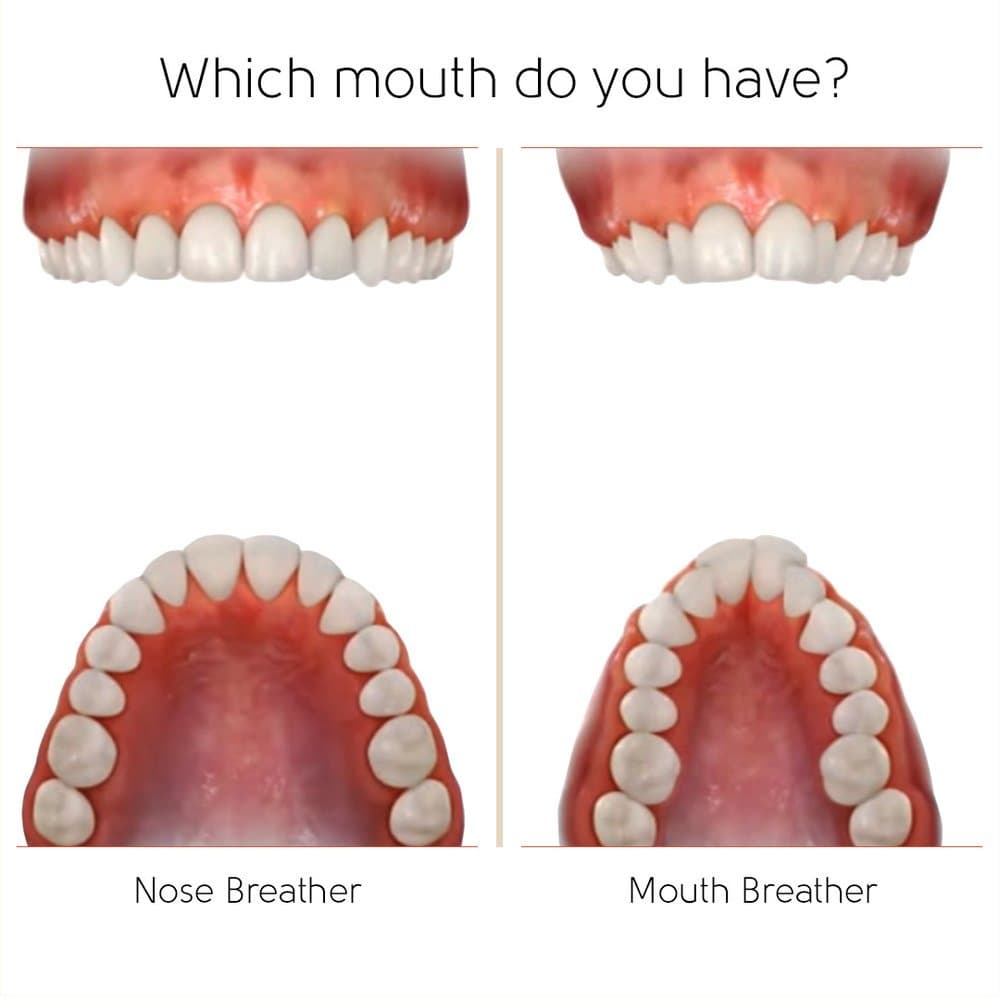
Mouth breathers also tend to have open lips and a forward head posture to make airflow easier, more daytime fatigue and difficulty concentrating, and shallower, more disturbed sleep. The shape of the palate tends to differ too: a broad 'U' shape with healthy nasal breathing, versus a narrower, higher 'V' shape associated with chronic mouth breathing.
Signs that mouth breathing may be a problem
- Habitually breathing through an open mouth, day or night
- Snoring, restless sleep, or waking unrefreshed
- A narrow, high palate or crowded teeth
- Daytime tiredness, poor concentration, or in children, behavioural changes
- A retruded chin or a long, narrow facial pattern
Nasal vs mouth breathing at a glance
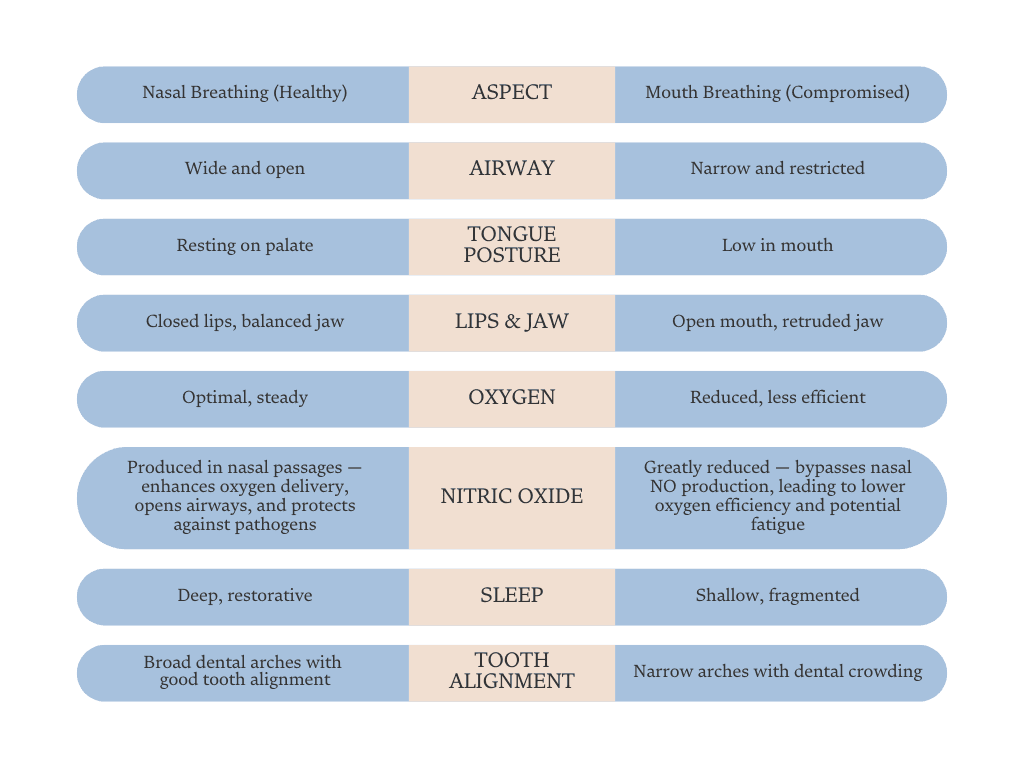
Healthy nasal breathing and mouth breathing differ across the airway, tongue posture, oxygen and nitric oxide, sleep quality and tooth alignment, as the comparison below sets out.
Why tongue position and nasal breathing matter
The tongue works like a natural orthodontic appliance. Its gentle pressure against the palate helps shape and hold a broad, U-shaped dental arch, which supports tooth alignment and a roomy airway. Nasal breathing keeps the tongue in this position and encourages normal muscle tone in the lips, cheeks and jaws.
When posture is poor, with the tongue low and the mouth open, the upper jaw tends to narrow, the lower jaw rotates backwards, and airway space decreases. This is associated with mouth breathing, snoring, sleep-disordered breathing and, over time, less stable tooth alignment.
How mouth breathing affects sleep
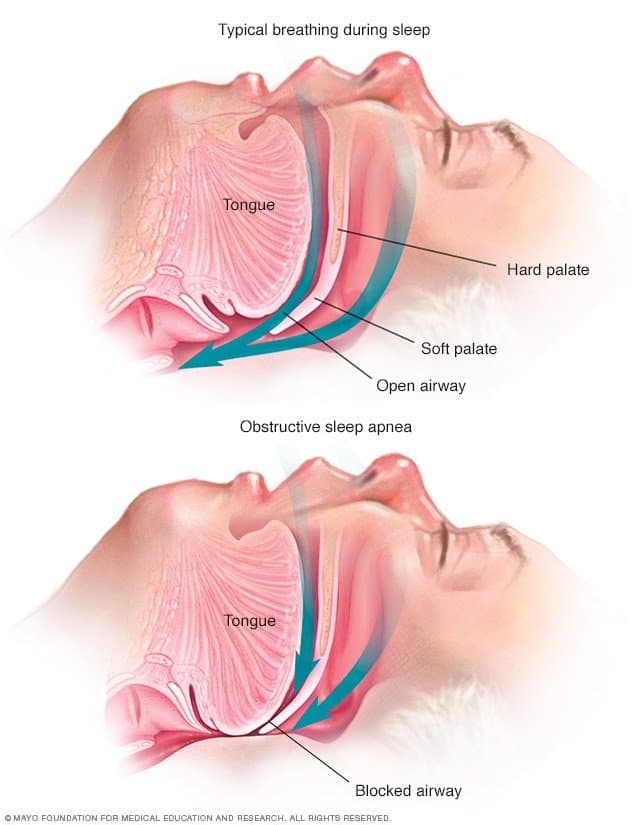
During sleep, mouth breathing dries the airway and makes airflow less stable. The tongue sits low and the jaw can fall back, which narrows the airway and increases both vibration, heard as snoring, and the chance of the airway partly collapsing.
The result tends to be more fragmented sleep, with less deep and REM sleep. Over the day this can show up as fatigue, irritability and poor concentration.
Sleep-related breathing disorders and sleep apnea
Sleep-related breathing disorders (SRBD) cover a range of abnormal breathing during sleep, from mild snoring to obstructive sleep apnea (OSA). In OSA, the upper airway becomes partly or fully blocked during sleep, causing pauses in breathing and drops in blood oxygen.
Recognising the pattern early matters, particularly in children who are still growing. The night-time signs below are worth noting and mentioning at an assessment.
Night-time signs in children and teens
- Loud or frequent snoring
- Pauses in breathing, sometimes followed by a gasp
- Restless sleep or frequent waking
- Moving or kicking during sleep
- Bed-wetting, in some cases

Daytime signs of disturbed sleep
Disturbed sleep does not always look like tiredness. In children it can show up as changes in behaviour or attention during the day, which are easy to put down to other causes.
Daytime signs to watch for
- Waking up tired, or morning headaches
- Falling asleep easily during the day
- Difficulty focusing or paying attention
- Irritability or hyperactivity, sometimes mistaken for ADHD
- Declining performance at school
- Mood, emotional or social changes, including low mood or depression
Dental and jaw signs we look for
A dental examination can pick up structural signs that often accompany sleep-disordered breathing. On their own they do not diagnose sleep apnea, but together they help build a picture and guide whether further assessment is useful.
Dental and jaw signs
- A small or set-back lower jaw
- A narrow, constricted upper arch or high palate
- Crossbites or crowded teeth
- Night-time tooth grinding
- Chronic mouth breathing
- Enlarged tonsils and adenoids
- Low tongue posture, tongue thrust or an unusual swallowing pattern

How airway-focused dentistry can help
A dental examination can identify structural factors that contribute to sleep-disordered breathing, and several measures may help, depending on what is found. Because mouth breathing and a narrow jaw reinforce each other, treatment often aims to break that cycle: where the upper jaw is narrow, gently widening it, in children often with the Invisalign Palatal Expander, creates room for the teeth and the nasal cavity and can make nasal breathing easier.
This is dental and orthodontic care, not a substitute for medical assessment of conditions like obstructive sleep apnea. Where a sleep study or ENT input is needed, we will help arrange the right referral and work alongside the relevant specialists. We place weight on early assessment, from around age 7, while a child is still growing and more options are open.
Ways airway-focused dentistry can help
- Screening for sleep-disordered breathing
- Palatal expanders to widen the upper jaw and support airflow
- Clear aligners, including Invisalign, to guide tooth and jaw alignment
- Myofunctional therapy to retrain tongue position and breathing
- Growth-guiding appliances for young children
- Working with ENT specialists on tonsils or adenoids
Questions & answers
Mouth breathing vs nasal breathing: common questions
Why is mouth breathing considered a problem?
Can mouth breathing be corrected?
How do I get my child assessed?
Book a visit
Ready to take care of your smile?
Tell us what you need and our team will help you book the right appointment, usually within one working day.