
Sleep apnea in children
Sleep apnea in children & teens
Loud snoring, restless nights and daytime tiredness can be more than a phase. Here are the signs of sleep-disordered breathing in children, and where dentistry fits in.
What sleep apnea is
Sleep apnea is a condition where a child's breathing is partially or completely blocked during sleep, often because of an obstruction in the airway. Each blockage interrupts breathing and reduces oxygen intake, so the brain keeps waking the child briefly to restart normal breathing.
Repeated through the night, this breaks up sleep even when a child appears to sleep through. The diagram shows the difference between an open airway during typical sleep and a blocked airway during obstructive sleep apnea, where the tongue and soft tissues fall back and narrow the space air has to pass through.
Signs during sleep
Sleep-disordered breathing in children can be easy to miss, because the night-time signs happen while everyone is asleep and the daytime effects are often put down to other things. If several of the signs below occur together, it is worth having your child assessed.
At night, children with sleep apnea may
- Snore loudly or frequently
- Have brief pauses in breathing, followed by gasping
- Sleep restlessly, with frequent awakenings
- Kick or move a lot during sleep
- Wet the bed, in some cases
- Have night terrors
Daytime symptoms
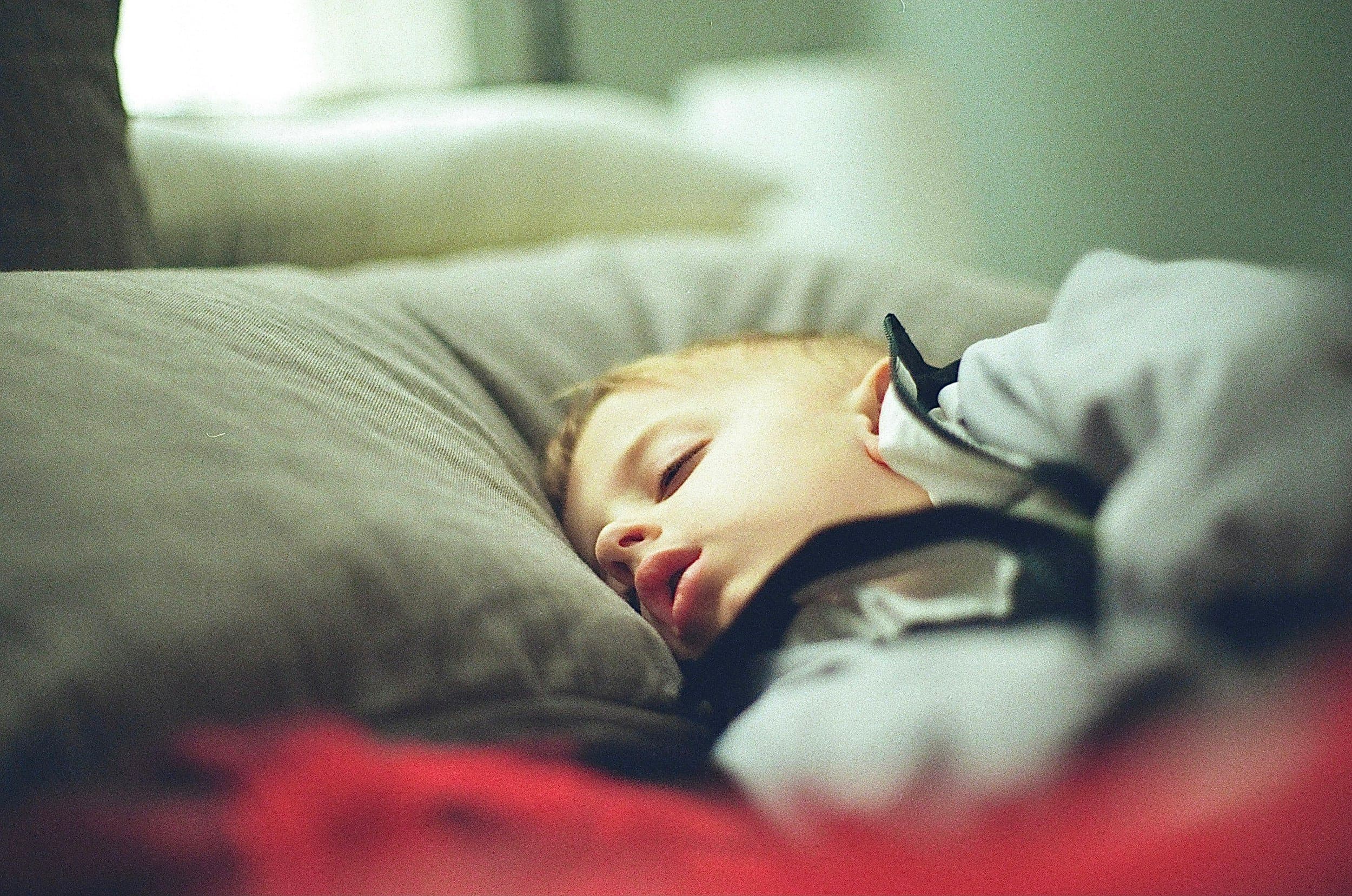
Because the sleep is fragmented, children with sleep-disordered breathing often miss out on restorative rest, and that shows up during the day. Some of these signs, particularly irritability and hyperactivity, are sometimes mistaken for ADHD.
During the day, you might notice your child
- Waking up tired, even after a full night's sleep, or with morning headaches
- Falling asleep easily in class, or general daytime fatigue
- Struggling to focus or pay attention
- Being irritable or hyperactive, sometimes mistaken for ADHD
- Doing worse at school, or finding learning harder
- Showing mood changes or depression, or social or emotional difficulties
The dental risk factors
Several features of the teeth, jaws and soft tissues are linked with a higher risk of sleep-disordered breathing in children. These are the things an airway-focused dental assessment looks for.
Where a narrow upper jaw is part of the picture, widening it, often with the Invisalign Palatal Expander in children, creates more room for the airway and supports nasal breathing. This is a dental and orthodontic contribution, not a diagnosis or treatment of obstructive sleep apnea itself, which is a medical matter. If a sleep study or ENT assessment is needed, we help arrange the right referral and work alongside the relevant specialists. If you recognise the signs, the airway self-screening questionnaire is a good first step.
Features linked to a higher risk
- A small or retruded lower jaw
- A narrow, constricted, V-shaped upper arch
- A high palatal vault, the roof of the mouth
- Crossbites or dental crowding
- Night grinding of the teeth
- Chronic mouth breathing
- Enlarged tonsils and adenoids
- Poor tongue posture
- Anterior tongue thrust and a poor swallowing pattern
How dentistry can help
Dentists and orthodontists can identify structural contributors to sleep-disordered breathing early, and address the parts that sit within dentistry. We emphasise early assessment, from around age 7, and work alongside paediatricians and ENT specialists so that facial growth, breathing and sleep are considered together.
These are contributions to airway health, not a diagnosis or treatment of obstructive sleep apnea itself, which remains a medical matter.
Where dentistry can contribute
- Sleep questionnaires or diaries to screen for sleep-disordered breathing
- Palatal expanders to widen the upper jaw and improve airflow
- Clear aligners, including Invisalign, to guide jaw and tooth alignment
- Myofunctional therapy to retrain tongue position and breathing patterns
- Growth modification appliances for younger children to support airway development
- Working with paediatricians and ENT specialists where tonsils or adenoids need attention
Questions & answers
Sleep apnea in children: common questions
Is my child's snoring something to worry about?
Can a dentist treat my child's sleep apnea?
What is the link between sleep apnea and my child's teeth?
Book a visit
Ready to take care of your smile?
Tell us what you need and our team will help you book the right appointment, usually within one working day.