

Root canal treatment
Root canal treatment
Saving a badly decayed or infected tooth by cleaning, disinfecting and sealing the canals inside it, so you keep your own tooth.
What root canal treatment is
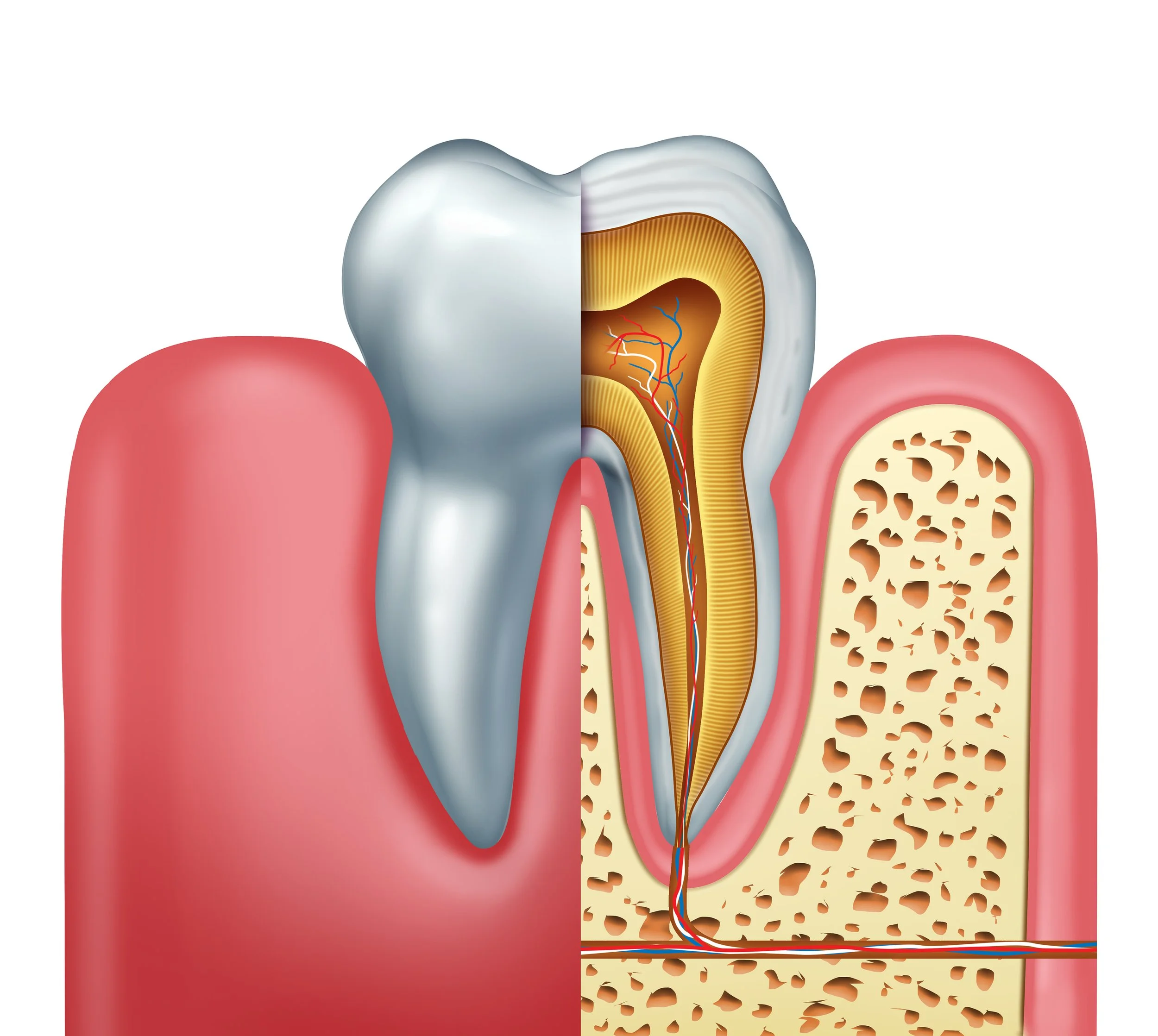
Root canal treatment removes the infected tissue from inside a tooth and its narrow channels, the canals. The canals are then cleaned, disinfected, and sealed off from the rest of the body with an inert material and cement.
Because the canals are very fine, a microscope is used to see them clearly during treatment. Two appointments of about an hour each are usually needed to complete it. The aim is to seal the inside of the tooth off from the surrounding jawbone.
The procedure step by step
Front teeth usually have a single canal. Premolars often have two and most molars have three, so back teeth take longer to treat.
What happens during treatment
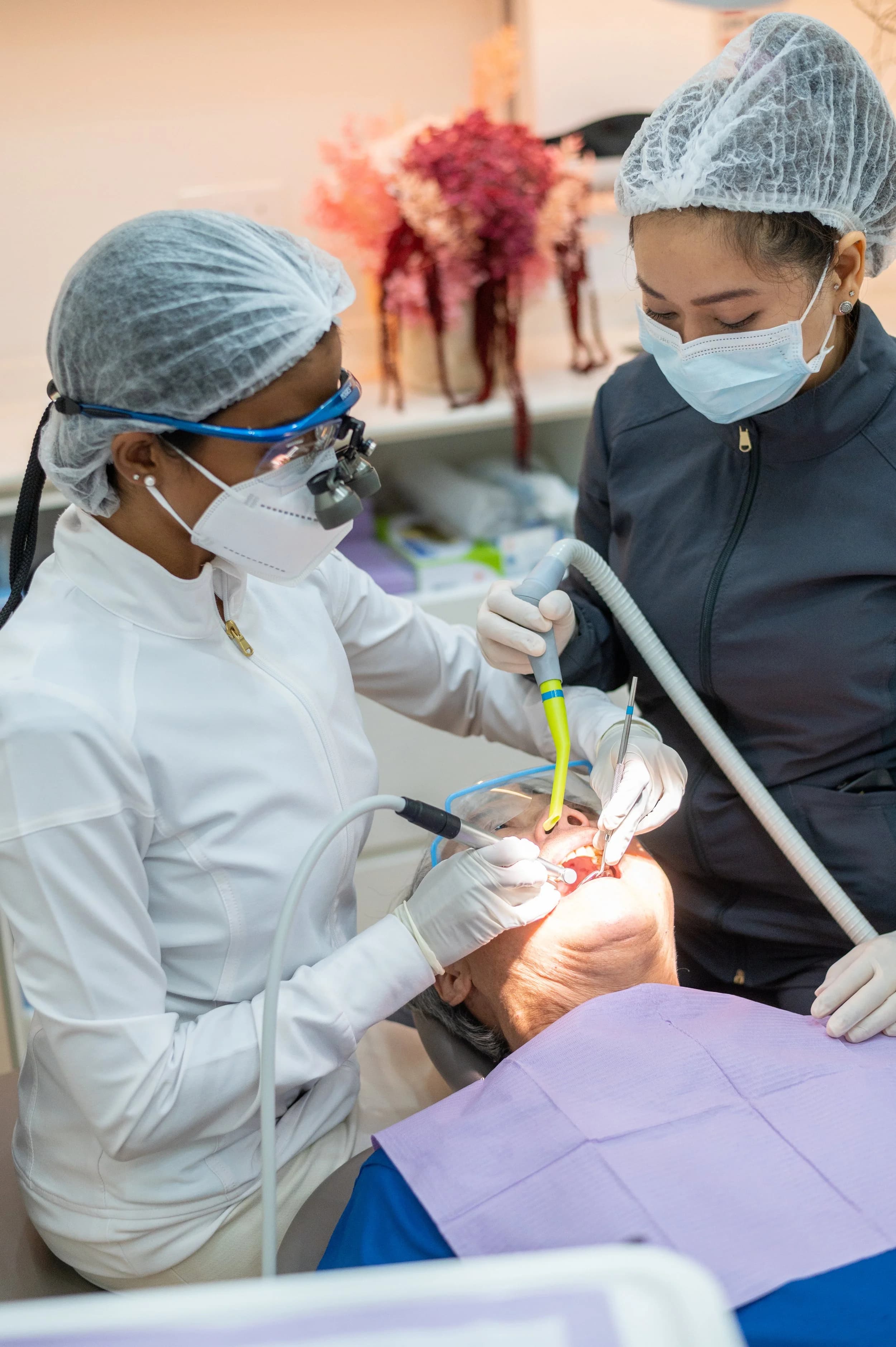
- The tooth is numbed with a local anaesthetic injection.
- A rubber sheet is placed around the tooth to isolate it and keep the area clean and dry.
- The infected pulp is cleaned out of the canals, which are then shaped and disinfected.
- The canals are sealed with an inert material and cement, closing them off from the rest of the body.
After your treatment
It is normal to feel mild discomfort when biting on the tooth for the first two or three days. Over-the-counter pain relief usually handles this, and it settles as the area heals.
A root canal treated tooth has had its internal core removed, so it becomes more brittle and tends to darken over time. A crown is usually recommended to protect it, restore its strength, and keep its appearance even.
When surgery is the better route
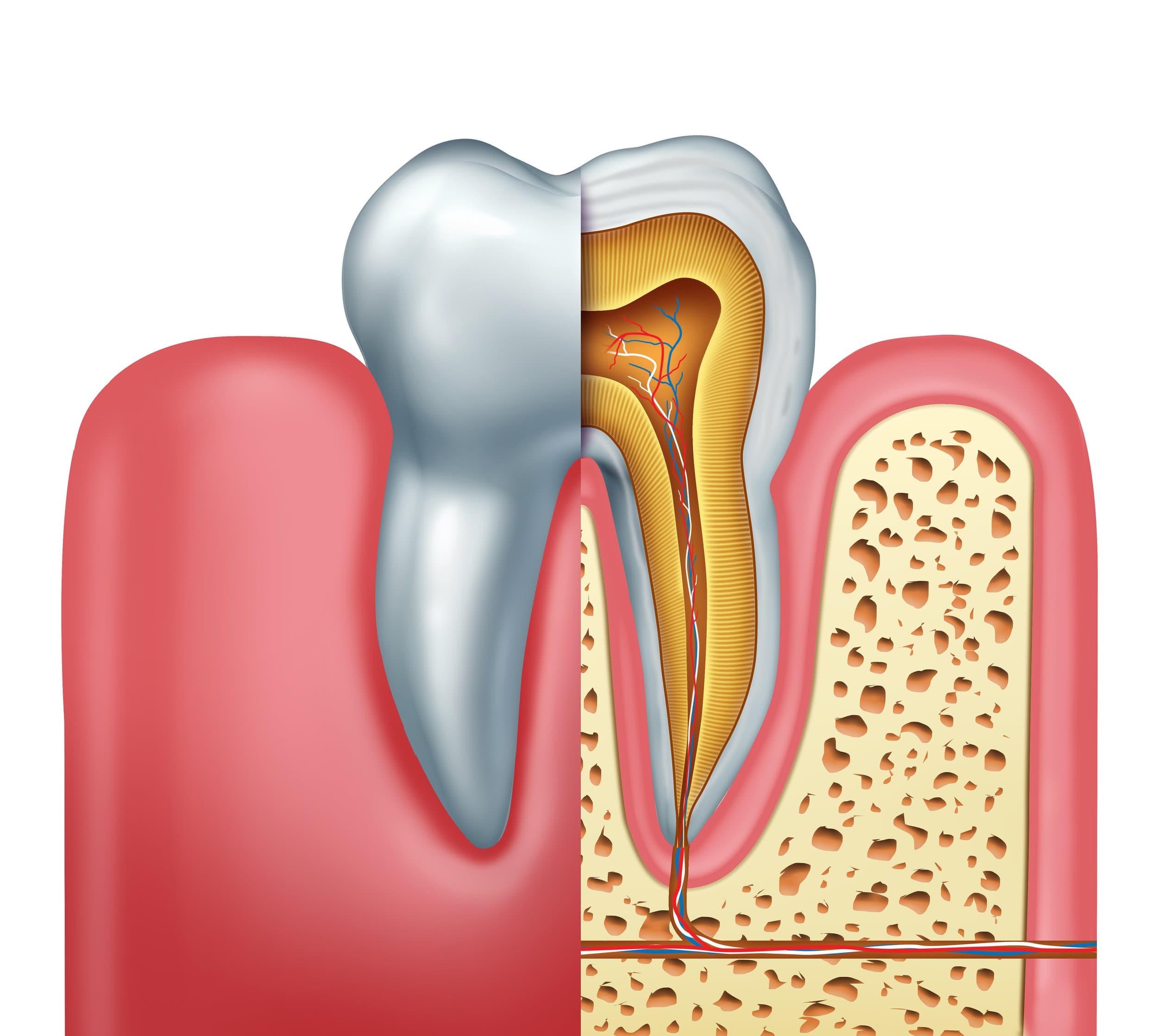
Sometimes the infection sits at the very tip of the root and is hard to reach through the usual approach, particularly when a crown is already in place over the tooth. In that case a small surgical procedure can treat it directly.
A small incision is made, the infected root tip is removed, and the end of the tooth is sealed. The medical term for this is an apicectomy, also called apex resection surgery.
Whether conventional treatment, re-treatment, or surgery suits a tooth depends on its condition. We will explain the options and the realistic outlook before starting, and where a tooth genuinely cannot be saved we will talk through alternatives such as an implant or a bridge.

How well it works
Root canal treatment succeeds in more than 90% of cases overall, which makes it a reliable way to keep your own tooth. The figure is lower in some situations.
A root canal treated tooth has usually been weakened by decay, cracks, or by removing the internal core to save it, so its lifespan can be shorter than a healthy tooth. Protecting it with a crown gives it the best chance of lasting.
When the success rate is lower
- Teeth with extensive infection
- Back teeth, where the canals are narrower and more curved
- Teeth being re-treated after a previous root canal, where success is around 70%
Questions & answers
Root canal treatment: common questions
Is root canal treatment painful?
What is the success rate of root canal treatment?
Do I really need a crown after a root canal?
Explore our other dental services
Book a visit
Ready to take care of your smile?
Tell us what you need and our team will help you book the right appointment, usually within one working day.