
Invisalign Palatal Expander
Invisalign Palatal Expander
A removable expander that gently widens a narrow upper jaw, creating room for the teeth and supporting healthy breathing and facial growth.
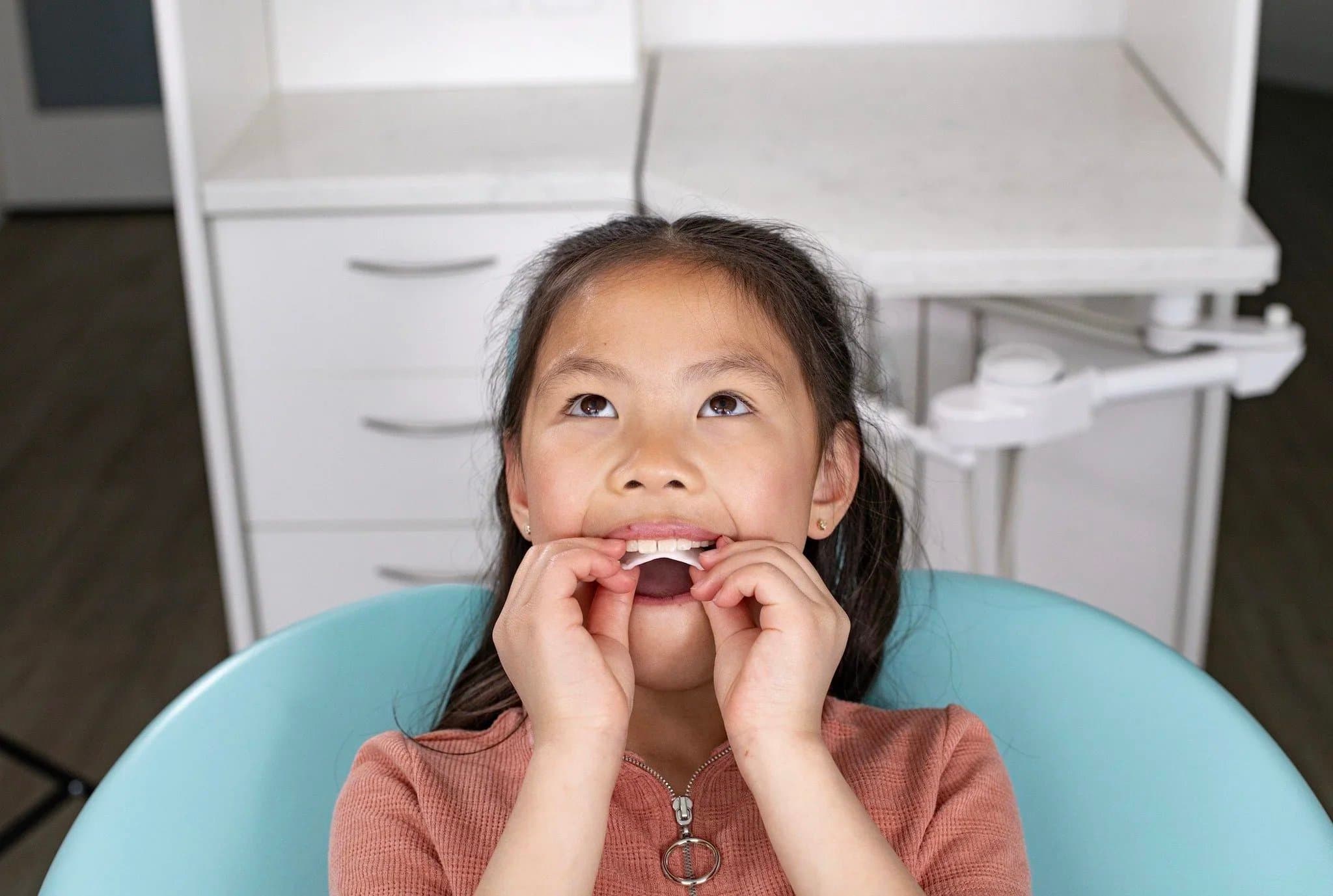
What palatal expansion does
Palatal expansion is an orthodontic treatment that widens the upper jaw to correct issues such as crowding, crossbites and narrow arches. By gently separating the mid-palatal suture, the join down the middle of the upper jaw, the two halves move apart and new bone fills the gap, permanently widening the palate. The result is more room for the teeth, a better bite, and, importantly, a positive effect on the airway and on facial development.
The Invisalign Palatal Expander is a removable version of this treatment. Being removable makes brushing the teeth and cleaning the device much easier than with traditional fixed expanders, and it is worn for a set number of hours a day as instructed, with regular reviews to track progress.
How it affects the airway
A narrow upper jaw is often linked with restricted nasal airflow and a habit of mouth breathing. When the palate is widened, the floor of the nose, which is also the roof of the mouth, widens too, increasing airway volume and improving airflow through the nose. That can mean better oxygen intake, reduced snoring, and fewer sleep disturbances such as sleep-disordered breathing.
Encouraging nasal rather than mouth breathing also supports more balanced craniofacial growth, helping to avoid the long, narrow facial pattern that chronic mouth breathing can contribute to. This is a dental and orthodontic treatment, not a substitute for medical care of conditions like obstructive sleep apnea; where medical assessment is needed, we will refer to or work alongside the right specialists.
Benefits of palatal expansion
- Improved nasal breathing, encouraging nose breathing instead of mouth breathing
- Better sleep quality, with less airway resistance
- More balanced midface and jaw development
- Room for permanent teeth, helping avoid extractions and overcrowding
- A better bite and improved chewing function
- Treating early can reduce the need for surgical correction later
Who it is for
Palatal expansion is most effective during childhood and early adolescence, roughly ages 6 to 12, while the mid-palatal suture is still flexible and has not yet fused. It is typically recommended for patients with a narrow upper arch, a crossbite, or dental crowding, and is often part of an airway-focused orthodontic plan where there are also signs of mouth breathing or disrupted sleep.
Expansion is most effective in childhood while the mid-palatal suture is still flexible. In adults it can still be carried out using MARPE, short for Miniscrew-Assisted Rapid Palatal Expansion, or with surgically assisted techniques, though results are slower.
Whether expansion is right for your child, and when, depends on their growth and bite, so an in-person assessment is the starting point; our airway self-screening questionnaire can help you decide whether to book one. After expansion, retainers or further orthodontic treatment usually follow to hold and refine the result.
Often recommended where there is
- A narrow upper arch
- A crossbite
- Dental crowding
- Chronic mouth breathing or snoring
- Airway restrictions identified by an ENT specialist
How it compares with a traditional expander
A traditional palatal expander is a fixed metal appliance, cemented in place and widened by turning a small screw or key in the clinic. The Invisalign Palatal Expander does the same job with a removable, metal-free appliance that is digitally designed and 3D printed for each child. Instead of key turns, the family moves through a series of expanders, each one slightly wider than the last, and the appliance lifts out so the teeth are easy to keep clean.
A closer look at the appliance
The Invisalign Palatal Expander is a removable, metal-free appliance that the family changes in a series, with no screws to turn at home.
Advantages of the Invisalign expander
The Invisalign Palatal Expander is custom 3D printed for each child from FDA-cleared, biocompatible nylon approved for medical use.
In practice this means
- Metal-free, with no screws or wires, which reduces irritation for young patients
- Removable, so the teeth and the appliance are easy to brush and clean
- A precise fit, digitally designed to each child's anatomy
- No key turns at home: the family moves to the next expander in the series
- A smooth fit that most children adapt to quickly when talking, eating and sleeping
- No metal parts, so it suits children who need regular MRI scans, for example in epilepsy care
How the treatment progresses
Treatment with the Invisalign Palatal Expander runs in four stages, with regular reviews along the way.
Treatment stages
- Expansion phase, about 4 to 8 weeks: a series of expanders is worn daily, each widening the jaw by roughly 0.25 mm.
- Holding phase, around 3 months: retainers known as palatal holders hold the new width while new bone forms and stabilises.
- Invisalign: once the jaw is wider, Invisalign aligners move the teeth into their new positions.
- Retention phase: retainers maintain the result while the adult teeth come through.
A team-based approach
Airway and expansion treatment often involves more than one clinician working together. A dentist assesses the jaw and dental structure, ENT specialists manage issues such as enlarged tonsils, adenoids and nasal obstruction, and sleep physicians assess breathing and sleep. Where a medical sleep assessment is needed, we help arrange the right referral and work alongside the relevant specialists.
Who may be involved
- Dentist: assesses the jaw and dental structure
- ENT specialist: manages tonsils, adenoids and nasal obstruction
- Sleep physician: assesses breathing and sleep-related concerns

Questions & answers
Invisalign Palatal Expander: common questions
Is the Invisalign Palatal Expander uncomfortable for my child?
What age is best for palatal expansion?
Will widening the palate really help with breathing and sleep?
What is the difference between the Invisalign Palatal Expander and a traditional expander?
How long does treatment with the Invisalign Palatal Expander take?
Can adults have palatal expansion?
Explore our other dental services
Book a visit
Ready to take care of your smile?
Tell us what you need and our team will help you book the right appointment, usually within one working day.