

Invisalign
Invisalign clear aligners in Singapore
A clear, removable way to straighten teeth, with treatment options for children, teens and adults.
Invisalign works through a planned sequence of aligners, each one moving your teeth a small amount, until they reach the position your dentist has designed. Because the aligners are removable, you take them out to eat, brush and floss, which makes cleaning easy and means there are no food restrictions.
Not every case is suited to clear aligners, and we will tell you honestly if fixed braces would do a better job for your situation. Where Invisalign is a good fit, it is a discreet, comfortable option that fits around work, school and life.
The Invisalign treatment options
Invisalign treatment is tailored to how much movement your teeth need. The main options differ in how long they take and how many aligners are involved.
Invisalign Full
For complex or severe orthodontic corrections that require significant tooth movement, such as cases where extractions are needed to make room for alignment. Treatment usually takes 18 to 36 months, with around 36 aligners on average.

Invisalign Moderate
For moderate crowding and spacing issues. It is also a common treatment after the first phase of Invisalign treatment for children and teens. Treatment usually takes 12 to 24 months, with around 26 aligners on average.
Invisalign Lite
For mild misalignment that does not need extractions. Treatment usually takes 3 to 12 months, with 10 to 14 aligners on average.
The Invisalign process
What to expect, step by step
- Digital 3D scans and x-rays
- The Invisalign laboratory reviews the scan
- A customised treatment plan by our dentists
- A series of clear aligners is fabricated, usually within 4 to 6 weeks
- Where needed, teeth are slenderized and tooth-coloured buttons are bonded to help the aligners grip
- Aligners are worn for 18 to 22 hours a day
- New aligners are changed every 7 to 14 days
Invisalign options at Align Dental


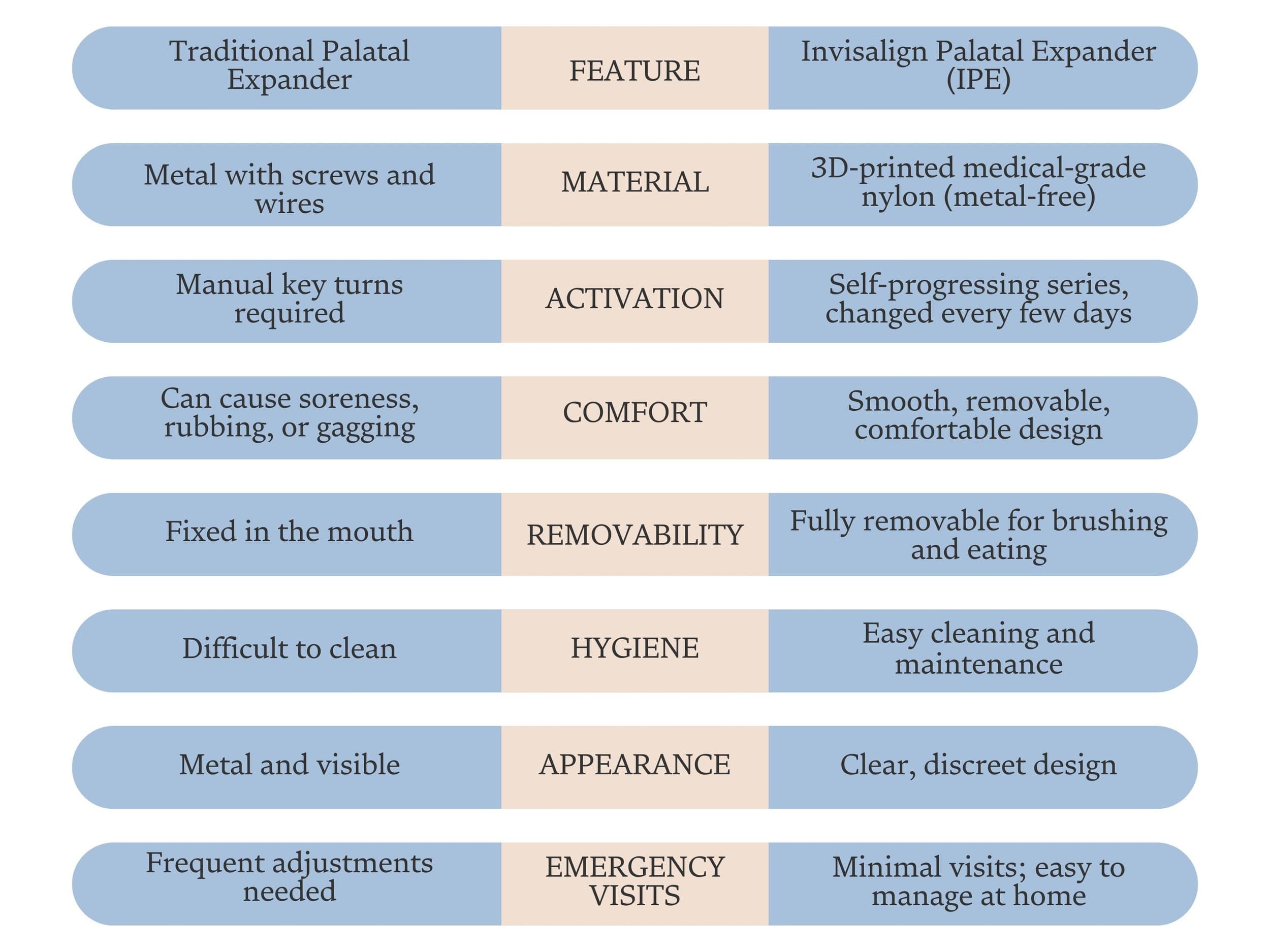

The Align Dental difference
Why patients choose us
Certified Invisalign provider
Our dentists plan and deliver Invisalign treatment in-house, including complex and growth-related cases.
Honest about what suits you
If fixed braces would give a better result for your case, we will say so.
Care beyond the last aligner
Clear retainer guidance and follow-up so your result holds. See our retainer wear and care guide.
Questions & answers
Invisalign: common questions
How long does Invisalign treatment take?
Does Invisalign hurt?
Is my child too young for Invisalign?
Will I need to wear a retainer afterwards?
Explore our other dental services
Book a visit
Ready to take care of your smile?
Tell us what you need and our team will help you book the right appointment, usually within one working day.