Align Health Library
Sleep Apnoea: Signs, Symptoms and Risk Factors
Common signs of obstructive sleep apnoea (OSA) include frequent loud snoring, breathing pauses during sleep, waking with gasping or choking, and persistent daytime sleepiness. Some people notice tiredness, morning headaches or difficulty concentrating instead.
What are the night-time signs of sleep apnoea?
Obstructive sleep apnoea, also spelled "obstructive sleep apnea", happens when the upper airway repeatedly narrows or closes during sleep. You may not remember the breathing interruptions or brief awakenings that follow.
No single symptom proves that you have OSA. A pattern of symptoms helps guide the next step.
Signs worth discussing with a healthcare professional
- Frequent loud snoring, particularly alongside breathing pauses or gasping.
- Breathing that stops and restarts, often noticed by someone sleeping nearby.
- Waking with choking or gasping, or a feeling of needing to catch your breath.
- Repeated awakenings or difficulty staying asleep.
- Frequent night-time urination, which can occur with sleep apnoea but has many other possible causes.
What symptoms might you notice during the day?
The effects of disrupted sleep may become more apparent after you wake up.

Sleepiness or persistent tiredness
You may struggle to stay awake during quiet activities or feel tired despite allowing enough time for sleep. Sleepiness is the tendency to doze off; fatigue is a feeling of low energy or exhaustion. Either is worth discussing when it persists.
Morning headaches or a dry mouth
Some people wake with a headache or dry mouth. These symptoms have several possible explanations, so they should be considered alongside your sleep history.
Changes in concentration and mood
You may find it harder to focus, remember information or stay patient with everyday demands. Irritability and mood changes can accompany poor-quality sleep.
These symptoms are not specific to sleep apnoea. Medical assessment can help explore other causes as well.
What might your partner notice?
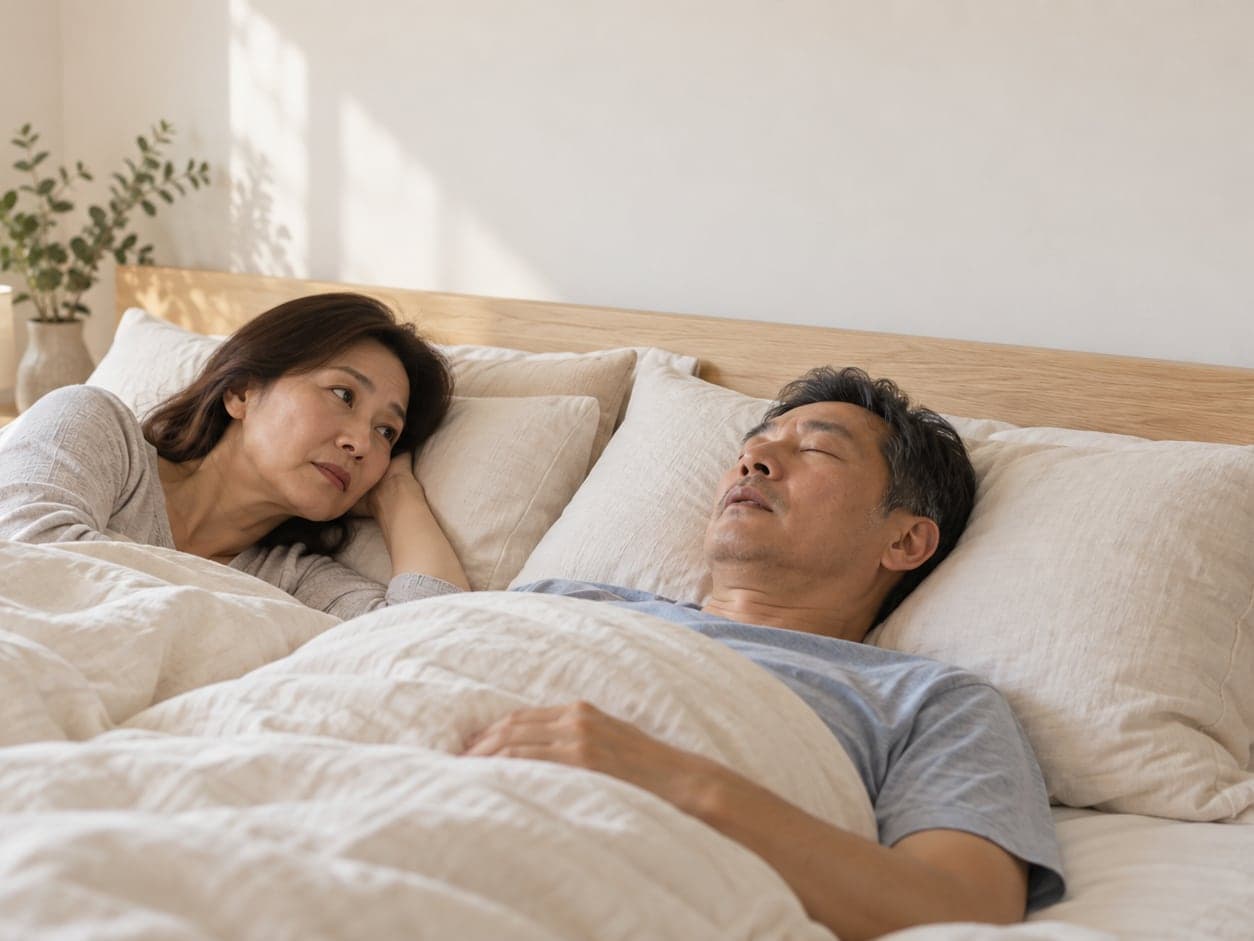
A partner may be the first person to raise a concern about your breathing. They may describe loud snoring interrupted by quiet pauses, followed by a snort or gasp, repeating during the night.
If someone has observed these changes, mention them during your assessment. Explain what they noticed and how often it happens. You do not need a recording before seeking advice.
If you sleep alone, persistent symptoms are still a reason to seek assessment. Not having someone witness your breathing does not rule out a problem.
Does snoring always mean sleep apnoea?
No. Snoring does not always mean that you have sleep apnoea. However, it deserves closer attention when it occurs with witnessed breathing pauses, gasping or daytime sleepiness.
The loudness of snoring cannot reliably tell you whether OSA is present or how severe it is. Some people with OSA do not report prominent snoring.
What increases your risk of obstructive sleep apnoea?
Several factors can make the upper airway more likely to narrow or collapse during sleep. Having a risk factor does not mean that you definitely have the condition.
Age
OSA can occur at different ages, but the risk generally increases as people get older. Younger adults can also be affected.
Weight and neck size
Excess weight can increase the tissue around the upper airway, making it more vulnerable to narrowing during sleep, and a larger neck circumference may indicate increased risk. Sleep apnoea can also occur in people who are not overweight.
Family history
Having a close relative with OSA can increase your risk. Inherited characteristics, including the shape of the face, jaws and upper airway, may contribute.
Jaw, tongue and airway anatomy
A smaller or set-back lower jaw, a larger tongue or enlarged tonsils can reduce the space available for breathing. These features may be relevant during screening, but appearance alone cannot establish whether someone has sleep apnoea.
Sex and hormonal changes
OSA is more common in men, but women can also be affected. Risk increases during and after menopause, and pregnancy can increase the risk or worsen existing sleep apnoea. Women may report fatigue, insomnia or morning headaches rather than loud snoring.
Nasal obstruction, alcohol and smoking
Persistent nasal congestion can contribute to difficulty breathing during sleep. Alcohol relaxes the upper-airway muscles and can worsen obstruction, while smoking is also associated with increased OSA risk.
Discuss your usual habits and any medications with your treating clinician as part of the assessment.
When should you seek assessment for sleep apnoea?
You do not need to have every symptom or fit a particular age or body type before seeking advice.
If you feel sleepy while driving, stop driving and seek prompt medical advice. Do not rely on pushing through the tiredness.
Arrange an assessment if
- Someone has noticed repeated breathing pauses while you sleep.
- You regularly wake gasping or choking.
- Snoring occurs alongside persistent daytime sleepiness.
- You remain unrefreshed despite adequate opportunity to sleep.
- Sleep concerns occur alongside high blood pressure, particularly when it is difficult to control.
Can a dentist diagnose sleep apnoea?
A dentist can screen for possible sleep-related breathing concerns, but a dental examination cannot diagnose sleep apnoea. Medical assessment and appropriate sleep testing are needed to establish the diagnosis.
At Align Dental Surgery, we can discuss your symptoms, medical history and observations from your partner, and assess oral or jaw-related features that may warrant further investigation.
Where appropriate, we refer you to an ENT specialist. ENT specialists and sleep physicians can guide investigation and diagnosis, and a sleep study helps establish whether sleep apnoea is present and how severe it is.

What should you bring to an assessment?
A few notes can help make the consultation more useful. A short sleep diary can help describe the pattern, but there is no need to delay an appointment to collect detailed records.
- What you notice during the night and how you feel during the day.
- How long the symptoms have been present.
- Any breathing pauses or gasping reported by your partner.
- Your usual sleep schedule.
- Your medications, medical conditions and any previous sleep-study results.

Questions & answers
Common questions
Can I have sleep apnoea if I am slim?
Can I have sleep apnoea without feeling very sleepy?
Does waking with a dry mouth mean I have sleep apnoea?
Does a screening questionnaire diagnose sleep apnoea?
Should I see a dentist or an ENT specialist first?
Sources
References & further reading
The research behind this guide, with links to the original papers and health authorities where they are publicly available. Ask us at your next visit if you would like to know more about any of these studies.
- National Heart, Lung, and Blood Institute. Sleep apnea: symptoms.
- National Heart, Lung, and Blood Institute. Sleep apnea: causes and risk factors.
- National Heart, Lung, and Blood Institute. Sleep apnea in women.
- National Heart, Lung, and Blood Institute. How sleep apnea is diagnosed.
- Mayo Clinic. Obstructive sleep apnea: overview.
- SingHealth. Obstructive sleep apnoea (OSA).
Links open in a new tab on the publisher's own website.
Book a visit
Concerned about your sleep or breathing?
If you recognise these signs, speak with our team. We can discuss your concerns, explain the role of dental screening and help you take the next step towards medical assessment.