

Dental fillings
Dental fillings
Repairing cavities, chips and small fractures with a filling that matches your tooth, so a small problem stays small.
Feel the difference with dental fillings
A filling restores a tooth damaged by decay, a chip or a fracture, so you can bite and chew on it normally again. A tooth-coloured filling blends in with the natural tooth, so the repair is hard to spot.
Which filling for which tooth?
Fillings repair cavities, chips and fractures caused by decay, trauma or the heavy forces of grinding. Amalgam, the old grey filling, contains mercury and is rarely used now because of the appearance and concerns over the mercury. Tooth-coloured composite is the everyday choice for small to moderate cavities: the decay is removed, the sides of the cavity are roughened, and a gentle acid is applied to prepare the tooth surface before bonding, after which the composite is hardened with a blue light and shade-matched to your tooth.
For larger cavities, or for people who grind and generate heavy forces, a stronger restoration is better, and sometimes a crown. The right material depends on the size of the cavity, the strength needed and the cost, and your dentist will help you choose.
When you might need a filling
- Tooth decay (a cavity) found at a check-up or causing sensitivity
- A chipped or fractured tooth
- Wear or notching near the gum line, often from grinding
- An old filling that has worn down, leaked or come loose
What are dental fillings?
A filling is the dental material used to fill a cavity left by tooth decay, excessive force or trauma. Tooth-coloured composite has largely replaced the old mercury amalgam fillings for everyday repairs, both for the appearance and to avoid the mercury.

What to expect
The visit is usually quick, and local anaesthesia keeps it comfortable. It is normal to feel some sensitivity to hot and cold for a few days afterwards, which settles on its own, and your dentist will give you any specific aftercare advice.
The filling procedure
- Your dentist removes the decay, or smooths and repairs the broken part of the tooth
- The filling material is placed into the cavity and shaped to match its contours and your bite
- The filling is hardened with a curing light
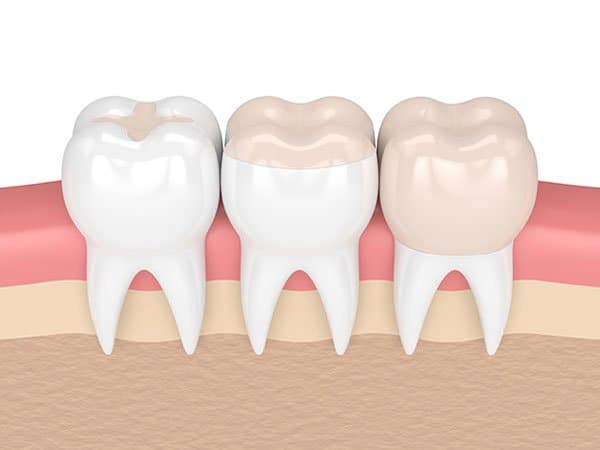
The filling materials we use
Strength, biocompatibility, appearance and cost vary between materials, so the choice depends on the size of the cavity, where the tooth sits and how heavily you bite. These are the materials we use most often.
Common filling materials
- Composite, tooth-coloured: bonded to the tooth and hardened with a blue light, then matched to your tooth shade. It suits small and moderate cavities.
- Glass ionomer: used to seal areas near the gum line that have turned sensitive where grinding has sheared the tooth. It needs only minimal preparation and a conditioner before placement.
- Porcelain inlays and onlays: strong and natural-looking, and often preferred for their strength and cosmetics, though they cost more. The tooth is scanned and the restoration milled with computer-aided technology, often within hours.
- Zirconia: stronger than porcelain and preferred where biting forces are high. It needs an extra day to process and is fixed with a biocompatible cement.
How long fillings last
In most cases fillings last for many years, though how long depends on the material, the size of the filling and where it sits in the mouth. As a rough guide, composite lasts around two to three years, porcelain restorations around seven to ten, and zirconia tends to last longer still.
Fillings can eventually wear down, loosen or leak. We check them at your regular visits and replace them before a small problem becomes a bigger one. Good brushing and flossing, limiting sugary and acidic foods, and wearing a night guard if you grind all help fillings last.

Questions & answers
Dental fillings: common questions
Are tooth-coloured fillings as good as the old metal ones?
Why is my tooth sensitive after a filling?
How long do dental fillings last?
Can a porcelain filling be done in one visit?
Explore our other dental services
Book a visit
Ready to take care of your smile?
Tell us what you need and our team will help you book the right appointment, usually within one working day.