
Wisdom tooth surgery
Wisdom tooth surgery
Assessment and gentle removal of impacted or troublesome wisdom teeth, with comfortable options including sedation and general anaesthesia.
When wisdom teeth cause trouble
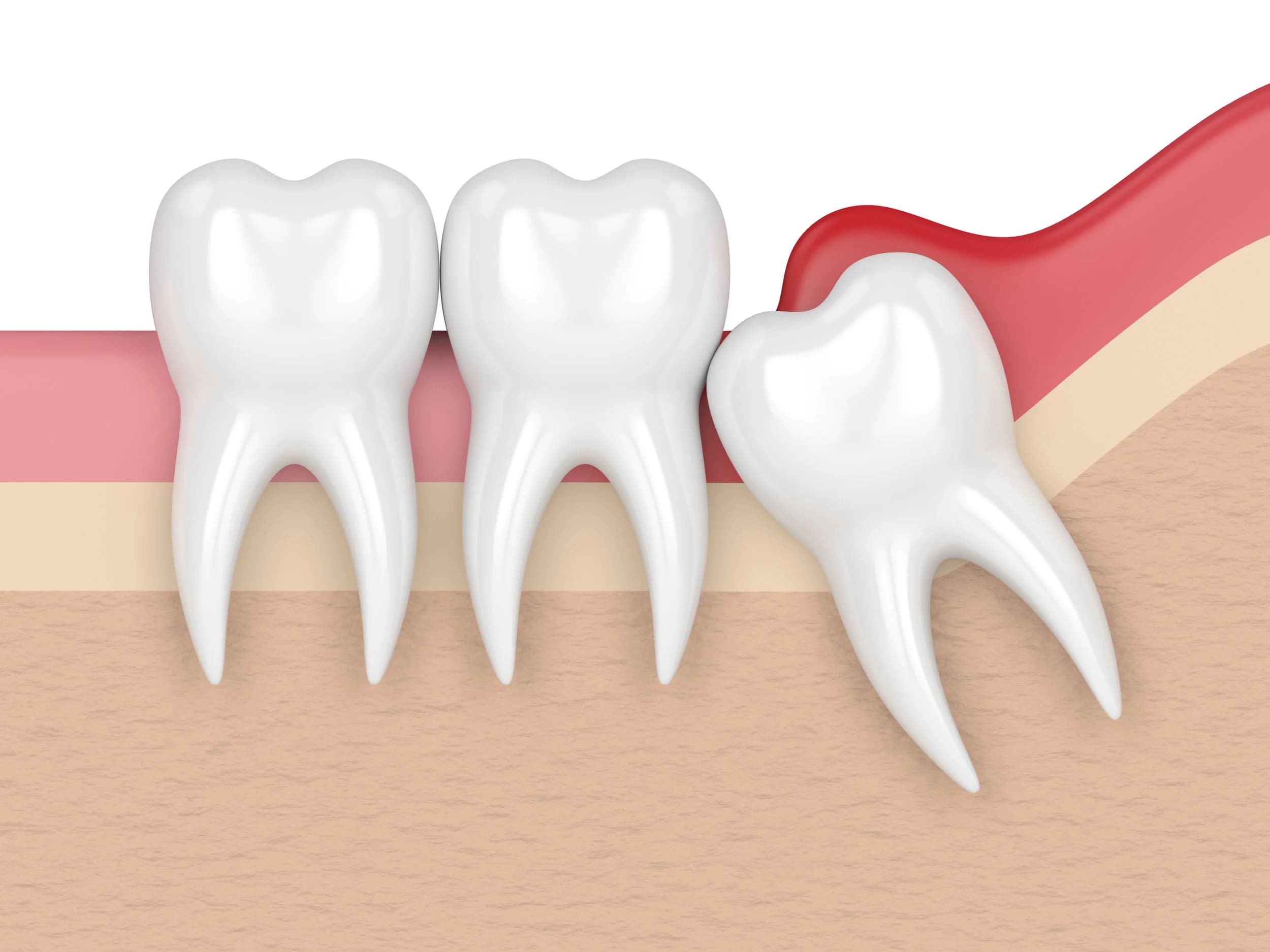
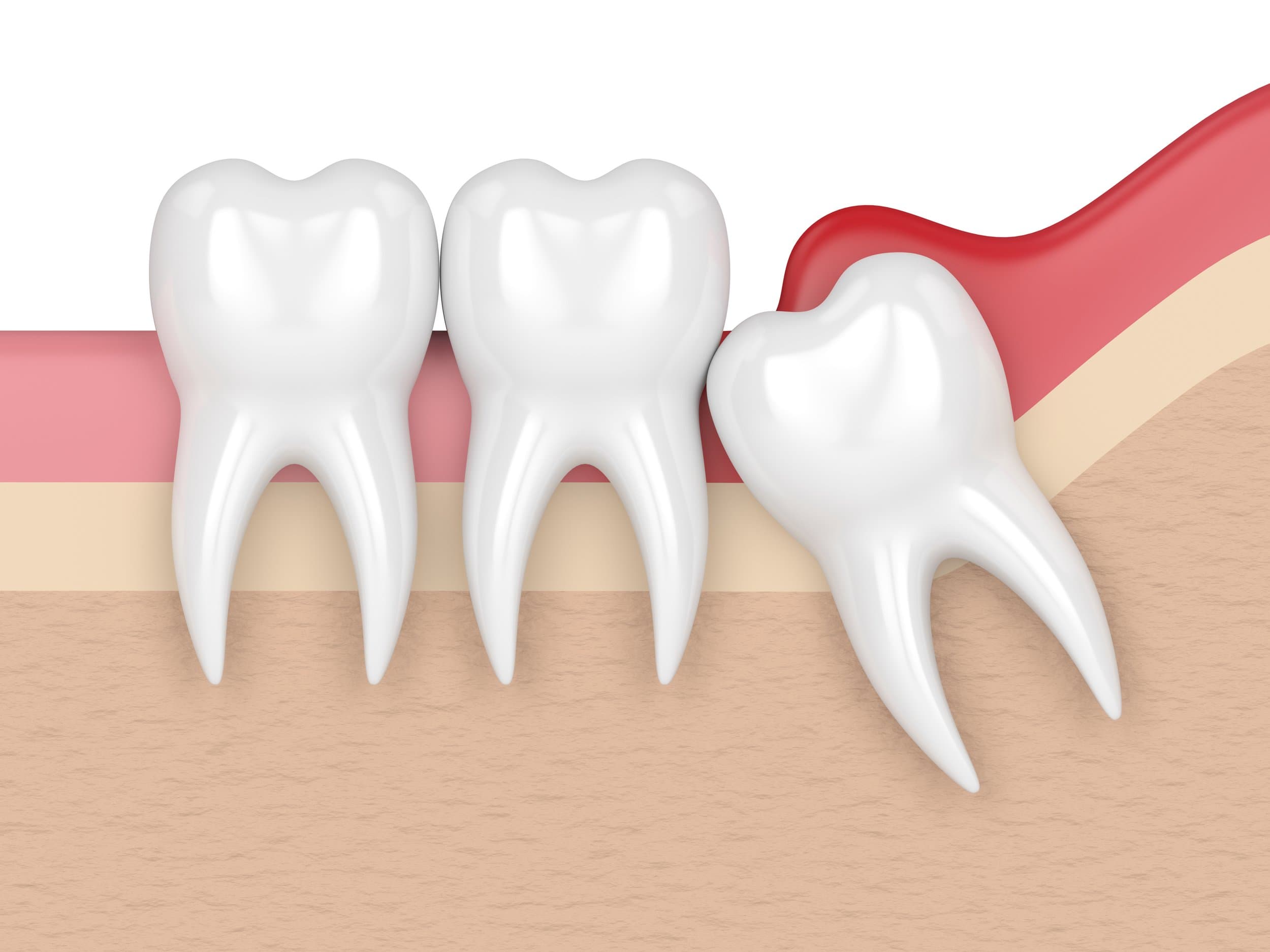
Wisdom teeth usually appear between the ages of 16 and 24. By then many jaws are not large enough to fit them, so they often do not come through fully. Food and bacteria get trapped under the overlying gum, and the wisdom tooth, or the molar in front of it, can become painful, infected or decayed.
When a tooth is impacted like this, surgery is usually needed to remove it from the jawbone. Not every wisdom tooth has to come out: if it sits in a useful position, you can clean it, and it is not causing pain or infection, it can be left in place. A scan and an examination tell us which applies to you.
How the surgery works
The procedure usually takes around an hour and is carried out under local anaesthesia, with sedation or general anaesthesia available if you would prefer not to be aware of it.
Step by step
- The gum covering the buried tooth is gently lifted to expose it.
- Using a dental bur, the tooth is divided into two or three sections so it can be removed without disturbing the surrounding bone.
- The gum is stitched back into position.
Staying comfortable
Even with local anaesthesia the pain pathways are blocked, but you can still feel some pressure and hear the instruments during the procedure. If you would prefer not to be aware of this, the surgery can be done under intravenous sedation in the clinic or under general anaesthesia in an operating theatre.
Comfort options we offer
- Local anaesthesia, a numbing injection, for a standard procedure
- Intravenous sedation in the clinic, supervised by a specialist anaesthetist
- General anaesthesia in an operating theatre, where you are fully asleep

How safe it is
Wisdom tooth surgery is generally a safe procedure. There are no major blood vessels in the area, and the main risk to be aware of is altered sensation in the nerves that supply the lips, cheek, teeth and tongue. This is usually temporary and settles on its own, and lasting numbness is uncommon. Most other effects after surgery are short-lived and reversible.
Where sedation or general anaesthesia is used, it is carried out and supervised by experienced specialist medical anaesthetists with trained nursing support.
Recovery and aftercare
Expect some discomfort and swelling for the first few days, eased with pain relief and an ice pack held against the cheek. Some numbness of the lips, tongue and cheek for a few hours afterwards is normal. Most people are back to their usual routine within a few days.
In the first few days
- Stick to soft foods.
- Avoid straws: the suction can disturb the healing clot and cause bleeding at the surgery site.
- Avoid smoking and alcohol for at least 24 hours.
- Follow the post-operative instructions we give you, and call us if anything worries you.

Questions & answers
Wisdom tooth surgery: common questions
Do all wisdom teeth need to be removed?
How long is the recovery after wisdom tooth surgery?
Can I be asleep for wisdom tooth surgery?
Is wisdom tooth surgery safe?
Explore our other dental services
Book a visit
Ready to take care of your smile?
Tell us what you need and our team will help you book the right appointment, usually within one working day.