
Dental glossary
Composite resin
A tooth-coloured material made of plastic and fine glass particles, commonly used for fillings and some cosmetic repairs.
This page is general information, not a diagnosis or treatment recommendation. For advice about your own teeth, or your child's, please speak to a dentist.
What composite resin is
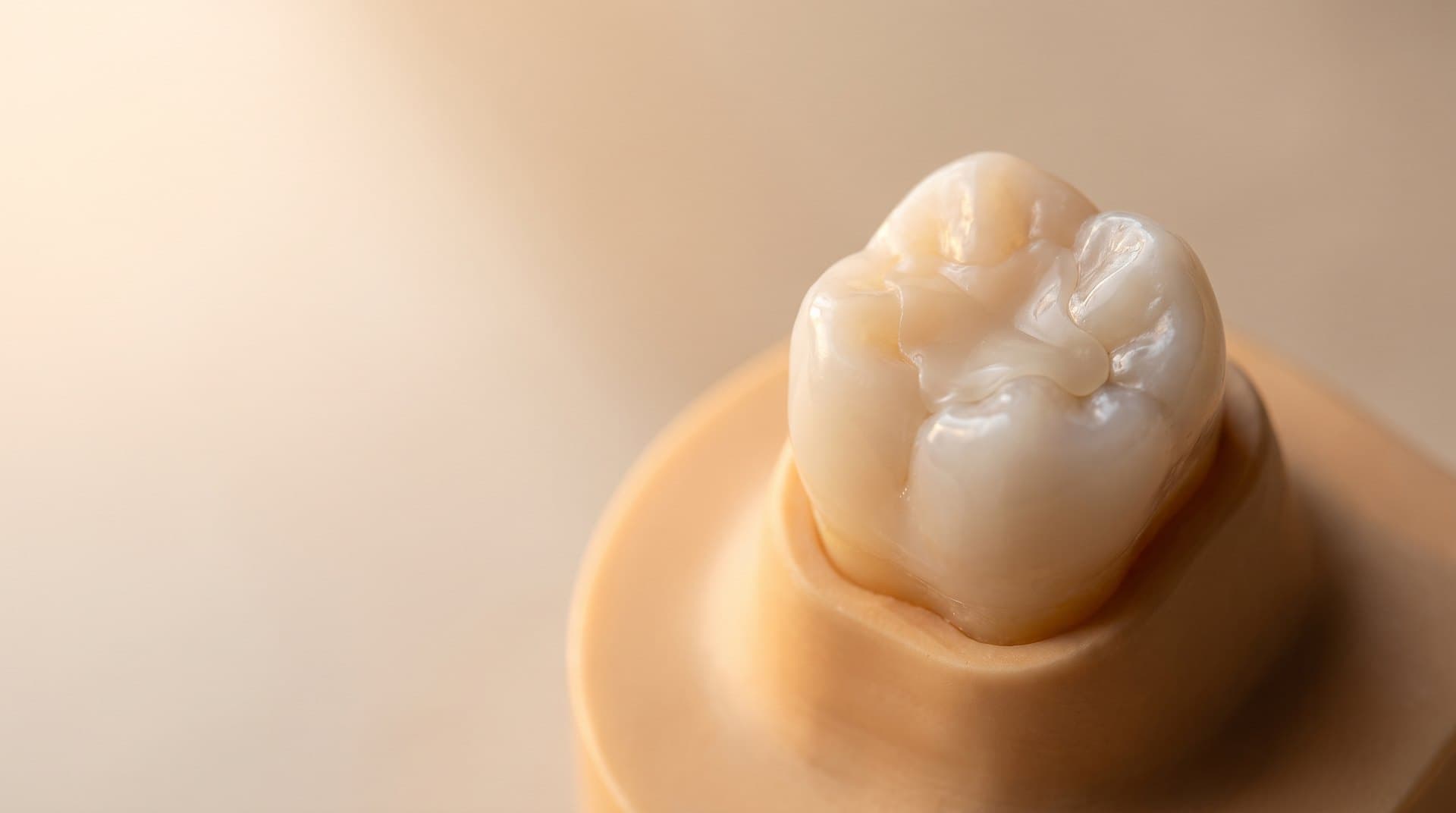
Composite resin is a tooth-coloured dental material made from a plastic base mixed with fine glass or ceramic particles. It is widely used to fill teeth after decay has been removed and for some small cosmetic repairs. Because it can be matched to the shade of the surrounding tooth, a finished composite restoration tends to blend in rather than stand out.
The material is soft when first placed, which lets the dentist shape it directly in the tooth, and is then set firm with a special curing light. This ability to be sculpted in place is part of why it is so versatile.
Where it is used
Composite is commonly used for fillings, for repairing small chips or worn edges, and for closing minor gaps in some cases. It bonds to the tooth, which can allow a conservative repair that keeps more of the natural tooth than some older approaches.
It is one of several materials a dentist might use. Others, such as ceramics or metal-based options, have their own strengths, and the choice depends on the size and position of the repair and the demands placed on that tooth.
Common uses
- Tooth-coloured fillings after decay is removed
- Repairing small chips or worn edges
- Reshaping or closing minor gaps in some cases
Things to know
Like natural teeth, composite can pick up staining over time depending on diet and habits, and any restoration can eventually need attention. How long a particular filling lasts varies with its size, where it is in the mouth and how the tooth is used, so a dentist is best placed to advise on what to expect in your case.
Looking after composite restorations is the same as looking after your own teeth: regular brushing, cleaning between the teeth, and routine check-ups so any wear can be spotted early.
How it compares with other materials
Composite is one of several materials used to repair teeth, and each has its place. Its main advantages are that it matches the colour of the tooth and bonds to it, which can allow a conservative repair. Other materials, such as ceramics or metal-based options, may be chosen where extra strength is the priority, for example on a large repair in a back tooth that takes heavy chewing forces.
There is no single material that is right for every situation, and the choice is a clinical judgement rather than a fixed rule. A dentist weighs the size and position of the repair, the demands on that tooth and what you are hoping for, and explains the options that apply to your case.
What guides the choice
- How large the repair is and where it sits in the mouth
- How much chewing force that tooth takes
- Whether appearance is a priority for that tooth
What affects how long it lasts
How long a composite restoration lasts varies with its size, its position, the bite and habits such as grinding, so it is not something that can be put as a single number. Any restoration can eventually wear, chip or need refreshing, which is part of normal dental care rather than a sign that something has gone wrong.
Routine check-ups let a dentist keep an eye on composite restorations and catch any wear early, while good daily cleaning helps them stay healthy. If a filling ever feels rough, sharp or different when you bite, it is worth having it looked at.
Questions & answers
Composite resin: common questions
Is a composite filling as good as a metal one?
Do composite fillings stain?
Related glossary terms
On treatment at Align Dental, see: Dental fillings.
Book a visit
Ready to take care of your smile?
Tell us what you need and our team will help you book the right appointment, usually within one working day.