Dental glossary
Dental caries
The clinical name for tooth decay: damage to the tooth caused by acids that form when bacteria in plaque break down sugars. Early decay often causes no symptoms.
This page is general information, not a diagnosis or treatment recommendation. For advice about your own teeth, or your child's, please speak to a dentist.
What dental caries is
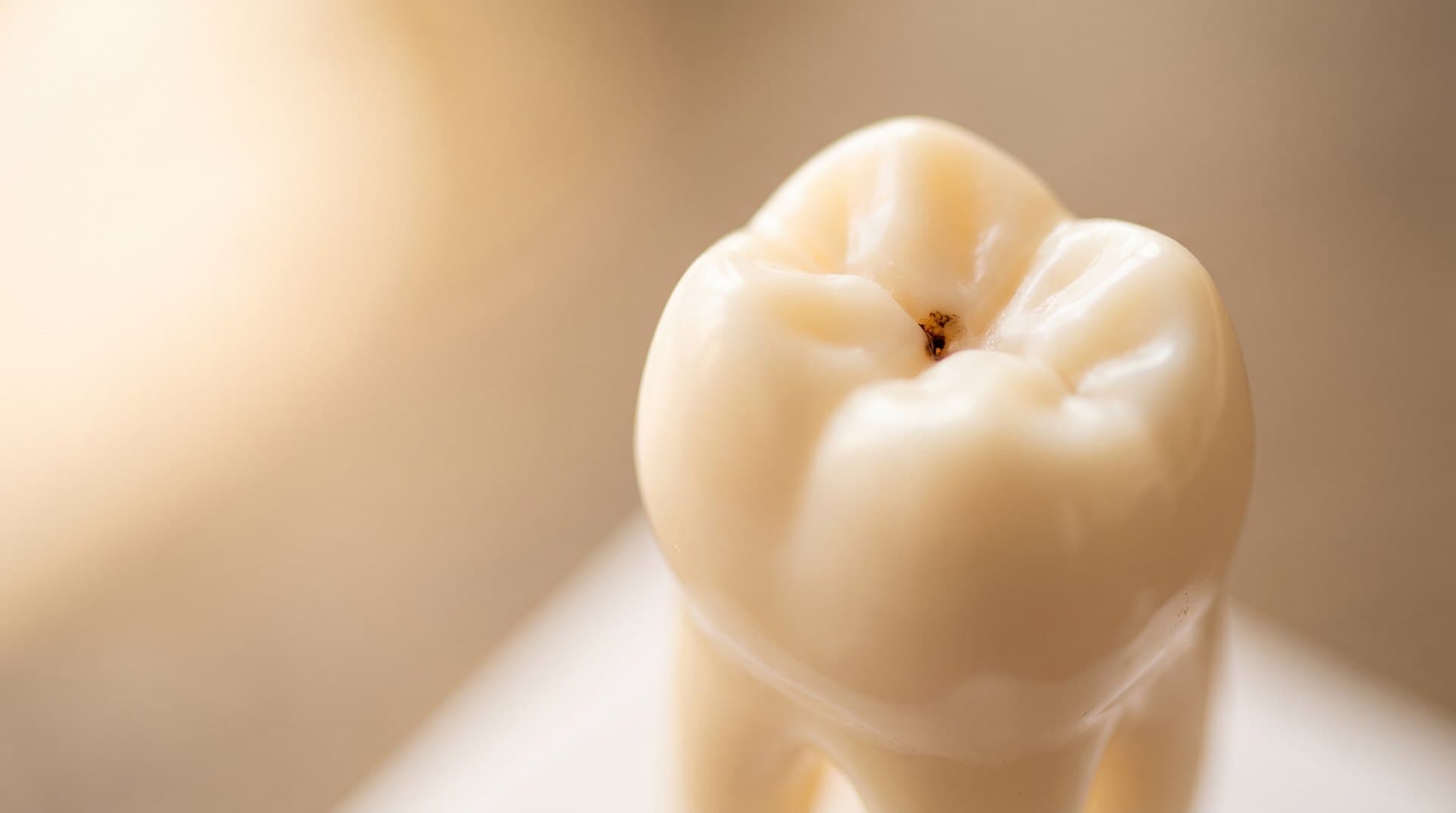
Dental caries is the technical term for tooth decay. It describes the gradual breakdown of a tooth's hard surfaces by acids. Those acids are produced when bacteria that naturally live in the mouth feed on sugars and starches from food and drink, forming a sticky film called plaque. Over time, repeated acid attacks can dissolve minerals from the enamel, the tooth's outer layer, and create a cavity.
Caries is one of the most common dental conditions and can affect children and adults alike. It tends to develop slowly, and in its early stages it is often painless, which is part of why regular dental check-ups are useful for catching it before it becomes a larger problem.
How it develops
Decay usually begins on the enamel as a small area where minerals have been lost. If the process continues, it can work through the enamel into the softer dentine beneath, and eventually reach the pulp at the centre of the tooth, where the nerves and blood vessels are. The deeper it goes, the more likely it is to cause symptoms and the more involved the treatment tends to be.
Several things influence how easily caries forms: how often sugary or acidic food and drink are consumed, how well plaque is removed by brushing and cleaning between the teeth, the flow and quality of saliva, and how much fluoride the teeth are exposed to. Because frequency matters as much as quantity, frequent snacking and sipping sweet drinks through the day can play a bigger part than people expect.
Common contributors to decay
- Frequent sugary or acidic food and drink
- Plaque left on the teeth and along the gum line
- Reduced saliva flow, for example a persistently dry mouth
- Deep grooves or crowded teeth that are harder to clean
Signs and symptoms
Early caries may cause no symptoms at all and can be hard to see, which is why dentists look for it with examination and, where appropriate, x-rays. As decay progresses, possible signs include sensitivity to sweet, hot or cold, a visible hole or dark spot on a tooth, food catching in a particular area, or ache and discomfort. Pain that lingers, or that wakes you at night, can be a sign that decay has reached the inner part of the tooth.
How it's managed and treated
What a dentist suggests depends on how far the decay has gone. Very early decay, where minerals have started to be lost but no cavity has formed, can sometimes be slowed or remineralised with measures such as fluoride and improved cleaning. Once a cavity has formed, the decayed part is usually removed and the tooth restored, commonly with a filling. More extensive decay may need a larger restoration, and decay that reaches the pulp may require root canal treatment to keep the tooth.
Only a dentist can decide which approach is appropriate after examining the tooth, so the points here are general rather than a recommendation for any individual tooth.
Preventing decay
The day-to-day basics make the biggest difference: brushing twice a day with a fluoride toothpaste, cleaning between the teeth, and being mindful of how often sugary and acidic items are consumed rather than only how much. Routine check-ups let a dentist spot early changes and advise on measures such as professional fluoride application or sealants where they are appropriate.
Questions & answers
Dental caries: common questions
Is dental caries the same as a cavity?
Can early tooth decay be reversed?
Does tooth decay always hurt?
Related glossary terms
On treatment at Align Dental, see: Dental fillings, Root canal treatment, Fluoride treatment.
Book a visit
Ready to take care of your smile?
Tell us what you need and our team will help you book the right appointment, usually within one working day.