
Dental glossary
Endodontics
The area of dentistry that deals with the soft tissue (pulp) inside the tooth and the tissues around the root. Its most widely recognised treatment is root canal treatment.
This page is general information, not a diagnosis or treatment recommendation. For advice about your own teeth, or your child's, please speak to a dentist.
What endodontics is
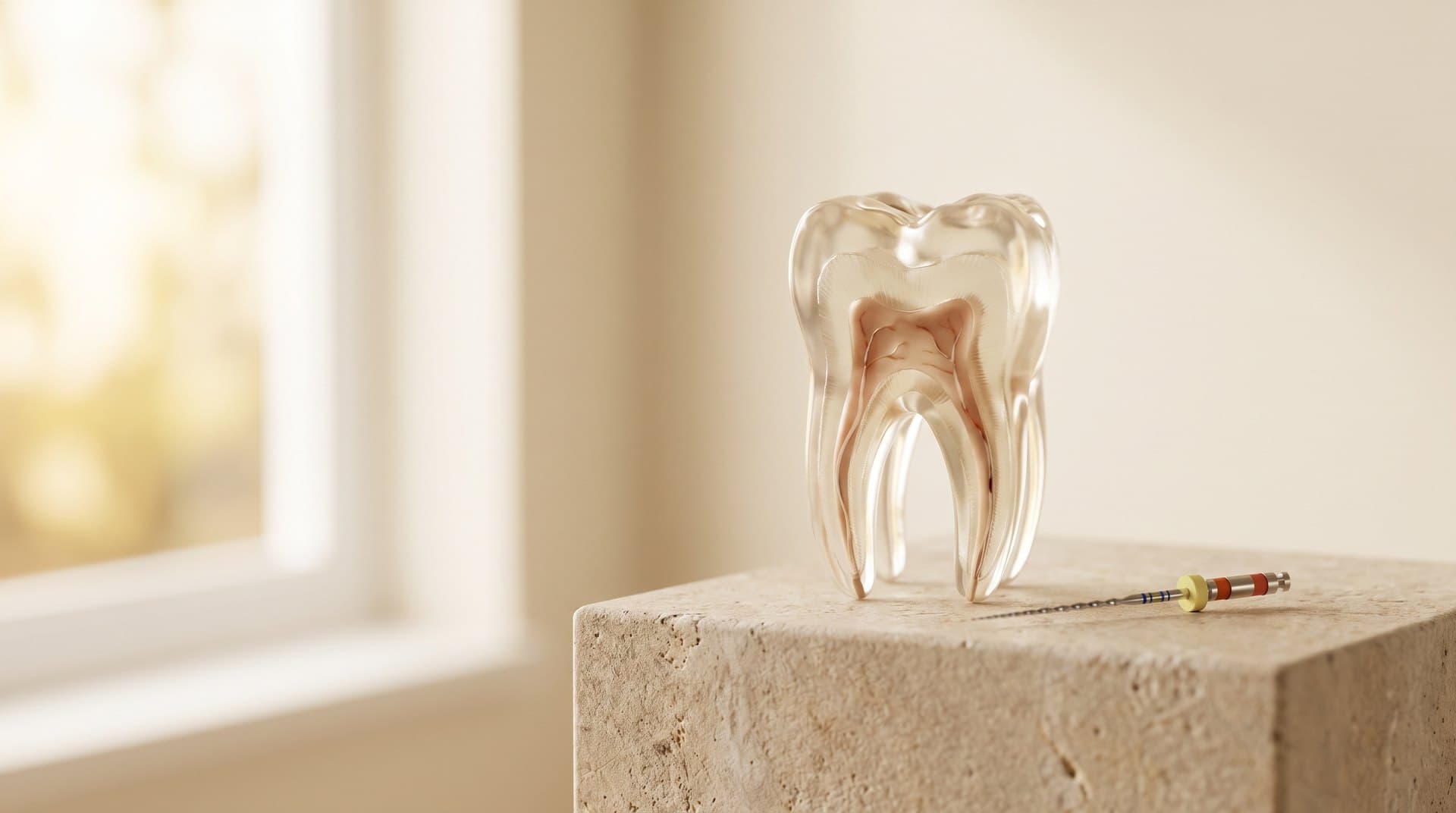
Endodontics is the branch of dentistry concerned with the inside of the tooth, specifically the dental pulp and the tissues immediately around the root. The pulp is the soft core of the tooth, containing nerves and blood vessels, that sits beneath the hard enamel and dentine. When the pulp becomes inflamed or infected, endodontic treatment aims to relieve the problem while keeping the natural tooth in place wherever possible.
The word comes from Greek roots meaning 'inside the tooth'. The most familiar endodontic procedure is root canal treatment, but the field also covers the diagnosis of tooth pain coming from the pulp and the management of injured or abscessed teeth.
Why root canal treatment is done
The pulp can become inflamed or infected for several reasons: deep decay that reaches the centre of the tooth, a crack or fracture, repeated dental work on the same tooth, or trauma. Once the pulp is significantly damaged it does not usually recover on its own, and the result can be persistent pain, sensitivity, swelling or an abscess.
Root canal treatment is one way to deal with this. The aim is to remove the damaged pulp, clean and shape the space inside the root, and seal it, so the tooth can stay in function rather than being removed. Keeping a natural tooth, where it is sensible to do so, helps maintain the bite and the neighbouring teeth.
What root canal treatment aims to do
- Remove inflamed or infected pulp from inside the tooth
- Clean and shape the root canals
- Seal the space to reduce the chance of further infection
- Allow the natural tooth to be kept and restored
What's involved
Root canal treatment is generally carried out under local anaesthetic so the tooth and surrounding area are numb. The dentist makes an opening in the top of the tooth, removes the affected pulp, then cleans and shapes the fine canals inside the roots. The space is filled and sealed, and the tooth is restored on top, often with a filling and sometimes a crown to protect it, depending on how much tooth structure remains.
Treatment may be completed in one or more visits. Magnification and fine instruments are used to work precisely within the narrow canals. The specifics vary from tooth to tooth, since front teeth and back teeth differ in the number and shape of their roots.
After treatment
It is normal for a treated tooth to feel a little tender for a few days, particularly when biting, and this usually settles. The dentist will advise on looking after the tooth while any final restoration is completed, and on what to expect. As with any treatment, outcomes vary between individuals, and a dentist can explain what is realistic for a specific tooth.
A tooth that has had root canal treatment still needs ordinary care, regular brushing, cleaning between the teeth and routine check-ups, so that decay or gum problems do not affect it in future.
Questions & answers
Endodontics: common questions
Is endodontics the same as a root canal?
Who carries out endodontic treatment?
Why try to save a tooth rather than remove it?
Related glossary terms
On treatment at Align Dental, see: Root canal treatment, Dental fillings.
Book a visit
Ready to take care of your smile?
Tell us what you need and our team will help you book the right appointment, usually within one working day.