
Dental glossary
Fissure sealant
A thin protective coating applied to the grooved chewing surfaces of back teeth to help prevent decay by sealing out food and plaque.
This page is general information, not a diagnosis or treatment recommendation. For advice about your own teeth, or your child's, please speak to a dentist.
What a fissure sealant is
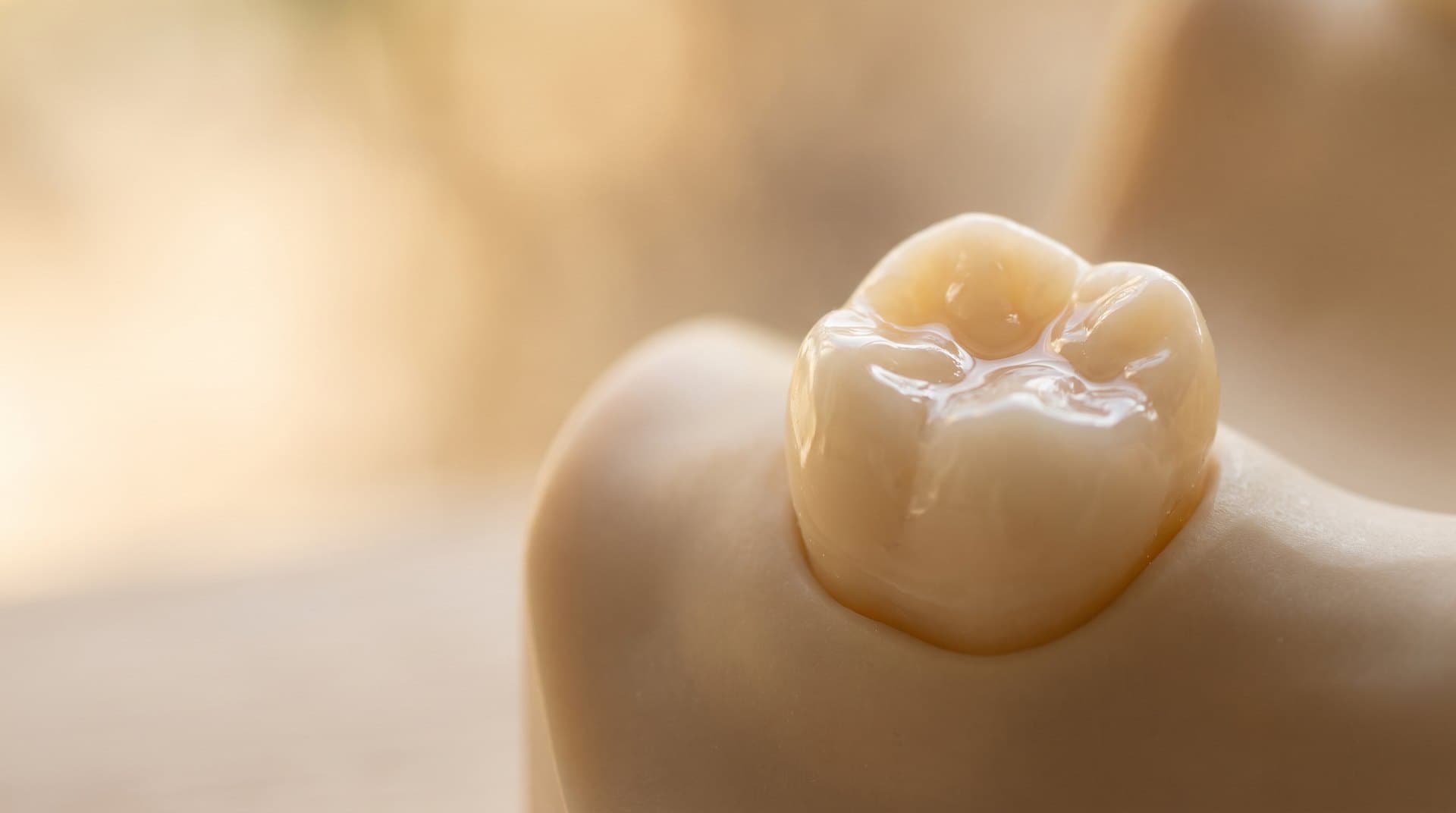
A fissure sealant is a thin, protective coating painted onto the chewing surfaces of the back teeth. These surfaces have natural grooves and pits, the fissures, that can be narrow and deep, making them difficult to clean thoroughly with a toothbrush. A sealant flows into those grooves and sets to form a smooth surface that is easier to keep clean.
By sealing out food and plaque, the coating helps reduce the chance of decay starting in those hard-to-reach grooves. It is a preventive measure rather than a treatment for existing decay.
Who it is for
Sealants are often used on children's and teenagers' back teeth, particularly the adult molars soon after they come through, since that is when those grooves are most vulnerable. They are sometimes appropriate for adults too, depending on the shape of the teeth and the risk of decay. A dentist advises whether they would help in a given case.
Sealants work alongside good daily habits rather than replacing them. Brushing, cleaning between the teeth and a sensible approach to sugary food and drink all remain important.
What's involved and how long they last
Applying a sealant is usually quick and straightforward and involves no drilling. The tooth is cleaned and prepared, the coating is painted onto the grooves, and it is set in place. Because nothing is removed from the tooth, it is generally a comfortable procedure.
Sealants can wear over time and may need topping up, so they are checked at routine visits and reapplied if needed. A dentist can keep an eye on them as part of regular check-ups.
How sealants fit alongside other prevention
Sealants are one part of a wider approach to preventing decay, rather than a measure that works on its own. They protect the grooved chewing surfaces, while fluoride helps strengthen the enamel across the whole tooth and good daily cleaning removes plaque from the surfaces a sealant does not cover.
Used together, these measures cover different weaknesses, which is why a dentist looks at the whole picture, the teeth, the diet and the cleaning routine, when deciding what would help a particular child or adult.
Prevention works in layers
- Sealants protect the grooves of the back teeth
- Fluoride helps strengthen the enamel
- Daily brushing and cleaning between the teeth remove plaque
What sealants do not do
It is worth being clear about what a sealant is for. It is a preventive coating, not a filling, so it is used on healthy grooved surfaces to help keep decay from starting, rather than to treat decay that has already formed. Where a tooth already has a cavity, a different approach is needed.
A sealant also covers only part of the tooth, so it does not remove the need for brushing, cleaning between the teeth and a sensible approach to sugary food and drink. A dentist can advise on whether a tooth is suitable for sealing.
Questions & answers
Fissure sealant: common questions
Who should have fissure sealants?
Do fissure sealants involve drilling?
Do sealants replace brushing?
Related glossary terms
On treatment at Align Dental, see: Fluoride treatment, Children's dentistry.
Book a visit
Ready to take care of your smile?
Tell us what you need and our team will help you book the right appointment, usually within one working day.