
Dental glossary
Abutment
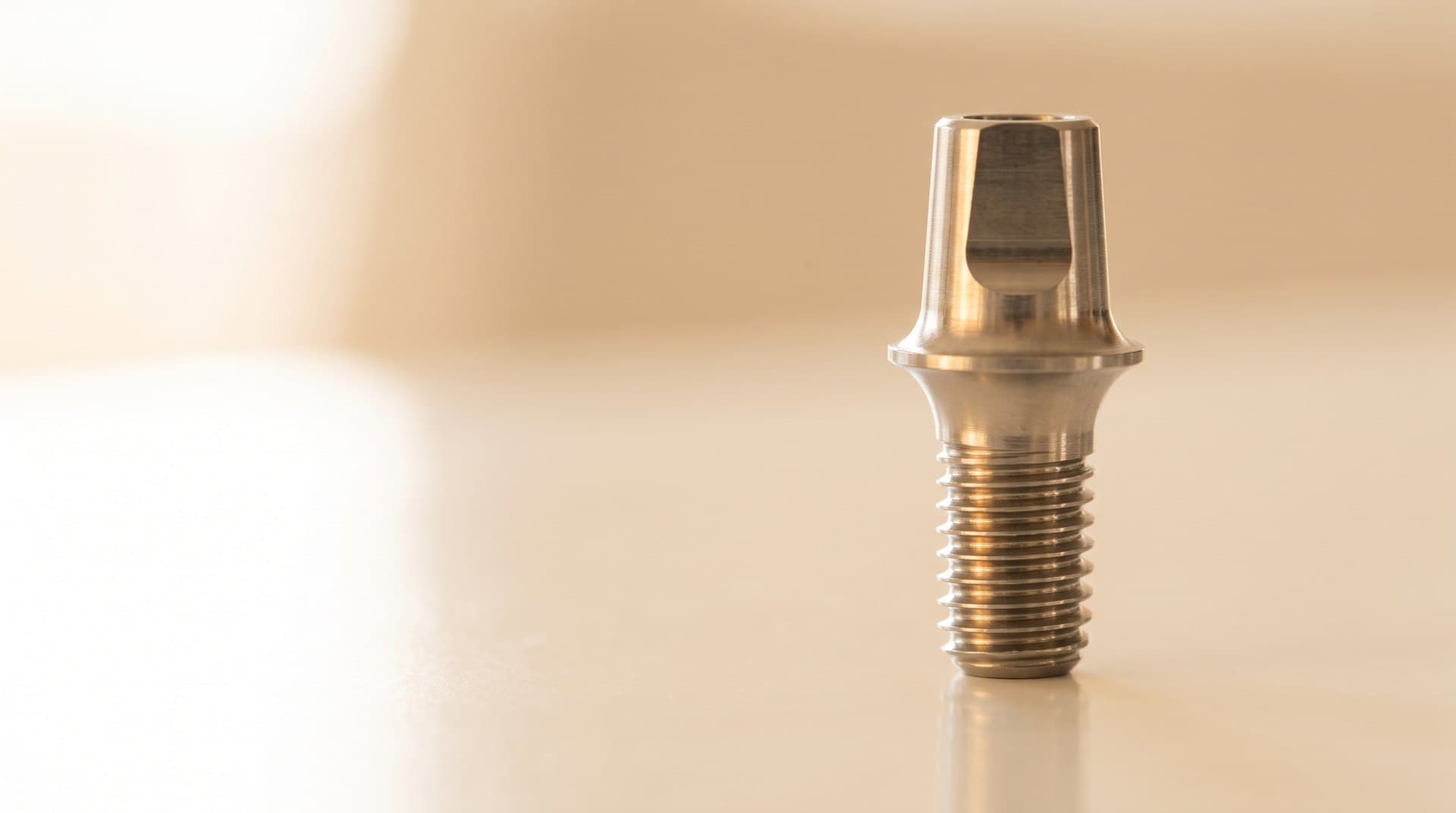
A small connector that joins a dental implant to the crown, bridge or denture it supports. It sits between the implant in the jawbone and the visible replacement tooth.
This page is general information, not a diagnosis or treatment recommendation. For advice about your own teeth, or your child's, please speak to a dentist.
What an abutment is
An abutment is the connecting piece in a dental implant system. A dental implant has three main parts: the implant itself, a small screw-shaped post placed in the jawbone; the abutment, which attaches to the top of that post; and the crown, bridge or denture that sits on the abutment and does the visible work of a tooth. The abutment is the link in the middle, joining the part hidden in the bone to the part you can see and chew with.
Because it bridges the gum line, an abutment is partly below and partly above the gum. It is usually fitted after the implant has had time to bond with the surrounding bone, a process called osseointegration, so the final tooth has a stable foundation. The timing depends on the individual case and is something a dentist plans around your healing.
An implant in three parts
- Implant: the post placed in the jawbone
- Abutment: the connector fitted on top of the post
- Crown, bridge or denture: the visible replacement attached to the abutment
Where it fits in implant treatment
In a typical implant plan, the post is placed first and left to heal. Once the dentist is satisfied that the implant is stable, the abutment is connected to it, and an impression or scan is taken so a crown can be made to fit. Sometimes a temporary healing abutment is used first to shape the gum, and the final abutment follows later.
The abutment also influences how the finished tooth looks and feels at the gum line. Its height, angle and shape are chosen so the crown sits at a natural level and the gum frames it neatly. This is part of why implant treatment is planned as a sequence of steps rather than a single appointment.
Types and materials
Abutments come in different materials and designs. Titanium is widely used because it is strong and well tolerated by the body; tooth-coloured options such as zirconia are sometimes chosen where the gum is thin or the tooth is near the front of the mouth, so nothing grey shows through. Some abutments are a stock shape, while others are custom-made to suit the individual tooth and gum contour.
Which type suits a particular case depends on where the tooth sits, the thickness and health of the gum, the bite and the kind of restoration being fitted. A dentist weighs these factors as part of planning and will talk through the options that apply to you, rather than there being a single right answer for everyone.
What to expect and caring for it
Fitting an abutment is usually a short step and is generally carried out with local anaesthetic where needed. The gum around it may feel tender for a short time afterwards. Once the final crown is in place, the abutment is hidden from view and needs no special attention beyond looking after the tooth well.
Day-to-day care is much like caring for a natural tooth: regular brushing, cleaning between the teeth, and routine check-ups so the dentist can keep an eye on the gum and the implant. If an implant tooth ever feels loose, or the gum around it becomes sore or inflamed, it is worth having it checked promptly.
Questions & answers
Abutment: common questions
Is the abutment the same as the implant?
Can an abutment be changed later?
Related glossary terms
On treatment at Align Dental, see: Dental implants, Bone graft & regeneration.
Book a visit
Ready to take care of your smile?
Tell us what you need and our team will help you book the right appointment, usually within one working day.