
Dental glossary
Dental implant
A small post, usually titanium, placed in the jawbone to replace the root of a missing tooth and support a crown, bridge or denture.
This page is general information, not a diagnosis or treatment recommendation. For advice about your own teeth, or your child's, please speak to a dentist.
What a dental implant is
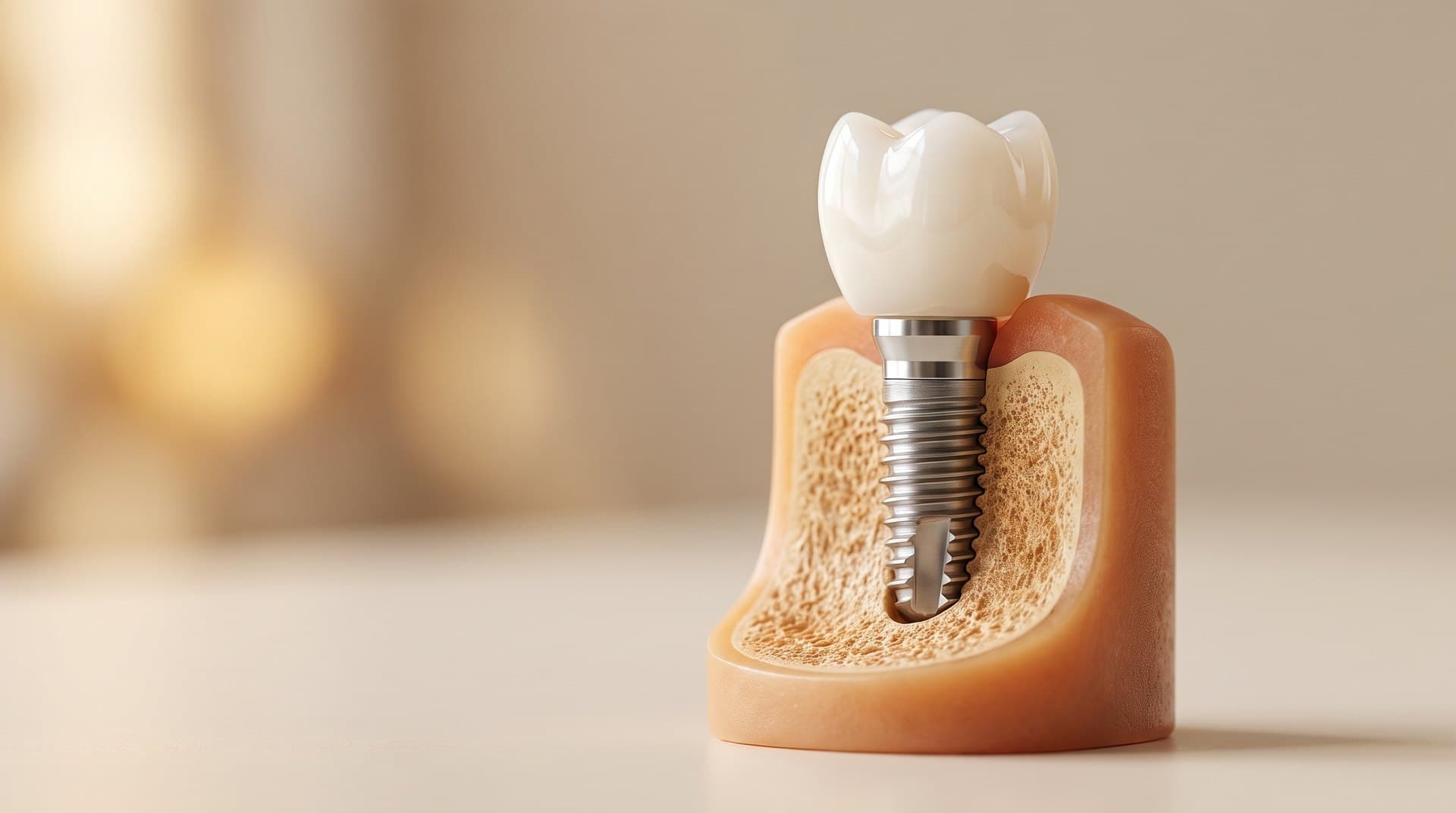
A dental implant is a small post, most often made of titanium, that is placed into the jawbone to take the place of a missing tooth's root. Once it has bonded with the bone, it provides a stable foundation for a replacement tooth, which can be a crown, a bridge or a denture fixed on top.
The implant works as a system of parts: the post in the bone, an abutment that connects to it, and the visible restoration. Together they are designed to look and function like a natural tooth.
The parts of an implant
- The implant: the post placed in the jawbone
- The abutment: the connector on top of the post
- The restoration: the crown, bridge or denture you see
What treatment involves
Implant treatment is planned in stages. It usually begins with an assessment, including images of the jaw, to check the bone and plan the position. The post is then placed and left to bond with the bone over a healing period, after which the abutment and the final restoration are fitted. In some cases a bone graft is needed first to build up the bone before an implant can be placed.
Each step is spaced to allow healing, so implant treatment generally takes place over a number of visits rather than all at once. The exact plan depends on the individual.
Suitability and care
Implants are not automatically suitable for everyone. Factors such as the amount and quality of jawbone, the health of the gums, and general health all play a part, which is why a careful assessment comes first. A dentist will explain whether an implant is a sensible option in your case and what the alternatives are.
Once in place, an implant tooth needs the same everyday care as natural teeth, regular brushing, cleaning around it, and routine check-ups, so the gum and bone supporting it stay healthy. If an implant tooth ever feels loose or the gum becomes sore, it is worth having it checked.
Healing and osseointegration
A key part of implant treatment is the period after the post is placed, when it bonds with the surrounding bone in a process called osseointegration. This bond is what gives an implant its stability, and it takes time, which is why the final tooth is usually fitted at a later visit rather than the same day.
The dentist judges when the implant is ready to take a restoration based on the individual case. Following any aftercare advice during this healing period, and keeping the area clean, supports the process.
When a bone graft is needed first
An implant needs enough healthy bone to anchor it. Where a tooth has been missing for a long time, or where bone has been lost, there may not be enough to start with. In these situations a bone graft or regeneration procedure may be carried out first to build up the area before an implant can be placed.
Whether this is needed is established during the planning assessment, using images of the jaw. It is one of the reasons implant treatment is planned carefully in stages rather than rushed.
Questions & answers
Dental implant: common questions
Are dental implants suitable for everyone?
How long does implant treatment take?
Do implants need special care?
Related glossary terms
On treatment at Align Dental, see: Dental implants, Bone graft & regeneration.
Book a visit
Ready to take care of your smile?
Tell us what you need and our team will help you book the right appointment, usually within one working day.