Dental glossary
Bruxism
The habit of clenching or grinding the teeth, often during sleep and frequently without the person being aware of it.
This page is general information, not a diagnosis or treatment recommendation. For advice about your own teeth, or your child's, please speak to a dentist.
What bruxism is
Bruxism is the term for habitually clenching or grinding the teeth. It can happen during the day, often when concentrating or under stress, or during sleep, where the person is usually unaware of it and may only learn about it from a partner who hears the grinding. It is common, and ranges from mild and occasional to more persistent.
Because sleep bruxism happens unconsciously, it is often picked up at a dental check-up from the pattern of wear on the teeth, rather than because the person noticed it themselves. That is one reason regular examinations are useful.
Signs and effects
Over time, repeated grinding or clenching can wear down the biting surfaces of the teeth, and is sometimes associated with tooth sensitivity, aching jaw muscles, headaches around the temples, or a tired or tight feeling in the jaw on waking. The effects vary widely between people, and not everyone who grinds their teeth develops problems.
Things people sometimes notice
- Flattened, chipped or worn-looking teeth
- Aching jaw muscles or tightness, especially in the morning
- Headaches around the temples
- A partner hearing grinding during sleep
What can contribute to it
Bruxism does not have a single cause. It has been linked with stress and anxiety, certain sleep patterns, aspects of the bite, and some lifestyle factors. In many people more than one of these plays a part, which is why an assessment looks at the whole picture rather than assuming one explanation.
How it's managed
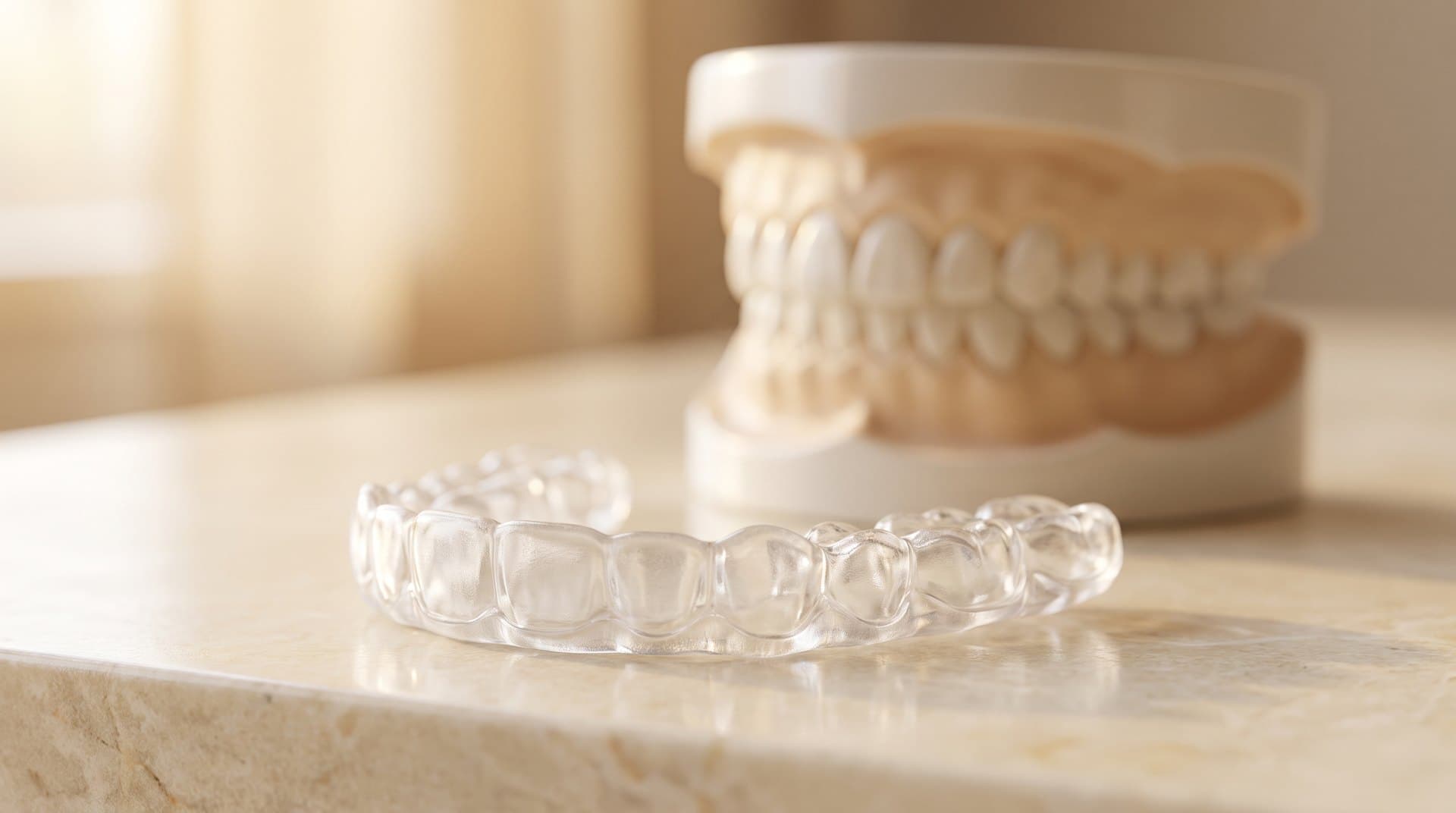
There is no single fix that suits everyone. A dentist can assess the signs, check how the teeth are wearing, and talk through options. These may include a custom-made night guard worn during sleep to protect the teeth, alongside addressing contributing factors where possible. Protecting the teeth and easing strain on the jaw are the usual aims.
If you think you might be grinding or clenching, or someone has noticed it, it is worth mentioning at a check-up so any wear can be looked at early.
Bruxism in children
Grinding is also common in children, particularly during sleep, and many grow out of it as their adult teeth come through and the jaws develop. In most cases occasional childhood grinding is not a cause for concern on its own, and heavy intervention is rarely the first step.
It is worth raising at a dental visit if a child grinds heavily, complains of jaw or tooth discomfort, or has teeth that are visibly wearing. Because a child's teeth and jaws are still changing, a dentist usually takes a measured approach, monitoring rather than intervening unnecessarily, and advising if anything is needed.
When to have it checked
Some signs make it worth booking a look sooner rather than later. Persistent jaw-muscle soreness, frequent headaches around the temples, increasing tooth sensitivity, or teeth that look flatter, chipped or worn can all point to grinding or clenching that is having an effect over time.
A dentist can examine how the teeth are wearing, ask about sleep and daily habits, and talk through whether a protective night guard or other measures would help in your case. Looking at it early generally means there is less to put right later.
Worth mentioning at a visit
- Jaw soreness or tightness, especially on waking
- Frequent headaches around the temples
- Teeth that look worn, flattened or chipped
- A partner noticing grinding during sleep
Questions & answers
Bruxism: common questions
Is grinding my teeth harmful?
Will a night guard stop the grinding?
Related glossary terms
On treatment at Align Dental, see: General dentistry.
Book a visit
Ready to take care of your smile?
Tell us what you need and our team will help you book the right appointment, usually within one working day.