Dental glossary
Malocclusion
A bite in which the upper and lower teeth do not meet as they ideally should, including crowding, spacing or an uneven bite.
This page is general information, not a diagnosis or treatment recommendation. For advice about your own teeth, or your child's, please speak to a dentist.
What malocclusion is
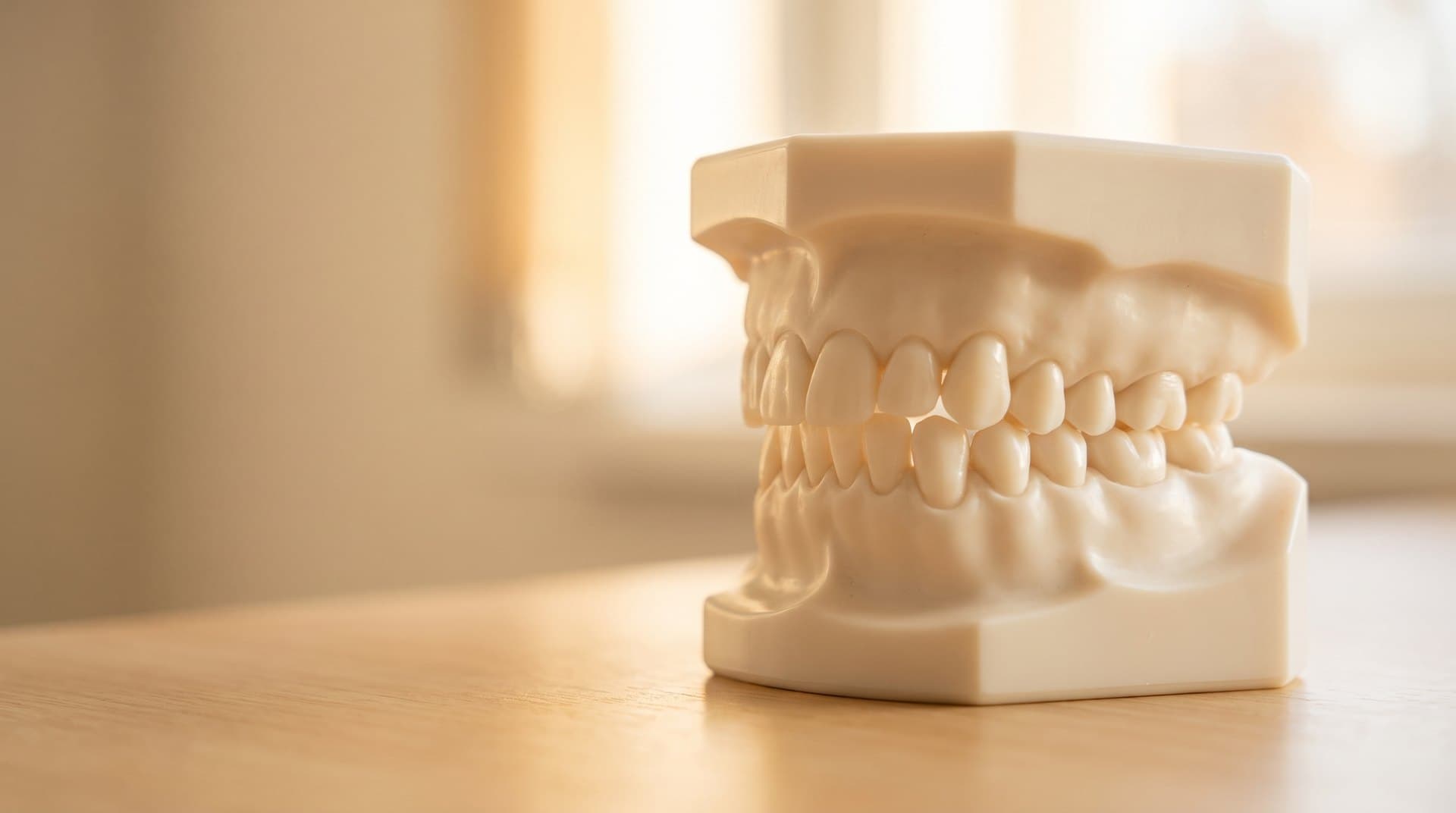
Malocclusion is the term for teeth that do not meet together as they ideally would when the jaws close. The word simply means an imperfect bite. It is very common, varies enormously in degree, and covers a range of situations from mild crowding to more noticeable differences in how the upper and lower teeth come together.
Many people have some degree of malocclusion, and a great deal of it is mild and of no concern. Whether it matters depends on the individual and on the effects it has, if any.
Common types
Malocclusion takes several forms, and a person can have more than one. Recognising the type helps a dentist or orthodontist decide whether treatment would help and, if so, which approach suits.
Ways teeth can be misaligned
- Crowding, where there is not enough room for the teeth
- Spacing or gaps between the teeth
- An overbite, where the upper front teeth sit well in front of the lower
- An underbite or crossbite, where the upper and lower teeth meet unevenly
Why it can matter, and what can help
Some malocclusion is purely about appearance, while in other cases it can make teeth harder to clean, contribute to uneven wear, or affect how comfortably the teeth meet. Whether any of this applies depends on the individual, which is why an assessment looks at the specific situation rather than assuming treatment is needed.
Where treatment would help, options can include braces, clear aligners or, in growing children, approaches that guide jaw development. A dentist or orthodontist assesses the bite and explains whether treatment is worthwhile and which approaches are suitable.
How a bite is assessed
Working out whether a malocclusion matters starts with an assessment. A dentist or orthodontist looks at how the teeth meet, how they are positioned, and, in children, how the jaws are growing. Photographs, scans or x-rays may be used to build a fuller picture.
The aim of the assessment is to understand not just what the bite looks like but what effect it is having, if any. That is what guides the conversation about whether treatment is worthwhile and, if so, what the options are.
Why it can affect cleaning and wear
One practical reason malocclusion sometimes matters is that crowded or overlapping teeth can be harder to clean, which can make plaque easier to miss and, over time, raise the risk of decay or gum problems in those spots. An uneven bite can also lead to some teeth taking more force than others, contributing to wear.
Whether any of this applies depends entirely on the individual, and many people with a mild malocclusion have no such issues. A dentist can advise whether, in your case, the bite is worth addressing for reasons beyond appearance.
Reasons a bite is sometimes treated
- Crowded teeth that are hard to keep clean
- Uneven wear from teeth meeting unevenly
- Appearance the person would like to change
Questions & answers
Malocclusion: common questions
Does malocclusion always need treatment?
What causes a bad bite?
Can adults have treatment for a misaligned bite?
Related glossary terms
On treatment at Align Dental, see: Braces, Invisalign.
Book a visit
Ready to take care of your smile?
Tell us what you need and our team will help you book the right appointment, usually within one working day.