
Dental glossary
Orthodontics
The branch of dentistry concerned with the alignment of the teeth and jaws and with correcting how the teeth bite together.
This page is general information, not a diagnosis or treatment recommendation. For advice about your own teeth, or your child's, please speak to a dentist.
What orthodontics is
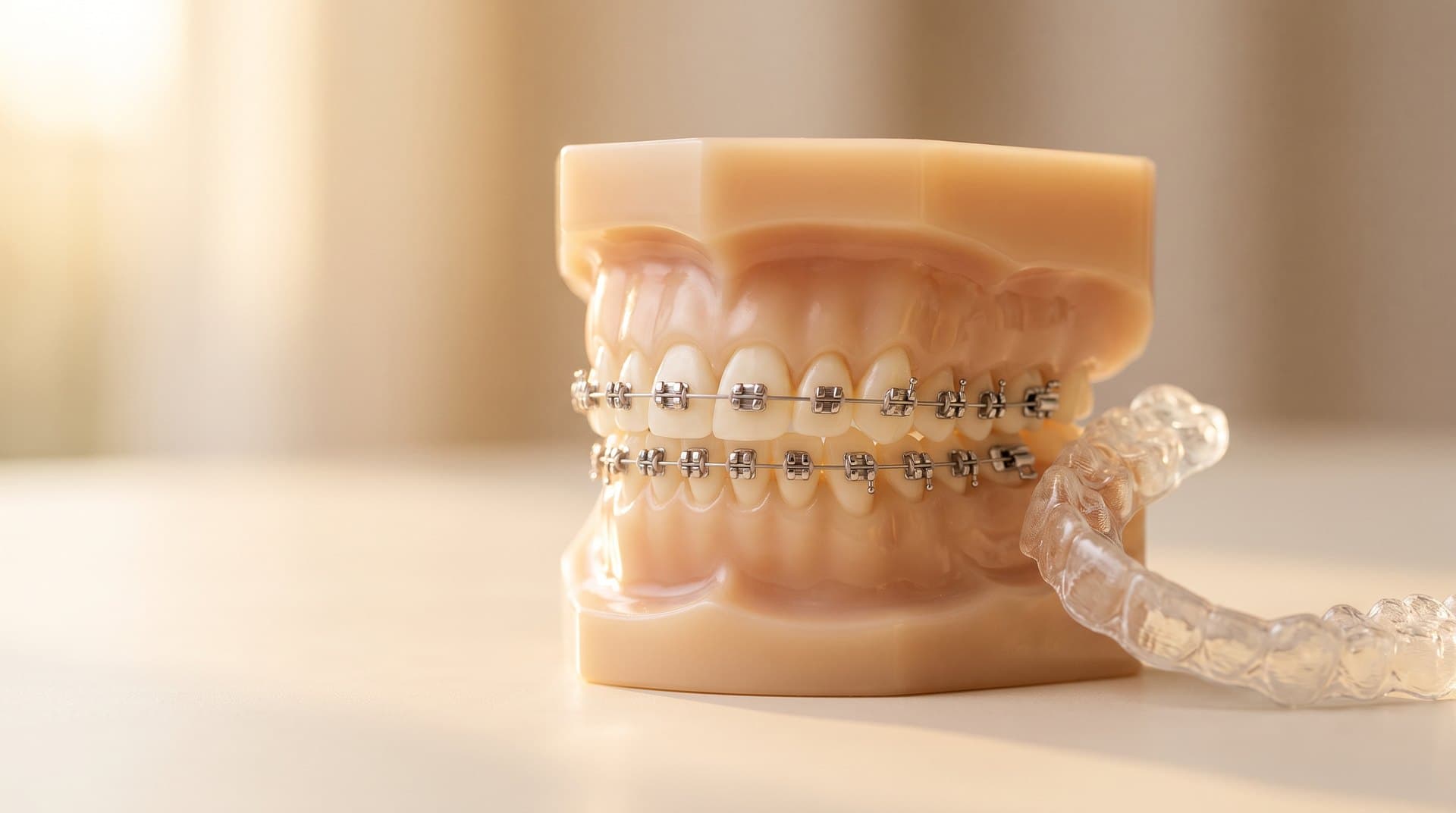
Orthodontics is the area of dentistry that deals with the position of the teeth and jaws and with how the upper and lower teeth meet. It covers the diagnosis, prevention and correction of misaligned teeth and bites, in both children and adults. The familiar tools of orthodontics include braces, clear aligners and other appliances.
The aim of orthodontic treatment is generally to bring the teeth into a better position and improve how they meet, which can help with appearance, with keeping the teeth clean, and in some cases with comfort and function.
What it covers
Orthodontic care ranges from straightening crowded or crooked teeth to addressing differences in how the jaws relate to each other. In growing children, it can also include guiding the development of the jaws while there is still growth to work with. The right approach depends entirely on the individual.
Approaches used in orthodontics
- Fixed braces attached to the teeth
- Removable clear aligners
- Appliances that guide jaw development in children
Getting an assessment
Because orthodontic needs differ so much, treatment begins with an assessment of the teeth, the bite and, in children, how the jaws are growing. This is what determines whether treatment would help, when the best time to start might be, and which approach suits. For children, an early check can be useful even if treatment is not needed yet, simply to keep an eye on development.
A dentist or orthodontist can talk through what, if anything, is worth doing, and there is no single answer that applies to everyone.
What treatment involves
Orthodontic treatment generally works by applying gentle, controlled forces that move teeth gradually into a new position over a period of time. With fixed braces this comes from brackets and wires attached to the teeth; with clear aligners it comes from a series of removable trays. Other appliances are used for particular purposes, such as guiding jaw growth in children.
Treatment is reviewed at intervals so progress can be checked and adjustments made. How long it takes varies a great deal depending on what is being addressed, so a realistic timeline is something the dentist or orthodontist sets out for the individual case.
Common orthodontic tools
- Fixed braces attached to the teeth
- Removable clear aligners
- Appliances that guide jaw development in children
- Retainers to hold the result afterwards
Retainers and keeping the result
Teeth can drift back towards their previous position after any kind of orthodontic treatment, a natural tendency that does not mean anything has gone wrong. To help hold the result, a retainer is generally used once active treatment finishes.
Retainers can be removable or fixed behind the teeth, and the dentist or orthodontist advises on what suits and how long to wear them. Looking after a retainer and following the advice on wearing it is an important part of keeping the benefit of treatment.
Questions & answers
Orthodontics: common questions
At what age should orthodontics start?
Is orthodontics only about appearance?
What is the difference between a dentist and an orthodontist?
Related glossary terms
On treatment at Align Dental, see: Braces, Invisalign, Airway-focused orthodontics.
Book a visit
Ready to take care of your smile?
Tell us what you need and our team will help you book the right appointment, usually within one working day.