
Dental glossary
Clear aligners
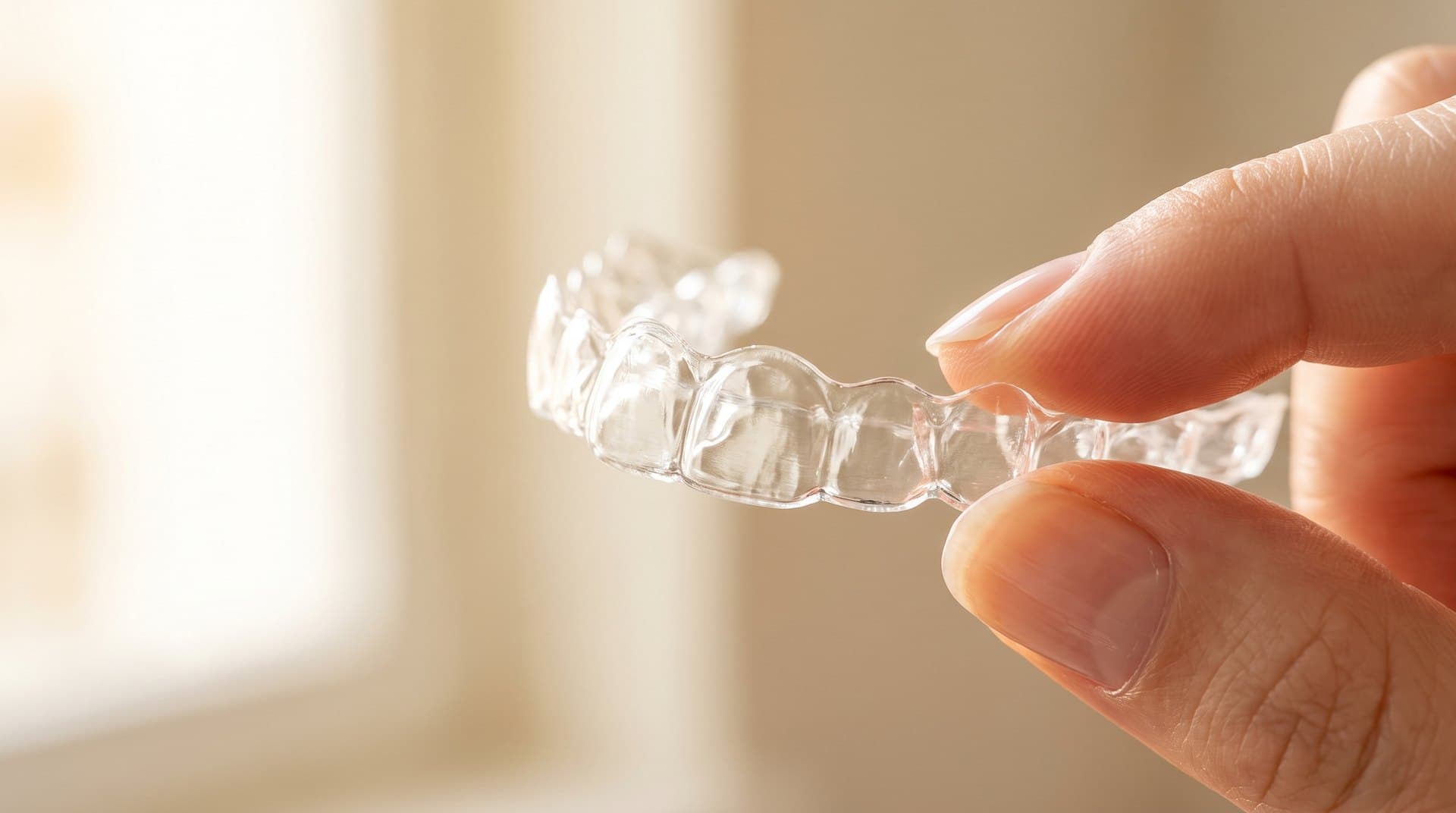
A series of removable, transparent trays that gradually move the teeth into a new position. Invisalign is one well-known brand of clear aligner.
This page is general information, not a diagnosis or treatment recommendation. For advice about your own teeth, or your child's, please speak to a dentist.
What clear aligners are
Clear aligners are removable, see-through trays that fit closely over the teeth and move them gradually towards a planned position. They are an alternative to fixed braces for many alignment issues. Invisalign is one widely recognised brand of clear aligner, so the brand name is often used as a general term, much as people use a brand name for other everyday products.
Each tray is worn for a set period and then swapped for the next in the series, with each one designed to move the teeth a small amount. The trays are custom-made from a scan or impression of your teeth.
How treatment works
Treatment usually begins with an assessment and a digital plan that maps out how the teeth will move. Aligners are typically worn for most of the day and night and taken out for eating, drinking anything other than water, and cleaning the teeth. Consistent wear matters, because the teeth only move while the trays are in.
Progress is reviewed at intervals, and once the teeth are in their new position a retainer is usually needed to help hold them there. The length of treatment varies a great deal from person to person depending on what is being addressed.
Living with aligners
- Removable for eating, drinking and cleaning
- Need to be worn consistently to work as planned
- Cleaned along with your usual oral-hygiene routine
- Followed by a retainer to help keep the result
Are they suitable for everyone?
Clear aligners can address many kinds of crowding, spacing and bite issues, but they are not the right choice for every case, and some situations are better suited to other approaches. Suitability depends on the individual teeth and bite and on how consistently the trays can be worn, which a dentist or orthodontist assesses before recommending anything.
What to expect during treatment
After the plan is agreed and the aligners are made, you work through the series of trays, each worn for a set period before moving to the next. It is common for a new tray to feel a little tight or for the teeth to feel slightly tender for a day or two as they begin to move, which usually settles.
Progress is checked at intervals so the dentist can make sure the teeth are tracking to plan. Because the trays do their work only while they are in the mouth, wearing them as advised is the single biggest factor within your control.
Caring for aligners and keeping the result
Aligners are taken out for eating and for drinking anything other than water, and for cleaning the teeth, then rinsed and replaced. Keeping both the teeth and the trays clean helps avoid staining and keeps the mouth healthy through treatment.
Once the teeth are in their new position, a retainer is generally needed to help hold them there, since teeth can drift over time. Your dentist will explain what retention is recommended and how to look after it.
Day-to-day with aligners
- Wear them consistently, removing only to eat, drink and clean
- Clean the teeth before putting trays back in
- Keep the trays rinsed and clean
- Expect a retainer afterwards to help hold the result
Questions & answers
Clear aligners: common questions
Are clear aligners as effective as braces?
What is the difference between Invisalign and clear aligners?
Do I need to wear a retainer afterwards?
Related glossary terms
On treatment at Align Dental, see: Invisalign, Invisalign vs braces.
Book a visit
Ready to take care of your smile?
Tell us what you need and our team will help you book the right appointment, usually within one working day.