
Dental glossary
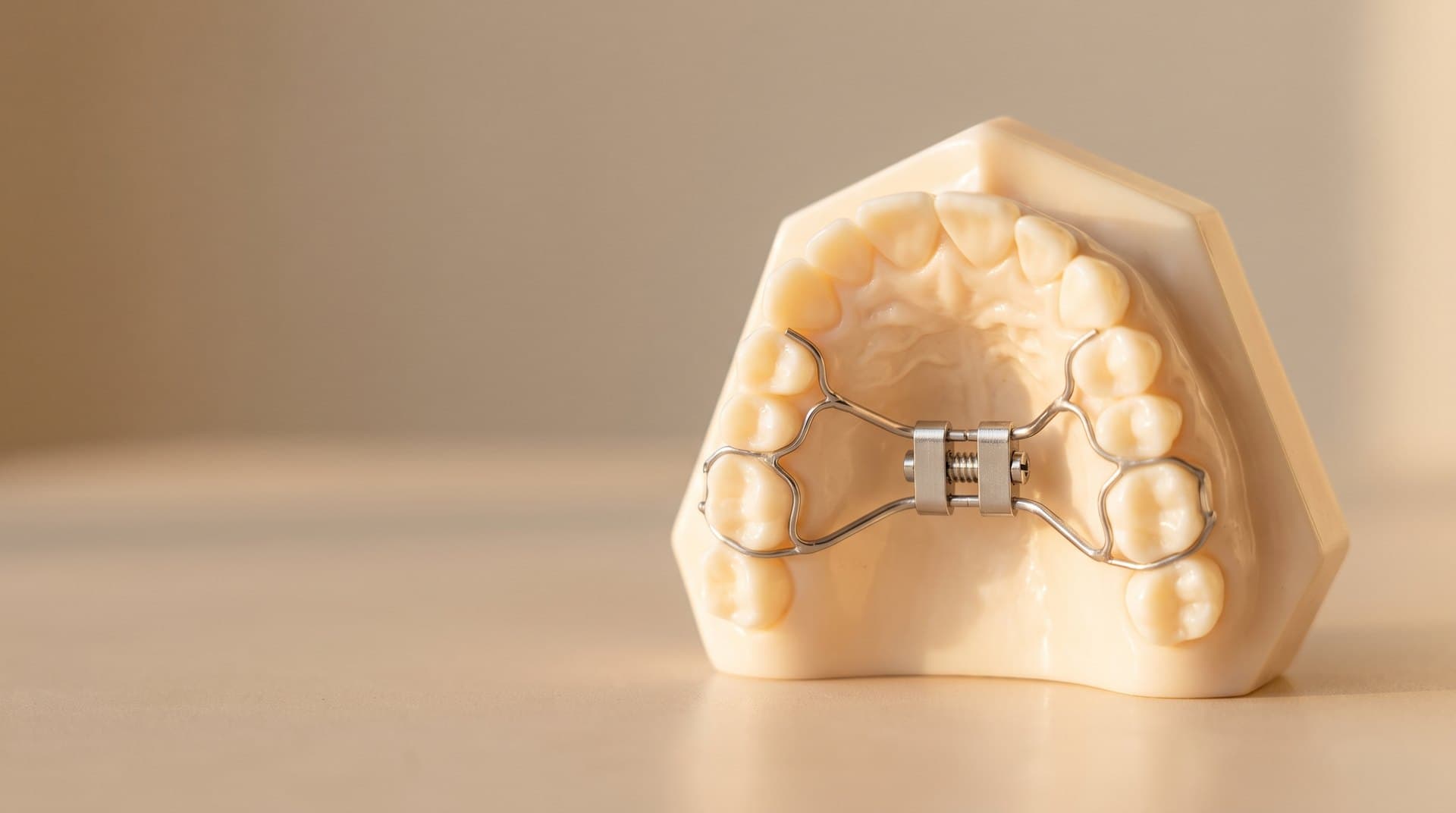
Palatal expander
An orthodontic appliance used, most often in children, to gradually widen a narrow upper jaw and create more room for the teeth and the nasal airway.
This page is general information, not a diagnosis or treatment recommendation. For advice about your own teeth, or your child's, please speak to a dentist.
What a palatal expander is
A palatal expander is an orthodontic appliance designed to widen a narrow upper jaw gradually. It is used most often in children, because the upper jaw is still developing and is more readily guided while there is growth to work with. The appliance is fitted to the upper teeth or palate and adjusted little by little over a period of time.
By gently widening the upper jaw, an expander can create more room for the teeth and can also widen the floor of the nasal passages. It is one of the tools used in orthodontics where jaw width is part of the picture.
Why it may be used
A narrow upper jaw can be associated with crowded teeth and with a crossbite, where the upper and lower teeth meet unevenly. Widening the jaw can help create space and improve how the teeth fit together. In airway-focused orthodontics, expansion is also considered where jaw width and breathing are looked at together, since a wider upper jaw can make more room in the nasal airway.
Whether an expander is appropriate, and when, depends on the individual child's teeth, jaw and stage of growth, which is why it follows an assessment rather than being a routine step for everyone.
What to expect
An expander is adjusted gradually, and it is common to feel some pressure or mild tightness after an adjustment, which usually eases. There may be a short period of getting used to speaking and eating with it in place. The dentist or orthodontist will give care instructions and review progress along the way.
Where breathing or sleep is a concern, it is worth remembering that an expander is a dental and orthodontic measure, not a treatment for medical conditions on its own. If a medical sleep assessment is appropriate, the dental team can work alongside the relevant medical specialists.
How expansion works
In a child, the two halves of the upper jaw are joined by a growth area along the middle of the palate that has not yet fully fused. A palatal expander works with this by applying gentle, gradual outward pressure, which encourages the jaw to widen a small amount at a time. The adjustments are small and spread over a period rather than done all at once.
Because the approach relies on the jaw still developing, timing matters, and it is part of why expansion is most often considered in childhood. A dentist or orthodontist plans the amount and pace of widening for the individual child.
Caring for the appliance
An expander stays in place during treatment, so keeping it and the surrounding teeth clean is important. The dentist or orthodontist gives instructions on cleaning, on any adjustments to make at home, and on foods to be a little careful with while it is in.
It is normal to need a short while to get used to eating and speaking with an expander, and to feel some pressure after an adjustment, which usually eases. If anything feels loose or uncomfortable in a way that does not settle, it is worth getting in touch.
During treatment
- Keep the appliance and teeth clean as advised
- Expect mild pressure after adjustments, which usually settles
- Allow a short adjustment period for eating and speaking
Questions & answers
Palatal expander: common questions
At what age is a palatal expander used?
Does a palatal expander help with breathing?
Related glossary terms
On treatment at Align Dental, see: Invisalign Palatal Expander, Jaw development & airway health.
Book a visit
Ready to take care of your smile?
Tell us what you need and our team will help you book the right appointment, usually within one working day.